header-logo
GettyImages-932533514-hero

Medical College of Wisconsin Otolaryngology Residency Program

  • Four positions available each year: three 5-year traditional track residents AND one 6-year research track resident
  • Locations: Froedtert Hospital, Children's Wisconsin, Clement J. Zablocki VA Medical Center, and Froedtert Hospital Menomonee Falls
  • Program Director: Thomas Robey, MD
  • Associate Program Director: Lauren North, MD
  • Residency Coordinator: Diann Fiscus
    dfiscus@mcw.edu
    (414) 955-0827 | (414) 955-0074 (fax)

Follow us on Instagram @mcwoto

View the Graduation Class of 2026.

2027 Resident Applicant Announcement

MCW Program will match 4 residents in 2027

The otolaryngology residency program at the Medical College of Wisconsin (MCW) accepts 4 residents each year. Three residents match into the traditional five-year clinical training track, while a recently awarded NIH R25 grant will support one resident annually in a six-year dedicated research track. The protected year of research occurs between PGY2 and PGY3.

Applicants may apply to either or both tracks through ERAS.

Resident Applicant Interviews will be held December 11 & 12, 2026.

  • Interview offers will be distributed November 5, 2026.
  • Interview acceptance date is November 9, 2026.

ENT Residency at MCW - Video Presentation

Hear from our residents about what it's like to be an otolaryngology resident at MCW. 

Message from the Program Directors
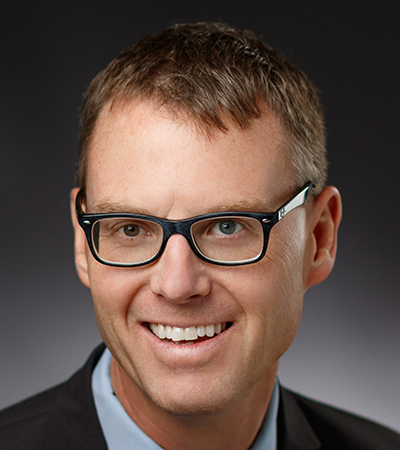
We welcome your interest in the Otolaryngology Residency Program at the Medical College of Wisconsin (MCW) in Milwaukee. Otolaryngology is a competitive and vital specialty and our department has a rich history of dedicated fellowship-trained leaders in all subspecialty areas. Because of the depth of our faculty, and the state-of-the-art institutions we work in, we are able to offer residents a dynamic clinical, surgical, and research experience. At MCW, it is our aim to develop residents into well-rounded clinicians who will be future leaders in otolaryngology and who are committed to promoting a healthy work-life balance and life-long learning. We are proud of our diverse resident family – you will not find a better group to join!  Please don’t hesitate to contact us with any questions regarding our program.
Thomas Robey, MD

Thomas C. Robey, MD
Professor
Pediatric Otolaryngology & Residency Program Director
Medical College of Wisconsin

Lauren North, MD

Lauren M. North, MD
Assistant Professor
Rhinology and Sinus Surgery & Associate Program Director
Medical College of Wisconsin

Stefan Vidovich_resized

Resident Spotlight: Stefan Vidovich, PGY3

I was born in the Chicagoland area. After attending University of Kentucky for undergrad, I returned to Chicago where I spent 2 years working and traveling prior to attending medical school at the University of Illinois at Chicago. I chose ENT due to the anatomic complexity, variety of cases, and overall culture of our field. I chose MCW because of the breadth of operative and clinical experiences, close-knit resident group, and supportive faculty. I am still undecided on fellowship after residency though I plan to pursue an ENT career in the community. My favorite things to do outside of work include international travel with upcoming trips to Serbia, Montenegro, and Egypt as well as spending time with family/friends, volleyball, digital photography, and gardening.

January 2026 potters at work.

Keeping Wellness Initiatives Alive

A Resident Wellness Committee organizes yearly department-funded outings for residents and their significant others, providing opportunities to relax, connect, and experience all that Milwaukee has to offer. In January 2026, residents visited the Kat Harrison Studio in Milwaukee’s Historic Third Ward for a clay hand-building workshop. This creative experience allowed residents to slow down and express their artistic stance by sculpting their own unique ceramic pieces. As they created and painted their work, they also strengthened friendships and fostered a supportive environment outside the clinical setting.
 

Reasons to live in Milwaukee

Milwaukee is a one-of-a-kind city with a vibrant and diverse culture, this charming, yet metropolitan must-see is just 90 minutes north of Chicago and nestled on the coast of Lake Michigan. Whether you’re catching a show at Summerfest, the world’s largest music festival, immersing yourself in the old world charm of the Historic Third Ward or taking in the sights and sounds of one of the many cafés, beer gardens or restaurants that line the city’s riverbank and shoreline, Milwaukee never disappoints. Find out why MCW residents and fellows take pride in calling Milwaukee home.

Learn more about our residency program including rotation schedule details, duty hours, conferences, call specifics and more. 

2023 Stryker Lab - Vidovich
all
Benefits, Conditions & Terms of Employment
The Medical College of Wisconsin Affiliated Hospitals, Inc. (MCWAH) offers an excellent comprehensive benefits package. View MCWAH's Benefits, Conditions & Terms of Employment.
Clinical Experience and Education

The Department’s policy concerning clinical experience and education is consistent with the policy set by the Medical College of Wisconsin Affiliated Hospitals, Inc. (MCWAH), under guidelines established by the Accreditation Council for Graduate Medical Education (ACGME) and the Otolaryngology Residency Review Committee (RRC).

The otolaryngology program schedules resident assignments in compliance with all applicable ACGME requirements and faculty members know, honor, and assist in implementing limitations. Residents must observe this policy, accurately report duty hours, and participate in monitoring procedures. All involved are expected to identify and report potential violations and collaborate to devise appropriate corrective action.

Otolaryngology residents are not permitted to practice medicine and receive financial compensation (moonlight) outside of the residency training program.

Educational Conferences and Experience

Our otolaryngology residency program is designed to meet the educational needs of residents and provide a foundation for lifelong learning while fulfilling knowledge and competency requirements.

Protected time each Tuesday afternoon allows residents to assemble as a team for presentation and review of the Otolaryngology Core Curriculum (OCC) as designed by the American Academy of Otolaryngology-Head and Neck Surgery. Focus is placed on interactive, flipped classroom, and problem-based learning styles. Grand Rounds and a Morbidity/Mortality - Quality/Improvement Conference is also held every month during this block time. Temporal bone drilling, an airway course, a soft tissue course, a microvascular course, an allergy course, and a sawbones course, along with presentations in business education, humanities, patient safety, research, and journal clubs round out the educational curriculum.

A multidisciplinary tumor board and facial trauma conference supplement the curriculum outside of the dedicated education block. Also, an e-learning curriculum is available to augment learning and increase independent self-study skills, preparing the resident for lifelong learning, self-discipline, and time management. 


Call

Call responsibilities vary by PGY level. PGY2-3 residents cover primary call, while backup call is covered mainly by PGY4-5 residents. Primary call responsibilities include coverage at Froedtert Hospital, Children's Wisconsin, and the VA Hospital. Backup call also covers all three hospitals, however, at Children's Wisconsin PGY2-3 residents discuss consults directly with staff. Facial trauma call is shared with the Plastic Surgery service on an alternating weekly basis. Similarly, pediatric aerodigestive foreign body call is shared with Pediatric Surgery, alternating every other week. There is currently no resident call coverage at Froedtert Menomonee Falls Hospital.

  • PGY1: PGY1s are on the Otolaryngology service for six months. During this time, they take daytime call for 1-2 weekends a month (7 am to 7 pm) with a more senior resident on “buddy call” with them. There is currently no overnight call as a PGY1 while on the Otolaryngology service.
  • PGY2: Home call covering Froedtert, Children’s, and the VA. Average of 4-5 calls/month including approximately one weekend per month (weekends are Friday/Sunday or Saturday).
  • PGY3: Home call covering Froedtert, Children’s, and the VA. Average of 4-5 calls/month including approximately one weekend per month (weekends are Friday/Sunday or Saturday).
  • PGY4: Home call, backup covering Froedtert, VA, and Children’s starting primarily in September. The PGY4 Children's Chief begins back up call in July.
  • PGY5: Home call, backup covering Froedtert, VA, and Children's.
Research

A structured research curriculum, supported by a dedicated oversight committee, guides residents through both clinical and basic science research. Formal presentations are held throughout the year, providing a stepwise framework for PGY1 and PGY2 residents to develop a comprehensive research proposal. During the PGY3 year, residents are provided with a protected research block to support scholarly activity. Research opportunities enable residents to collaborate with staff inside and outside of the Department and travel to present their work at national specialty meetings.

Beginning with the 2027–2028 academic year, the Department will offer a one-year NIH R25 research track for one resident, to be completed between PGY2 and PGY3. Applicants may apply through either the traditional five-year otolaryngology residency NRMP match pathway, the six-year research track NRMP match pathway, or both. Additional information about this research opportunity is available at Research Training Programs | Medical College of Wisconsin.

Application Process

The application process is administered through the Association of American Medical Colleges' Electronic Residency Application Service (ERAS). The Medical College of Wisconsin Otolaryngology Residency Program accepts four PGY1 residents each year through two tracks:

  • Traditional five-year clinical residency: 3 positions
  • Six-year research track: 1 position

Applicants may apply through ERAS to either track or both.

A completed ERAS application must include:

  • A minimum of three letters of recommendation
  • Medical Student Performance Evaluation (MSPE/Dean's Letter)
  • Personal statement
  • Medical school transcript
  • USMLE and/or COMLEX scores

Each year, approximately 40–50 applicants are invited to interview for the four PGY1 positions. Applicants who signal the program receive preferential review of their application.

In-person Resident Applicant Interviews will be held on December 11 and on December 12, 2026.

  • Interview offers will be distributed on November 5.
  • Interview acceptance date is November 9.

The MCW Otolaryngology Residency Program will participate in the National Resident Matching Program (NRMP).

The otolaryngology residency at the Medical College of Wisconsin is 5 years in length. The application and match processes are administered by the Association of American Medical College’s Electronic Residency Application Service (ERAS) and the National Resident Matching Program (NRMP). 

Residency Contact:
Diann Fiscus
(414) 955-0827
dfiscus@mcw.edu

Mailing Address:
Department of Otolaryngology
8701 Watertown Plank Rd.
Milwaukee, WI 53226

General Program Outline

Five Year Training Program

PGY-1 Resident
The PGY-1 year is managed by the Department of Otolaryngology and Communication Sciences as mandated by the ACGME. Rotations include Trauma Surgery, Plastic Surgery, SICU, Pediatric Surgery, Anesthesia and General Surgery in addition to six months on the otolaryngology service. All rotations are completed in Medical College of Wisconsin affiliated hospitals.

The PGY-1 year is designed to allow the resident to accumulate background information leading to more specialized training. Trainees emerge from this year with excellent patient care skills.

PGY-2 Resident
The PGY-2 year consists of 12 months of otolaryngology with rotations at Froedtert Hospital, Children's Wisconsin, and VA Medical Center. The PGY-2 resident is exposed to a variety of clinical dilemmas and diseases and is guided by faculty and more senior level residents.

The resident perfects examination techniques in this year and learns to evaluate patients in the outpatient and inpatient settings.

The PGY-2 resident begins to display learning through participation in conferences and case presentations. Examples of early surgical experience include: myringotomy, tonsillectomy, adenoidectomy, tracheotomy, endoscopy, and skin and oral cavity excisions. The PGY-2 resident assists in more complex procedures. Direct supervision is required for all surgical procedures at all of the institutions.

PGY-3 Resident
The PGY-3 year includes 4 months of dedicated research along with 2 months of research and clinic duty. A research proposal must be developed and presented, under the mentorship of a faculty member, before beginning the PGY-3 year.

One month of electives (divided weekly with the VA clinic) are dedicated specifically for resident exposure to allergy, audiology, head and neck radiology, radiation oncology, speech pathology, and surgical pathology.

Five months of the PGY-3 year are spent on specialty rotations, rotating specifically in laryngology, otology, rhinology, and comprehensive otolaryngology. And, one month is spent at Children's Wisconsin.

The PGY-3 resident will continue to learn to diagnose a broad spectrum of adult and pediatric patients presenting to the clinic, emergency room, and as inpatient consultations.

PGY-4 Resident
The PGY-4 year consists of rotations at Froedtert Hospital and Children's Wisconsin. While at Froedtert, the resident will spend dedicated time in rhinology, otology, head and neck, laryngology, and facial plastic surgery. While at Children's, the resident first tests his/her administrative skills, serving as Chief Resident.

The PGY-4 resident is expected to be able to discuss all but the most complex patients.  Surgical experience includes a variety of more complex procedures, including major head and neck, sinus, and pediatric, although the resident continues to assist on the most complex cases.

PGY-5 Resident
The PGY-5 year consists of rotations at Froedtert Hospital and at the VA Medical; the PGY-5 serves as Chief Resident at both institutions.

The PGY-5 resident routinely performs complex head and neck, otology, sinus, general, and reconstructive procedures under faculty supervision.

They may also be involved in multi-disciplinary surgical procedures with plastic surgery, oculoplastic surgery, oral and maxillofacial surgery, and neurosurgery.

The PGY-5 resident is expected to be capable of discussing the most complicated patients, confidently handling emergencies, recognizing and handling complications, seeking help at appropriate decision points, and expertly teaching more junior level trainees and medical students.

In addition, increased administrative and teaching duties further prepare each PGY-5 resident to become an independent otolaryngologist-head and neck surgeon.

Contact Us 

Otolaryngology and Communication Sciences

Clinical and General Information
(414) 955-0830
slistinsky@mcw.edu
 

Education Information
(414) 955-0827
dfiscus@mcw.edu
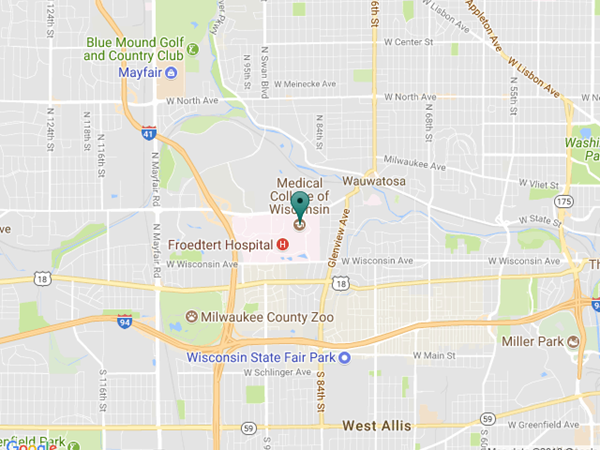
Froedtert Hospital Google map location