
PharmD Classmates Become Clinical Oncology Pharmacists at Froedtert Hospital
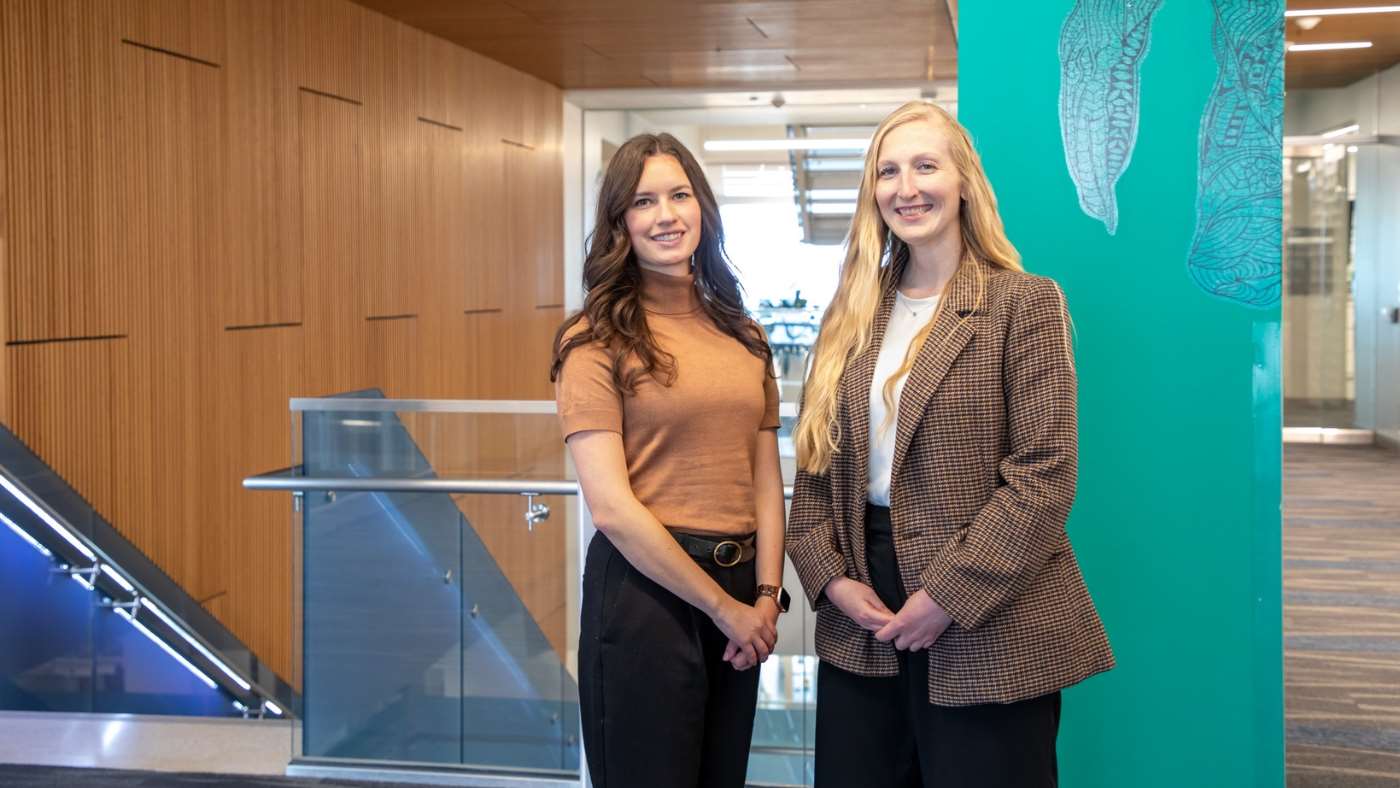
Friends and classmates Megan Mills, PharmD and Rachel Schneider, PharmD both graduated from the MCW School of Pharmacy in 2023, then completed PGY2 oncology residencies at Froedtert Hospital and were hired as clinical oncology pharmacists.
What is your “why” for pursuing a pharmacy career?
RS: “In my teens, I ended up with a disease that put me in the hospital and medication truly saved my life. I realized the power of medicine in that moment and had a pharmacist go through my medications with me and put me at ease. I also had a high school teacher who suggested since I enjoy chemistry, medicinal chemistry could be interesting for me to study.”
MM: "I started looking at different healthcare careers in high school. I knew I wanted to work directly with people and enjoyed my science classes but wasn’t quite sure what career fit with that. After shadowing several hospital roles, I found pharmacy was the right fit and was interested in how much you can do because there are so many career options and you’re not locked into any one path right away.”
Why are you interested in oncology pharmacy specifically?
RS: “Oncology is interesting because there are always new drugs and new trials coming out – you really have to keep on top of your practice. With the partnership between Froedtert and the Medical College of Wisconsin, I got to see early on just how innovative Froedtert’s Cancer Center is. They’re running all these new therapies for oncology patients, and I was really intrigued by that.”
MM: “I had earned my bachelor’s in genetics from UW-Madison and wanted to incorporate genetics with pharmacy. I learned about the job of a precision medicine pharmacist and the growing field of pharmacogenomics and was very interested. I also had family members treated for cancer at Froedtert and saw how great and novel their care was. It was something I wanted to be involved in myself.”
What does an oncology pharmacist’s job look like?
RS: “There are lots of different pathways, but for an oncology pharmacist in the clinic setting, you’re working with an interdisciplinary team including providers. The pharmacist takes the lead on oral chemotherapy, so what I love so much is getting lots of one-on-one interaction with patients – teaching them how the medication is used, monitoring their progress and following up. We’re really involved in their care and help put the patient at ease when they’re going through a really tough time.”
MM: “Froedtert has a precision medicine clinic for patients with rare cancer types who have gone through several lines of treatment and are ready to be treated with something more targeted. A pharmacist can complete a pharmacogenomics test for a patient to see how their genetic makeup impacts their response to certain treatments.”
Why did you choose to go to pharmacy school at the Medical College of Wisconsin?
RS: “I knew I’m a fast-paced learner. The accelerated program and earning your PharmD in three years was something I looked forward to. Also, the relationship that MCW has with Froedtert Hospital and knowing they provide top-level care at their Cancer Center was a draw.”
MM: “One reason I did want to go to MCW was their focus on pharmacogenomics – there is a pharmacogenomics elective and students can test their own genes to see how they metabolize and respond to certain medications. There’s a lot of opportunity within the school to work with this novel type of pharmacy practice. It’s an exciting, unique thing about MCW.”
How was completing an academic concentration beneficial to you as a PharmD student at MCW?
RS: “I was able to complete an academic concentration in specialty pharmacy throughout my time at MCW. I believe about three-quarters of my rotations (IPPE and APPE) were at Froedtert. I was able to rank my preference for oncology-related experiences and those rotations were prioritized for me. I was able to contribute to a research project specific to oncology patients, which was unique, and helped me gain exposure to that population. When I was preparing for residency, I was able to speak about my rotations and research experience, and it helped me get to the path I’m on now.”
MM: “I chose pharmacogenomics for my specialty pharmacy academic concentration. This allowed me to have priority on certain rotations – so I did a rotation at RPRD Diagnostics, which is a lab that does genetic testing for hospitals across the country and publishes research on different mutations that could affect drug metabolism. The academic concentration also allowed me to do a longitudinal project looking at electronic health records to see how many patients would benefit from proactive pharmacogenomics testing before starting medication. I worked with the MCW Pharmacy School Dean on the project. Being at a small school, students can interact with administrative faculty and get involved in unique opportunities.”
Any advice for someone considering a pharmacy career but isn’t sure?
RS: “If you’re considering going to pharmacy school, there are lots of opportunities where you can shadow a pharmacist or look into different roles pharmacists can play. There are so many different career paths, so just exploring options and seeing which pathway aligns with your interest can help.”
What personality type would make a good pharmacist?
MM: “A personality type I think fits well in pharmacy is someone who enjoys problem solving. A lot of pharmacy is looking at a patient’s chart or medication list and deciding what to do for them. It’s not always black and white. If you like fast-paced environments, you may do well in the emergency department. Or if you like to deep dive into problems and work with complex patients, the ICU or oncology would be a good fit for you. I’m not sure if there’s one specific personality type of a pharmacist, but as long as you enjoy continuous learning, problem solving and caring for patients, you’re going to be a great pharmacist.”