
MCW PharmD Students Learn Specialized Pediatrics Skills from Practicing Pharmacists at Children’s Wisconsin
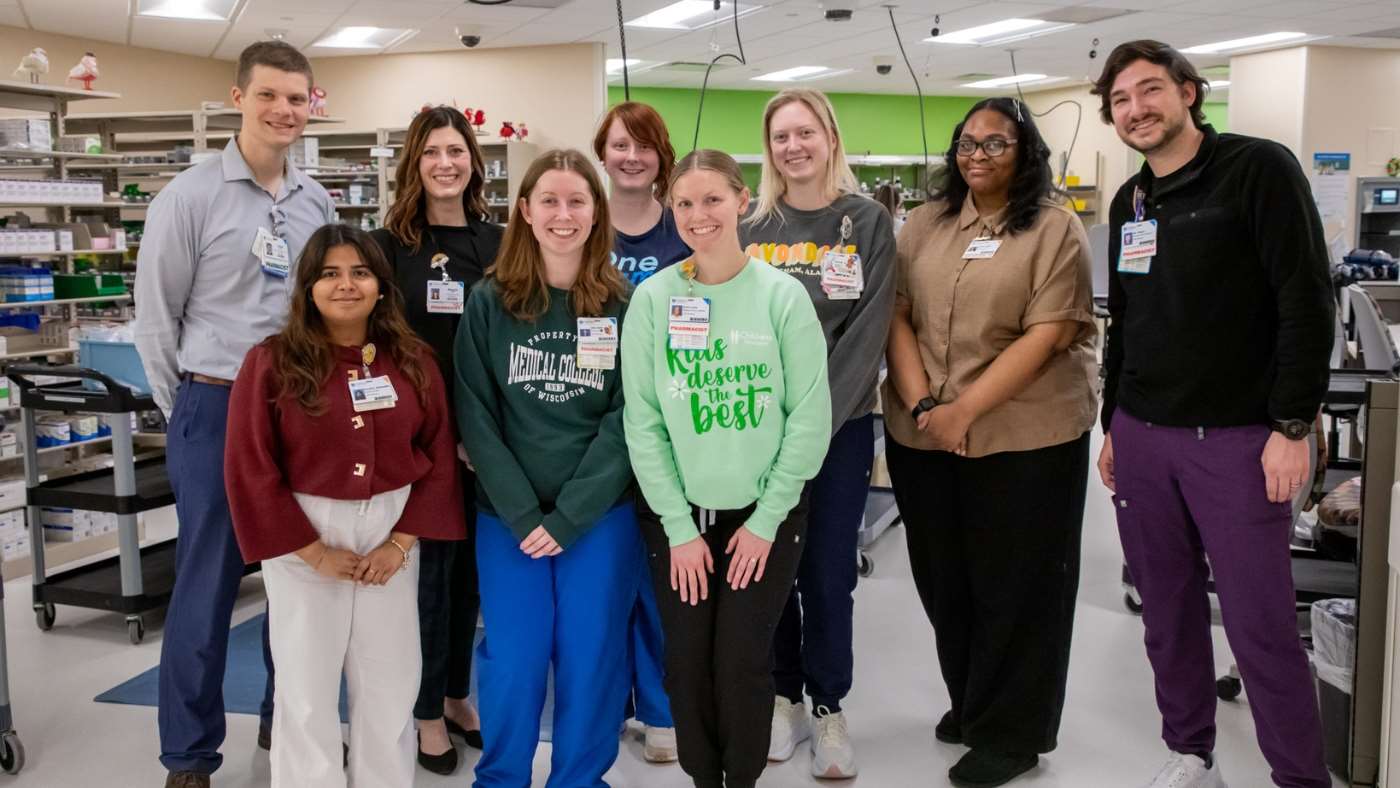
Since its founding in 2016, leaders at the MCW School of Pharmacy and Children’s Wisconsin have worked collaboratively to cultivate opportunities for students to learn from experts about the pediatric pharmacy specialty. The pharmacy school and children’s hospital are adjacent to each other on the Milwaukee Regional Medical Center campus and connected via a skywalk.
The partnership is mutually beneficial. Pharmacy students on clinical rotations learn from preceptors about the nuances of pediatric pharmacy and develop hands-on, specialized skills. They practice compounding medications that are easily administered to children – for example, giving a liquid medication to a child instead of a tablet. The students also learn to administer the proper dose and concentration of medication through an IV based on the patient’s weight, ranging from newborns to young adults.
For Children’s Wisconsin, MCW students contribute to the pharmacy workforce as qualified applicants for the hospital’s residency program and even as future employees. Since 2020, when MCW’s School of Pharmacy graduated its inaugural class, Children’s has hired five alumni as full-time pharmacists.
Megan Ose, PharmD, MHSA, RPh, DPLA, director of pharmacy services at Children’s, is also an assistant dean at MCW’s School of Pharmacy, where she helps facilitate and maintain the close partnership between the two entities. Part of her role involves educating young people about pediatric pharmacy career opportunities even before they enter MCW’s PharmD program. To that end, Dr. Ose presents information to high school and undergraduate students at MCW’s Pharmacy Discovery Day events and hosts tours for the Pre-Pharmacy Scholars summer boot camp.
“We’re able to give people a well-rounded idea of what the required education looks like, the ultimate role to be played in the profession and different opportunities within that,” she explained. “I think that this will solidify for those pursuing our field that this is the right career choice for them.”
The MCW-Children's partnership has evolved over time; the latest edition is the establishment of a new pediatrics elective course. Course director Jesse Cramer, PharmD, BCPPS, has a dual appointment as an MCW clinical assistant professor in the department of clinical sciences and clinical pharmacy manager at Children’s.
“The whole point of my position as an MCW assistant professor and practicing pharmacist is to teach real-world concepts versus what the textbook says,” explained Dr. Cramer.
Each week, the elective pediatrics course features a guest lecture by a specialist at Children’s who can speak to unique protocols for various patient populations. One important takeaway that Dr. Cramer impresses upon the students is how drug therapy differs when dealing with pediatric versus adult patients.
“It’s addressing the cliche that kids are just little adults,” said Dr. Cramer. “Students have learned in their regular pharmacy courses that Drug A is the right choice, but first-line therapy for kids is actually Drug C. There are also soft challenges that need to be addressed, such as when a medication has to be given three times a day – which is hard for kids who are in school.”
The elective course also focuses on disease states specific to the pediatric population. Examples include apnea of prematurity, which occurs when a preterm baby may experience pauses in breathing due to underdeveloped nervous and respiratory systems; asthma exacerbations; infantile spasms; and pediatric oncology diseases.
Students who show a significant interest in a pediatric pharmacy career can apply for the Longitudinal Advanced Pharmacy Practice Experiences (LAPPE) program, during which they can spend 70 percent of their third and final year of the PharmD program at Children’s to gain a deeper understanding of the healthcare services provided and to prepare for their intended career paths.
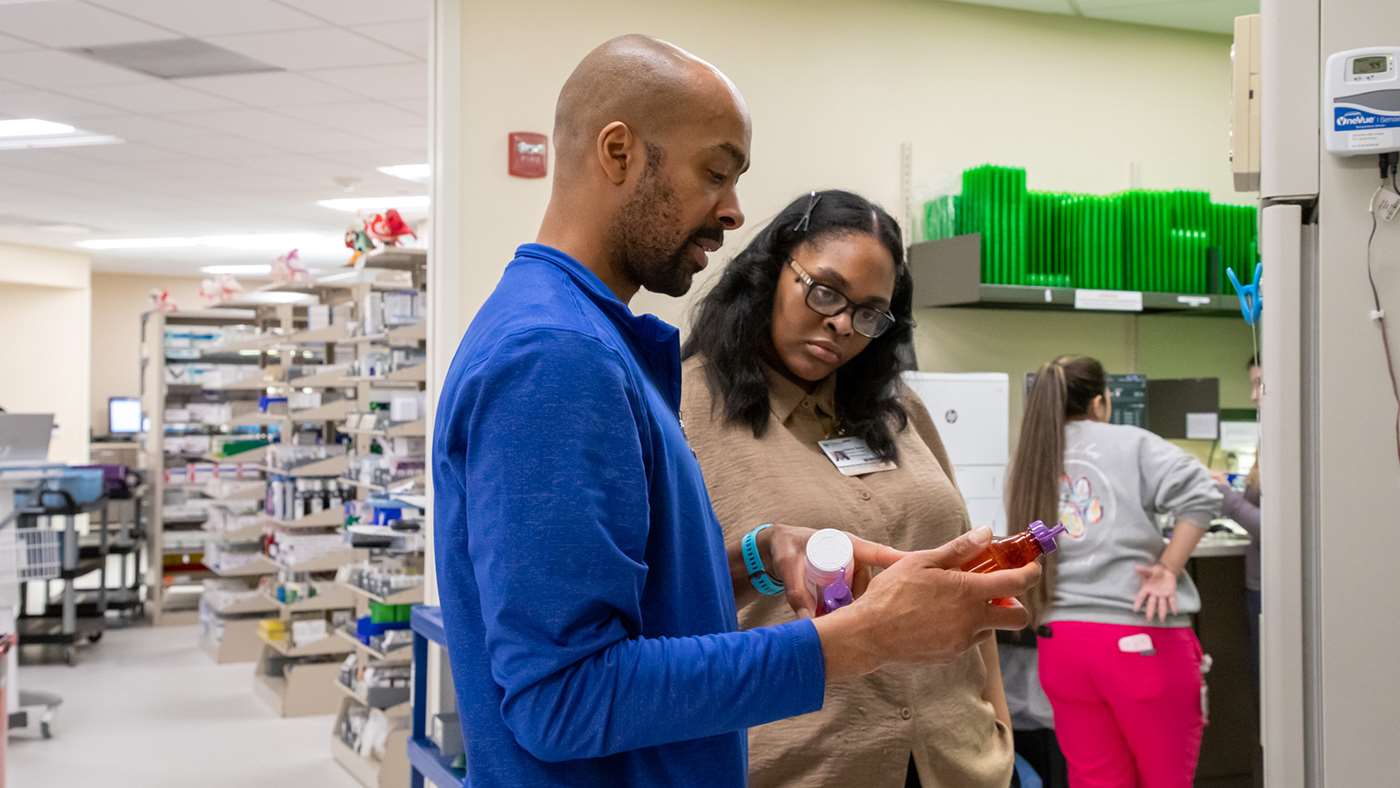
Kaitlin Larson, PharmD ‘25 was inspired to pursue the LAPPE program after experiencing an introductory rotation at Children’s in her first year as an MCW pharmacy student.
“To put it in one word, the experience was ‘incredible,’” recalled Dr. Larson, who is now a Children’s resident pharmacist. “I was able to see a wide range of activities across those 10 Friday rotations. I spent time in the emergency department, looked at investigational drugs with Dr. Cramer, went on rounds with different teams and spent time in the operating room – so it was a joy to be able to see those different parts of the pharmacy.”
Additionally, the proximity and partnership between MCW and Children’s allow students to get involved in research. As a student, Dr. Larson worked with Dr. Cramer to review the efficacy and safety of a sedation weaning protocol for children. Drs. Larson and Cramer investigated safely weaning children off sedatives – which are harmful for neurodevelopment – while minimizing withdrawal symptoms.
“Learning to care for children is such a small part of the pharmacy curriculum, so MCW sharing a campus with Children’s Wisconsin – the only standalone children’s hospital in the state – opens a lot of doors,” said Dr. Larson. “Being able to learn directly from a practicing pediatric pharmacist, who happens to work in a building connected to your school where you can see patients and easily shadow them, is a great opportunity.”
The 2025-2026 U.S. News & World Report ranked Children’s Wisconsin first in the state for Best Children’s Hospitals. It also was among the best in the nation in five pediatric specialties: cancer, gastroenterology and GI surgery, nephrology, pulmonology and urology.