
Generosity Helps Pave a Path to Recovery for Veterans and First Responders
For Dan, hope began with a simple conversation, one that ultimately led him toward treatment, recovery, and a chance to rebuild his life.
Dan was seeking treatment for addiction when he shared an experience from his service in the U.S. Marine Corps. His comments prompted a follow-up call from Gregory Burek, MD, GME ’18, who today serves as associate professor of psychiatry and behavioral medicine at the Medical College of Wisconsin (MCW).
That conversation with Dr. Burek, himself a Marine, proved to be a turning point. Dan was struggling deeply and considering ending his life. Instead, he agreed to seek help.
“He talked me into sticking around long enough to try the program and get help,” Dan recalls. “I had never been open to any kind of mental health treatment, but he had a way of talking that was a little different than other doctors.”

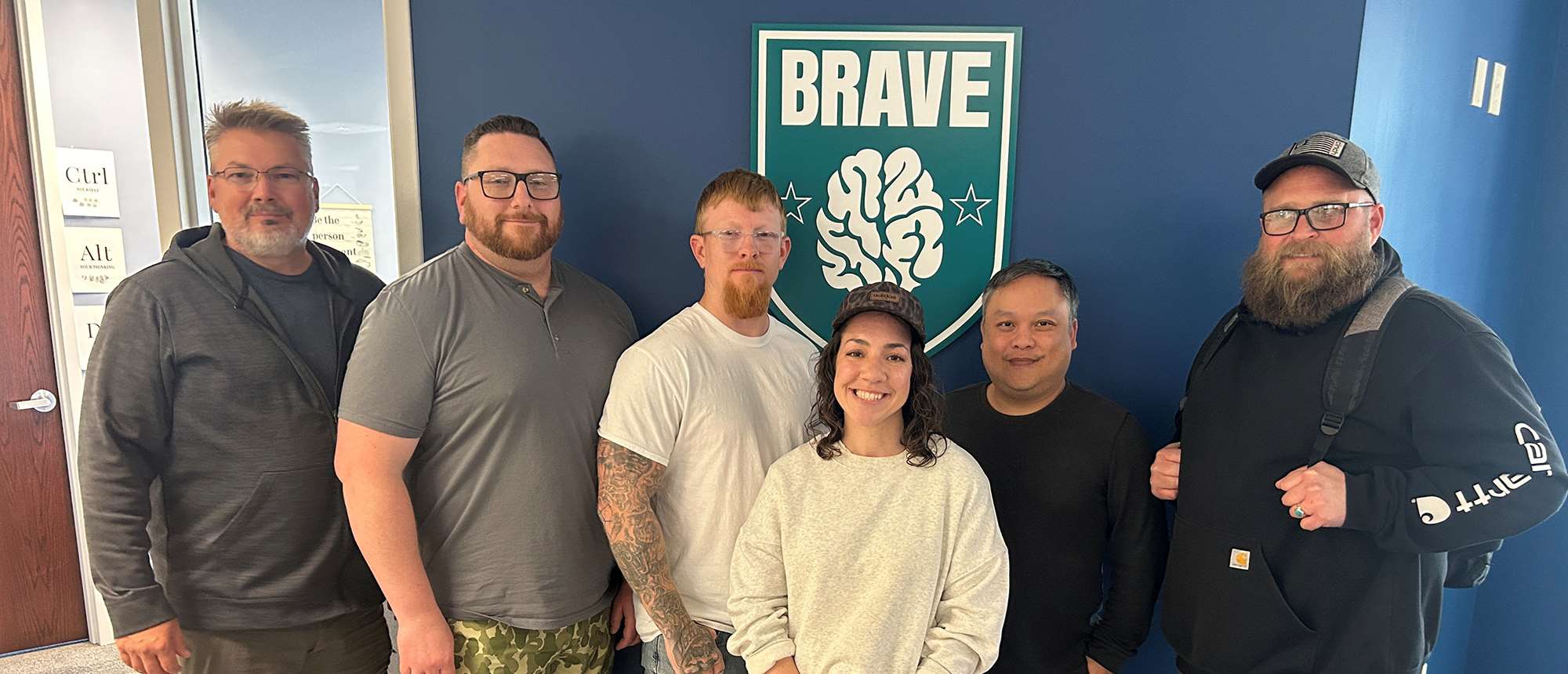
Dan later joined MCW's BRAVE (Building Resilience through Action in VEterans and First Responders) program, designed to diagnose and treat brain injuries in military veterans and first responders so participants can reclaim their health, relationships, and quality of life.
The BRAVE team completed a comprehensive assessment and diagnosed Dan with traumatic brain injury (TBI) and post-traumatic stress disorder (PTSD). Dan committed himself to the three-week intensive program, building healthier habits while the BRAVE team guided his mental, emotional, and cognitive recovery.
“Today, I’m calmer. Things in my life that felt catastrophic before are much easier to manage,” Dan says. “With more patience, clarity, and peace, I’m able to make better decisions and think more clearly.”
Dan's experience reflects the journey of many veterans and first responders who come to BRAVE seeking answers for symptoms that can go unrecognized for years.
Many arrive carrying wounds that are easy to overlook, both by others, and sometimes, even by themselves.
According to Dr. Burek, TBIs are often missed because their symptoms may not immediately appear or can be mistaken for stress, burnout, or being part of the job.
"In the military and first responder community, we call it ‘getting your bell rung,’ and it happens all the time," he says. “It is highly underreported and undiagnosed because it is so common that service members and first responders try to shake it off and get back to the mission."
However mild, these injuries can carry long-term consequences.
"The most significant risk factor for having chronic symptoms after TBI is pre-existing or co-occurring PTSD and other mental health issues, which are also highly prominent and under reported in military veterans and first responders," Dr. Burek says. "Having both PTSD and TBI dramatically increases risk of death by suicide and other comorbidities.”
The consequences of these injuries can emerge years later and in unexpected ways. For Steven, they followed him throughout a lifetime of service.
After serving in the Army, Steven became an ordained minister and spent 22 years as a chaplain for a Sheriff's Department.
Like many BRAVE participants, Steven had grown accustomed to keeping his emotions and his experiences to himself.
“For years, I just kept shoving things behind the door,” he says. “I didn’t have the skill, the know-how, or the time to deal with them, and I was afraid to open the door because of all the terrible things that would come out.”
Steven rarely talked about his experiences with his wife; in fact, it was years before his kids learned he had served in the military. BRAVE gave him something he hadn't found before: an environment where he felt comfortable to begin confronting those experiences.
“I’ve been able to crack the door open a little bit more each time, which has been a real blessing to me,” he says.
Steven’s experience is shared by many participants, who may not always realize how significantly brain injuries can affect mood, behavior, and daily functioning.
TBIs can contribute to anxiety, depression, impulsivity, irritability, memory problems, and trouble concentrating. Physical symptoms such as blurred vision, loss of balance, fatigue, headache, and nausea can continue long after an injury occurs, making it difficult for participants to recognize the true source of their struggles.
BRAVE’s comprehensive approach recognizes that TBI and psychological trauma often overlap, requiring coordinated treatment.
“PTSD and TBI don’t happen separately,” says Sydney, a firefighter-paramedic. “They’re intertwined. This program treats both together, and that’s allowed me to make much bigger strides than I ever did before.”
For many veterans and first responders, seeking help is often one of the hardest steps.
“We were trained to suck it up. The more of a warrior you become, the harder it is to take care of yourself,” says Sean, who recently retired after a 28-year career as a police officer.
“The three-week program gives people time to step away, connect with people, and heal.”
The healing is possible in part because participants are surrounded by people who understand the unique culture of military and first-responder service, removing a barrier to building trust. Many BRAVE team members have served these professions themselves or have deep experience caring for these communities.
“A lot of people don’t know how to approach vets or first responders. It’s not just a ‘thank you for your service.’ It’s: ‘I recognize you as an individual, who served and sacrificed, and your individual experience,’” Dr. Burek says.
This attitude provides a foundation for BRAVE participants to build trust and confidence in their care team.
 "I feel safe when I'm here," says James, a 31-year emergency responder who has worked as a firefighter, EMS, and law enforcement officer (pictured right). "I trust the providers, and I never have to overly explain myself because they just understand how this works."
BRAVE addresses the full scope of participants’ recovery, integrating behavioral health, physical therapy, and speech-language pathology along with mindfulness, yoga, group therapy, and peer connection.
“If you took the kind of treatment that we’re giving here and the number of appointments with those clinicians, it would take over two years to get anywhere else,” says Dr. Burek. “We’re doing it in a three-day evaluation and a three-week intensive outpatient program.”
For Jay, a military veteran and retired police officer, BRAVE helped him find answers to why something was bothering him or what situations may trigger intense emotions.
After decades spent helping others, Jay says that kind of self-understanding didn’t come naturally.
“As a veteran or a first responder, you’re not thinking about yourself pretty much ever,” he says. “I pushed everything down. But at some point, it’s got to all come out.”
BRAVE's holistic care is unlike any other in the region. By bringing multiple specialties together in a concentrated three-week experience, the program addresses challenges that often go untreated elsewhere.
Growing demand for the program – the first of its kind in the Midwest – suggests just how urgently this care is needed.
Philanthropic support is critical to making BRAVE’s holistic services accessible to everyone who needs them. The program covers all of participants' costs, not only for care received but also airfare, lodging, and meals.
“A lot of people are unwilling to get help or don't think they can get help because they can’t afford it. And this is one of the phenomenal things about this. We can get here and not worry about the cost,” says Scott, whose military service spanned 33 years across three branches: Air Force, Army, and Navy.
Since 2024, more than 260 veterans and first responders across 36 states have completed the program, and more than 500 participants have applied to participate.
Philanthropic support remains essential to ensuring veterans and first responders have access to the care and community they deserve.
“Donor support is essential because we’re trying to address all of the barriers to care: de-stigmatization, normalization, and logistics,” Dr. Burek says. “We bring people in from around the country and cover their airfare, travel, and meals because expense and logistics are two of the biggest barriers.”
For Dan, the impact of that support is impossible to measure.
“I love this program. It actually hasn’t given me back my life – it gave me a new one,” he says. “It gave me a new life that I didn't know was possible for me.”


