How a Family's Recovery Sparked a Calling
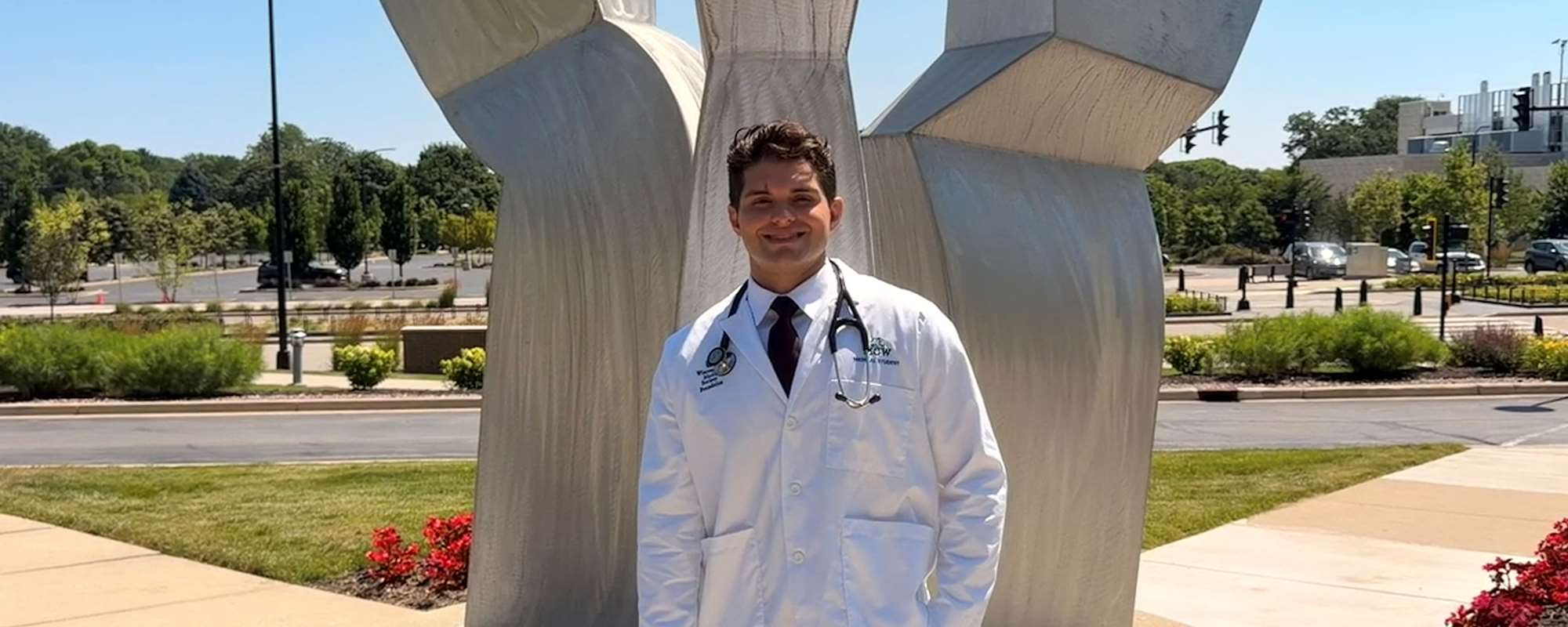
In 2005, Hurricane Wilma swept through Miami with wind gusts up to 185 miles per hour. Power lines short-circuited, sending entire grids of the city into darkness. This included the neighborhood where Angelo Madruga, now a first-year medical student at the Medical College of Wisconsin (MCW), lived with his two older brothers, sister, and parents.
A few days after the storm, the brothers were refueling the family’s backup generator when it combusted, engulfing them and their home in flames.
The brothers suffered second- and third-degree burns along their legs. One brother received synthetic skin grafts, a treatment that brought night-and-day results. Today, you can’t even tell he was burned, Madruga says.
“The entire experience made me very fascinated by science and medicine because it mixed understanding basic science principles about how the body regenerates with caring for patients with injuries and seeing the hope on their faces again,” says Madruga.
Connection to Cuban Culture
Madruga was born in Miami to Cuban parents who had immigrated during the Mariel migration in 1980—a year when more than 125,000 Cubans left the country in search of better opportunities in the United States. His family left to escape political imprisonment and forced military service.
Once in Miami, his parents first worked in a biomedical manufacturing factory before opening a Cuban restaurant. Madruga was helping in the family business by age 10, cooking, cleaning, washing dishes, and running the cash register.
“My parents worked really, really hard,” says Madruga. “There was never a moment when we didn't have anything that we needed, but there were moments when we worried where we were going to end up.”
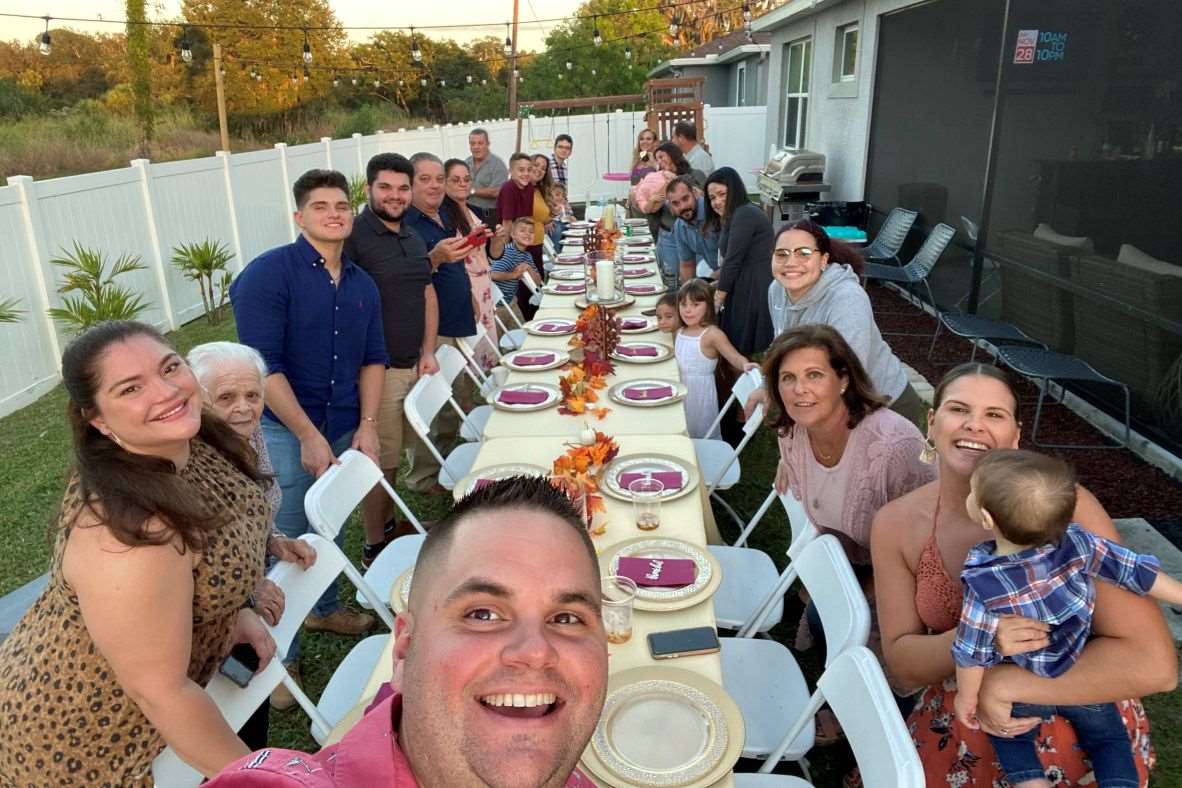
Despite the uncertainty, the family was happy. They had settled in and found a home in Miami’s thriving Cuban community.
“I consider myself Cuban-American,” says Madruga. “The culture has been very embedded in my life and I feel very close to it and my people.”
Regeneration and Rejuvenation
After high school, Madruga attended the University of Wisconsin-Madison, where he studied biochemistry and completed a certificate in stem cell sciences—disciplines he picked due to his experience during the aftermath of Hurricane Wilma.
During his first week of school, he learned that he had received a full-ride scholarship.
“I felt very, very blessed,” says Madruga. “My parents and I both cried. I am a first-generation student. My mom has a middle school education and my dad has a high school education. I’m also the first in my family to pursue medicine. Having out-of-state tuition covered so I could just focus on school was invaluable.”
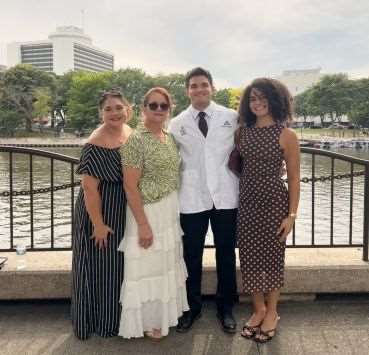 At UW-Madison, Madruga studied how skeletal muscle injury affects the stem cells that develop into bone, fat, and cartilage. After graduating, he worked as a research assistant at the National Institute of Neurological Disorders and Stroke, studying the molecular pathways that lead to muscle wasting in mitochondrial disorders. He also gained clinical experience by working as a caregiver and volunteering in the Walter Reed National Military Medical Center.
“My brother has been a firefighter since I was growing up, and he continues to serve today,” says Madruga. “His dedication has made supporting those who put themselves at risk for others especially meaningful to me.”
A School that Feels Like Family
As Madruga was applying to medical schools, MCW felt like home.
“I applied because of the family culture,” says Madruga. “Coming from an immigrant family, family is such an important thing. At MCW, they help their own, like family. I felt that energy.”
At MCW, Madruga plans to join the Latino Medical Student Association and recently joined the lab of Bo Wang, PhD, assistant professor in the Joint Department of Biomedical of Biomedical Engineering at MCW and Marquette University. The lab uses nanoparticles to promote bone development in radiation-damaged stem cells.
After graduation, he hopes to pursue either orthopedic, plastic, or burn surgery after graduation.
“I envision myself working in either a research or academic hospital where I can seamlessly integrate my clinical expertise with my research interests,” says Madruga.
Wherever he ends up, Madruga won’t forget his roots.
“I also want to help underrepresented students who are unsure of how to navigate medicine on their own,” says Madruga. “Many times I had to find my way on my own, and I want to be that guiding voice for others.”
MCW Medical School Admissions FAQ
MCW offers many program options to help you become the next generation of physician leaders. Here’s what you need to know if you are interested in applying to the MCW Medical School.
Recommended


