
Pfizer Hosts Interprofessional Drug Discovery & Development Workshop at MCW
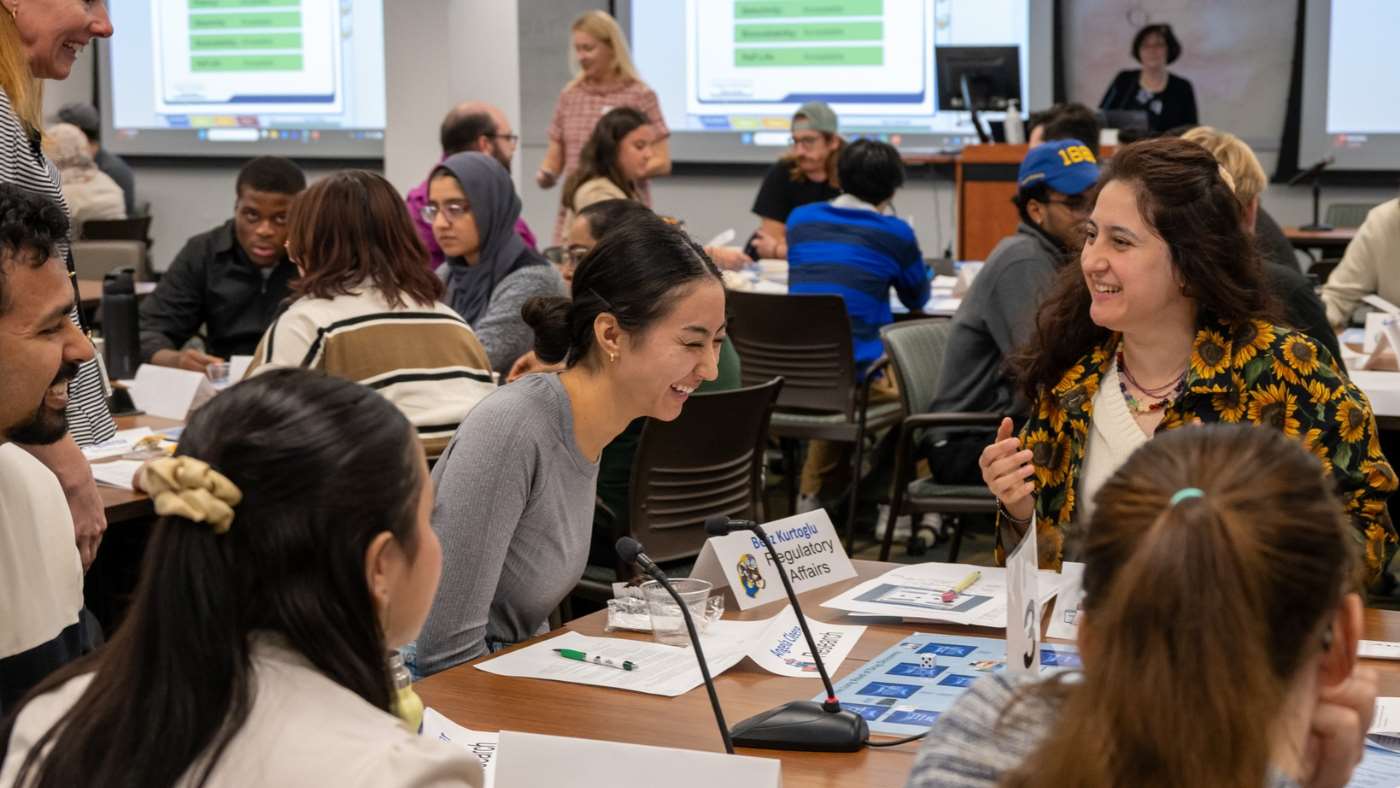
Medical College of Wisconsin students across all three Schools are benefiting from a new interprofessional education opportunity to learn about the full scope of the drug discovery process – from recognizing unmet medical needs, to performing clinical trials and managing challenges that arise from going to market.
Pfizer’s Drug Discovery & Development Workshop provides students with an overview of the scientific, regulatory and marketing paths, as well as the time, money and risk trade-offs to consider when developing and advancing an innovative drug project.
The workshop is formatted as a board game in which teams acting as a new pharmaceutical company compete to make the most impactful new medication. However, the outcomes of various steps in the process are left up to chance – an actual roll of the dice. JoAnn Trainer, PharmD, senior field medical director at Pfizer, explained the workshop is structured to intentionally incorporate failures.
“When it comes to bringing a drug from the clinical phase with human trials, the percentage of success is only about 11 percent,” said Dr. Trainer. “That means 89 percent of the time, you have drugs that just don’t make it – and this is after spending millions and millions of dollars in preclinical and early clinical phases. [The workshop] gives the participant a realistic view of what it takes to bring these drugs to market, because it’s not understood or appreciated.”
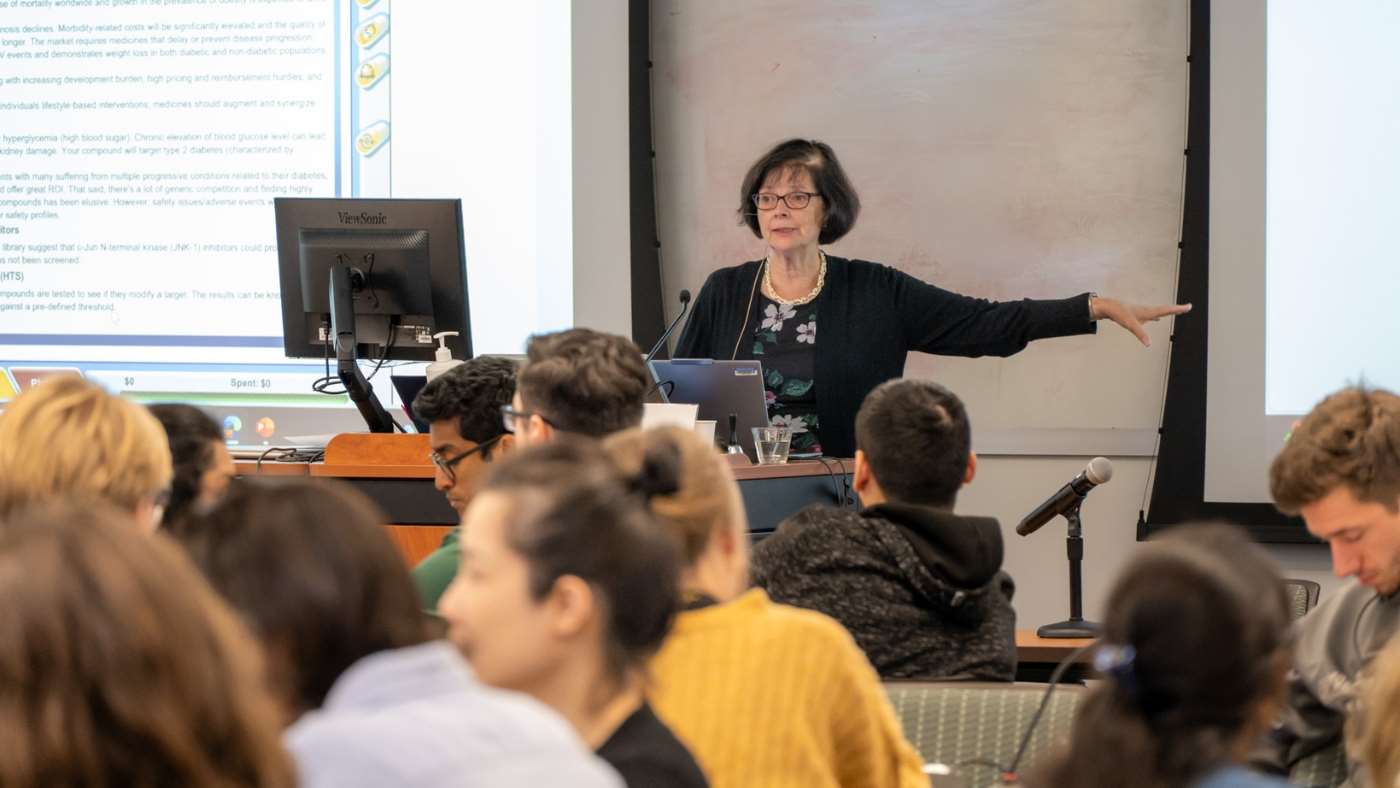
The length of time from the first idea about the unmet medical need to the clinical trials phase typically takes five to seven years; the timeline from concept to the drug’s approval can take between 13 to 15 years.
Members of Pfizer’s research, business development and medical affairs teams facilitate the program, delivering a broad range of expertise in the drug development process.
Participants include MCW medical, graduate and pharmacy students who are grouped into interprofessional teams and assigned roles (e.g. “market analyst” or “research scientist”). The activity is an opportunity for MCW students to learn from one another about their different areas of expertise.
“By working together through the scientific, regulatory, financial and clinical decision-making process, students gain a deeper appreciation for the collaboration, perseverance and innovation required to transform an unmet medical need into a potential therapeutic solution,” said Karen MacKinnon, BPharm, RPh, director of outreach and assistant professor at the MCW School of Pharmacy.
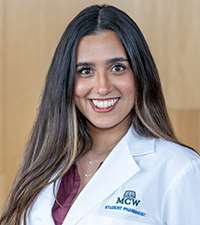 Saumya Shukla, 2028 PharmD candidate, valued how each profession approached the same challenge from a different perspective.
"By combining our clinical, scientific and patient-centered perspectives, we were able to develop a more thoughtful and comprehensive solution," explained Shukla.
She added that the workshop reinforced why pharmacists are crucial within the pharmaceutical industry – contributing to areas such as clinical development, medical affairs, regulatory affairs, pharmacovigilance, medication safety, commercialization and more.
"Pharmacists understand both the science behind medications and how those medications are ultimately used in patient care," she said. "Their training allows them to bridge the gap between researchers developing a therapy, healthcare professionals prescribing it and patients using it."
Shukla is president of MCW's student chapter of the Industry Pharmacists Organization, organizing programming for classmates to learn about various pharmaceutical industry career paths, in addition to providing opportunities for professional development and mentorship.
"The ability to connect scientific innovation with real-world patient needs is the main reason I'm interested in a career in the pharmaceutical industry as a pharmacist," said Shukla. "I want to contribute to the development and responsible use of therapies on a broader scale while continuing to advocate for patient safety and improved health outcomes."
Pfizer’s workshop goal, Dr. Trained described, is to broaden awareness that new drugs do not come about overnight. The extensive time required in the drug discovery and development process includes rigorous safety testing and regulatory oversight.
“We live in a society where we can get instantaneous information on our phones. So oftentimes, for the younger generation, learning that a process could take 12 years to reach phase two – only to fail – is an educational moment for them that these things don’t happen at the push of a button,” said Dr. Trainer.