
About Drug & Gene Delivery Lab Research

Topical Nanomedicine for Ocular Drug Delivery
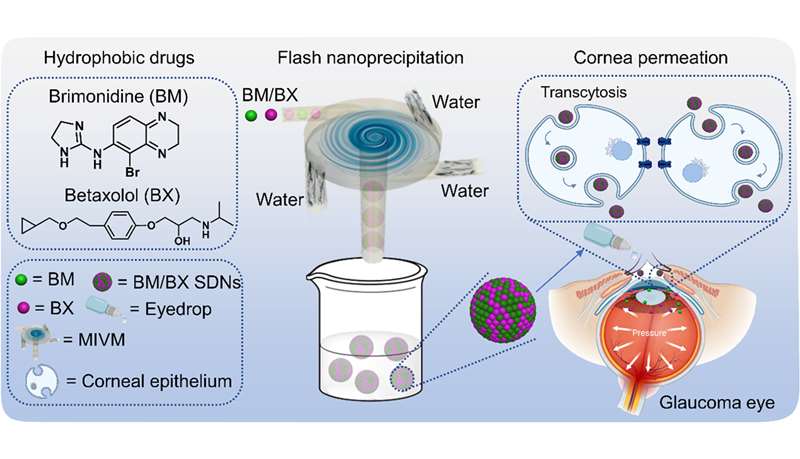 Glaucoma is commonly treated with eye drops that lower intraocular pressure, but conventional drops have important limitations. Most of the medicine is quickly washed away by tears, only a small amount reaches the target tissues inside the eye, and patients often need to use drops multiple times a day for many years. This can make long-term treatment difficult and may reduce the effectiveness of therapy. Our lab develops advanced topical drug delivery systems that help medicines stay on the eye longer, enter ocular tissues more efficiently, and provide sustained therapeutic effects. These systems include dendrimer-based nanoparticles, nanofiber mats, solid drug nanoparticles, hydrogels, and hybrid hydrogel–nanoparticle platforms. By improving how drugs are delivered through a simple eye drop, these technologies may reduce dosing frequency and provide more consistent intraocular pressure control. Our work shows that noninvasive topical nanomedicine can achieve prolonged glaucoma treatment effects that were once thought to require injections or implanted devices. Building on this foundation, we are also developing dual-action eye drop formulations that are designed to both lower intraocular pressure and protect retinal nerve cells from damage. This approach addresses glaucoma not only as a pressure-related disease, but also as a neurodegenerative condition that requires protection of vision over time.
Representative Publications
Multi-targeting and Theranostic Nanomedicine for Atherosclerosis
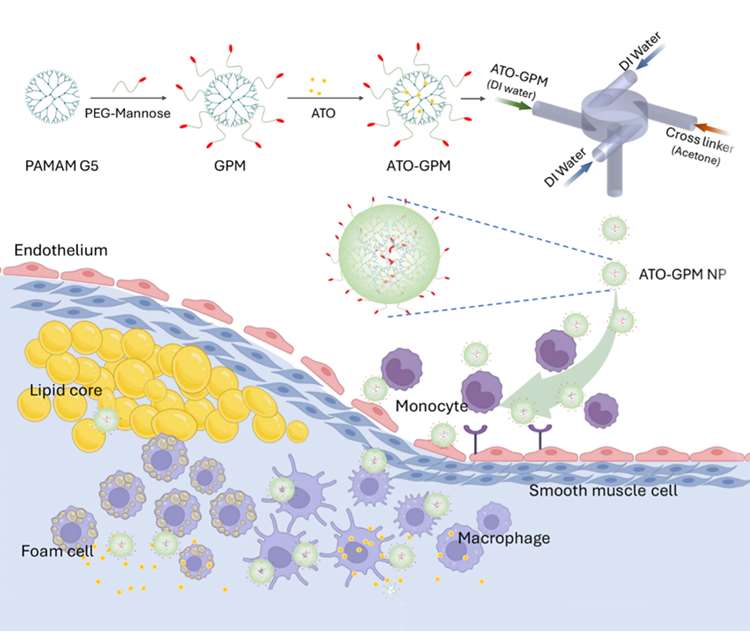 Atherosclerosis occurs when fatty plaques build up inside blood vessels. These plaques are complex and making them difficult to treat. Current therapies just focus on lowering the lipid and not focusing on the plaque. Our lab develops nanoparticle-based therapies that are designed to reach diseased blood vessels, enter plaques, and act on multiple cell types involved in atherosclerosis. These platforms can target both endothelial cells, which line the blood vessels, and macrophages, which are immune cells that contribute to plaque growth. By improving cholesterol handling inside plaques, these nanomedicines help reduce lipid buildup and support plaque regression in preclinical models.
 Dr. Yang’s research has helped establish dual-cell and dual-pathway treatment strategies for atherosclerosis. These approaches are designed to improve drug delivery into plaques, increase retention at the disease site, and directly influence the biological processes that drive plaque progression.
In addition to developing therapy, our lab also integrates imaging tools into these nanomedicine platforms. For example, MRI-active nanoparticles can help track where the treatment goes, how well it reaches plaques, and how plaques respond over time. This combined treatment-and-imaging approach, known as theranostics, allows us to move beyond drug delivery alone toward image-guided therapy and long-term monitoring of disease improvement.
The translational potential of this research is supported by a granted patent covering nanomedicine-based therapy for atherosclerosis.
Representative Publications
Cancer Drug Delivery
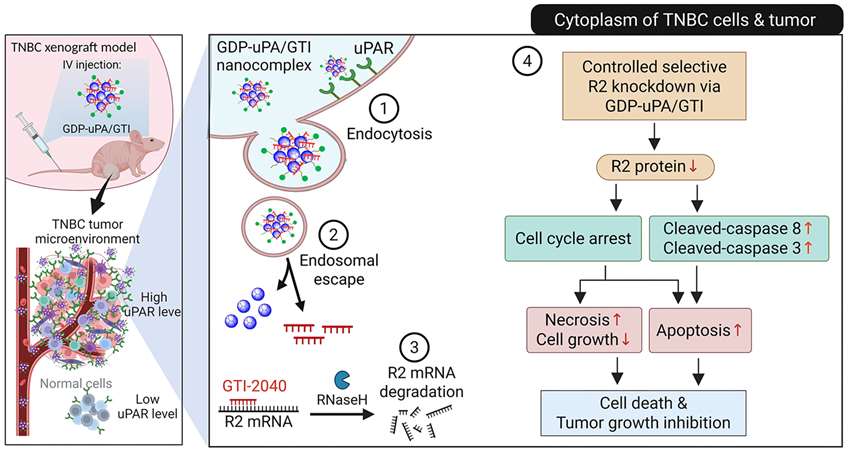
Cancer treatment often requires medicines to reach tumors while limiting damage to healthy tissues. However, many drugs have difficulty crossing biological barriers, staying inside tumors, or being released at the right place and time. This can reduce treatment effectiveness and increase side effects. Our lab designs advanced drug delivery systems that can carry different types of therapies, including small-molecule drugs, genes, nucleic acids, and combination treatments. These delivery systems include dendrimers, polymer-based carriers, dendrimer hydrogels, microgels, nanogels, and hybrid nano–gel platforms. Our cancer drug delivery research includes applications in head and neck cancer, breast cancer, brain cancer, and other organ-targeted diseases. We have developed strategies that help medicines remain at the tumor site, target specific disease markers, and improve treatment response. Examples include dual-targeted dendrimer gel nanoparticles for triple-negative breast cancer, dendrimer- and liposome-based gene and immunotherapy systems for head and neck cancer, and polymeric nanomedicines designed for local delivery in brain cancer.
These platforms are designed to improve tumor exposure to therapy and influence key cancer cell processes such as cell death, cell cycle control, and immune activation. Overall, our work aims to create smarter and more effective drug delivery technologies that can improve therapeutic outcomes while reducing unwanted side effects.
Representative Publications
- Highly Adaptable Dendrimer Gel Nanoparticles with Dual Targeting of uPAR and Ribonucleotide Reductase R2 for Better Retention and Improved Therapeutic Outcomes in Triple-Negative Breast Cancer
- Engineering nanostructured pure cancer cell membrane-derived vesicles as a novel therapeutic cancer vaccine