header-logo
Mother Child W Physician

Medical College of Wisconsin Pediatric Pulmonary Fellowship Program

Since 1994, the Pediatric Pulmonary (& Sleep Medicine) Division at the Medical College of Wisconsin has developed a nationally recognized pediatric pulmonary fellowship training program. We train the Pediatric pulmonologists of the future through excellence in patient care, research, and teaching. Our program combines broad clinical training and diverse research opportunities in a collegial work environment emphasizing both clinical and scholarly activity. Learn more about our division
MCW Pediatric Pulmonary fellows

A Message from Our Program Director

Each year I sit down to update this letter and look back over all the accomplishments of our fellows and graduates. I enjoy seeing how each one has individualized their clinical and academic pursuits into the pulmonologists they want to be. I look at unique Quality Improvement involving everything from tracheostomy and home ventilator programs to asthma, and cystic fibrosis and sleep. Research form basic science to all areas of clinical research in asthma, sickle cell lung disease, and sleep disordered breathing. They have become leaders in education, CF center directors, Sleep Center Directors and Division and Hospital administrative leaders. We have graduates pursuing further sleep fellowships. They have moved around the country and the world.

We strive to provide a rock-solid base of general pulmonary clinical and research training. Then challenge each fellow to individualize their training to find their own home within pulmonology. It means building new options that may only be used once, however the wide variety of paths in our field of pediatric pulmonology this encourages our fellows to explore is overwhelmingly rewarding. We're excited to see their paths, and proud of every one of our fellows and graduates.

Julie E. Noe, MD
Fellowship Director, Pediatric Pulmonary and Sleep Medicine
Associate Professor of Pediatrics

Meet Our Fellows

Two Medical College of Wisconsin Pediatric Pulmonary & Sleep Medicine Fellows discuss our program, our institutions, and living and training in Milwaukee with our Program Director.

As a Pediatric Pulmonary fellow you will...

  • Become immersed in the multiple roles of a pulmonologist including inpatient and outpatient consultations, directing an inpatient pulmonary team. These will traverse from ICU to general inpatient, emergency room, and outpatient clinics with involvement in transitions between settings.
  • Work in interdisciplinary teams including our tracheostomy and home ventilator team, Cystic Fibrosis team, BPD program, and sleep medicine center among others.
  • Become confident and proficient in flexible bronchoscopy.
  • Immerse in a pulmonary research topic during 20 months of dedicated research time to build a research focus as an area of personalized training.
  • Participate in a fellow driven general pulmonary continuity clinic building relationships with patient panel seen longitudinally across your three years of training.

About Our Institutions

Medical College of Wisconsin (MCW)

The Medical College of Wisconsin brings together the most inquisitive minds in science, medicine, education and community engagement to solve the toughest challenges in health and society today. Academic medicine is at the core, where scientists, physicians and students work hand-in-hand with the community to ask the questions no one else is and fuel the continuous cycle of knowledge that’s shaping the future of medicine.

Learn more about MCW

Children’s Wisconsin

Children’s Wisconsin is the region’s only independent health care system dedicated solely to the health and well-being of children. We offer a wide range of care and support for children of all ages. Our services include medical care, dental care, child and family counseling, foster care, adoption, social services, child advocacy and injury prevention.

Learn more about Children’s Wisconsin

About Our Fellowship

The Pediatric Pulmonary Fellowship program fulfills the requirements for training as stated by the American Board of Pediatrics and is accredited by the Accreditation Council for Graduate Medical Education (ACGME). Graduates of the three-year program will be eligible to take the American Board of Pediatrics subspecialty examination in Pulmonology upon completion of the fellowship.
all
A Message from Our Section Chief

Greetings!

Welcome to our fellowship page here at the Medical College of Wisconsin and Children’s Wisconsin, in Milwaukee Wisconsin. We are pleased that you are interested to learn more about our fellowship in pediatric pulmonary medicine. Our program is a national leader in the care of children and adolescents with pulmonary and sleep needs. We are proud to be consistently ranked among the top 20 pediatric pulmonary medicine programs by US News and World Report.

Our pediatric pulmonologists are trained in all aspects of pulmonary care. We provide comprehensive care to children with common to complex conditions, including asthma, cystic fibrosis, recurrent pneumonia, chronic cough, infant apnea and bronchopulmonary dysplasia, and congenital and acquired airway problems. Our Cystic Fibrosis Center is accredited by the Cystic Fibrosis Foundation and we are an approved site in the CF Foundation’s Therapeutic Development Network for CF research. Our Tracheostomy/Home Ventilator program utilizes a multidisciplinary care approach with collaboration from other subspecialty areas including pediatric otolaryngology, critical care and neonatology.

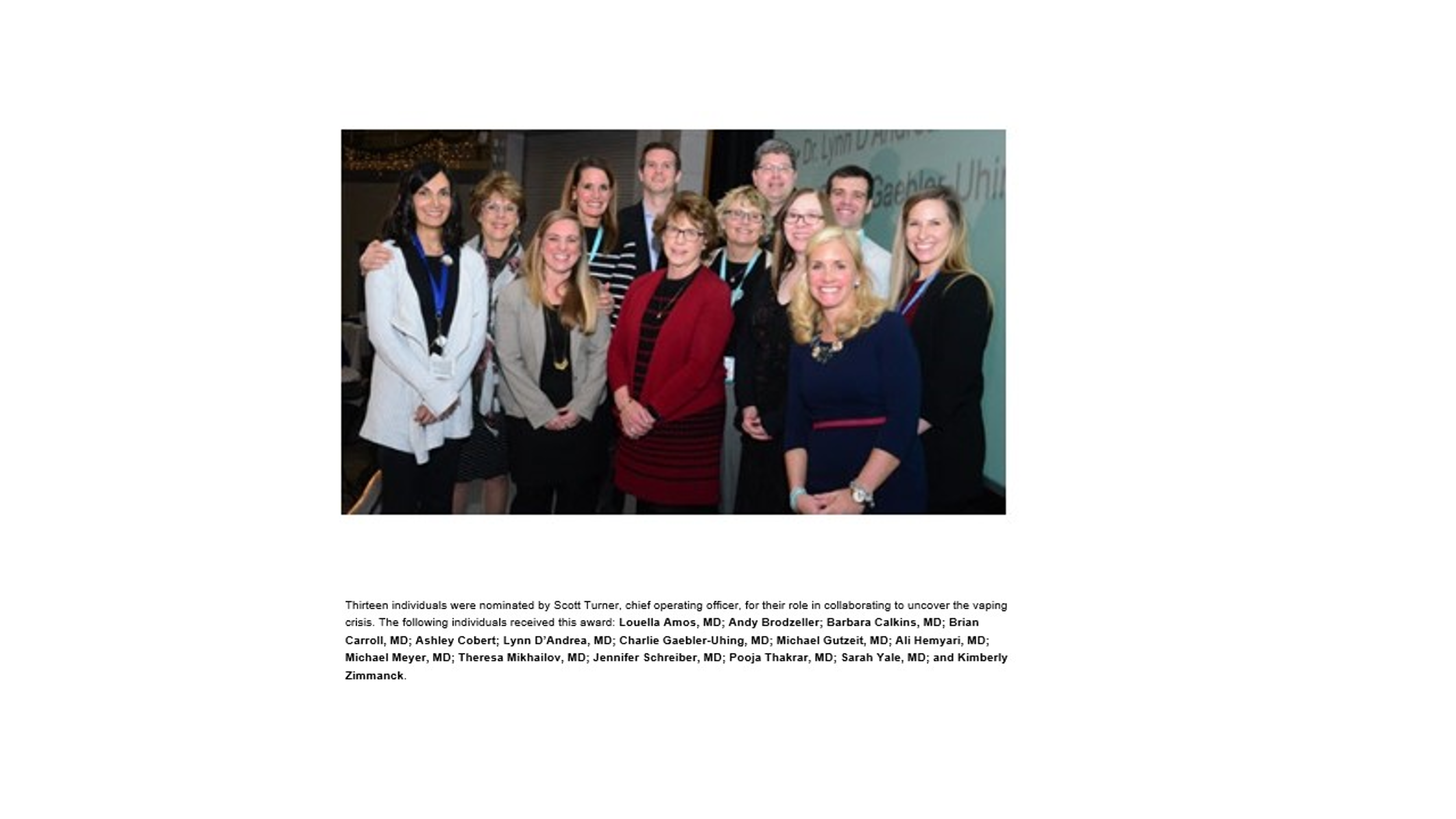
Most recently our group was in the news related to the topic of vaping and the development of EVALI. Our pulmonologists were the first to recognize and raise the alarm about EVALI. Faculty have participated in numerous lectures and interviews at the national level (Good Morning America, New York magazine, Wall Street Journal, Big Vape by a Time magazine reporter). In addition, faculty have testified at the state government level regarding legislation around vaping products as pertains to adolescents.

Our pediatric sleep specialists provide care for children and adolescents with both respiratory-related sleep disorders, as well as non-respiratory related sleep problems. Our pediatric sleep center is the only sleep center in Wisconsin dedicated solely to the care of children. The center is accredited by the American Academy of Sleep Medicine. Faculty participate in the sleep medicine fellowship through the Medical College of Wisconsin.

Again, we welcome you the Department of Pediatrics, Division of Pulmonary and Sleep Medicine. Should you have questions regarding your visit with us, please feel free to contact Julie Noe, MD, Director, Pediatric Pulmonary Fellowship Program.

Sincerely,

Lynn A. D’Andrea, MD
Professor, Department of Pediatrics
Chief, Division of Pulmonary and Sleep Medicine

Program Overview

During our three-year training program, time is distributed among both clinical and research opportunities to ensure that fellow’s develop expertise in the field of pediatric pulmonary. The program provides approximately 5 months in the first year and 3 months in each of the second and third years for clinical work. Approximately 17 months of protected time dedicated to hypothesis driven research.

Program Goals

  • To adequately educate and provide the necessary background for a trainee to diagnose and manage pediatric respiratory disorders.
  • To prepare the trainee to conduct research in the area of pediatric respiratory diseases.
  • To enable the trainee to become a competent teacher of pediatric pulmonary physiology and pediatric respiratory disease.
Progression in Training

1st year fellows

  • Will learn the role of a consultant
  • Will begin to staff patients with residents and students with direct faculty supervision
  • Will be involved in telehealth with supervision in video visits and participate in sick and urgent phone call medicine and triage with faculty supervision.
  • Introduction to bronchoscopy and assist and begin to perform bronchoscopies
  • Identify a research topic and mentor

2nd and 3rd year fellows

  • Will work in a consultative role with graduated independence
  • Increased teaching opportunities with the medical team in addition to students and residents
  • Expand their outpatient practice with graduated independence in fellows’ clinic and with sick/urgent telephone calls
  • Increased comfort with telehealth with graduated independence
  • Continue to perform bronchoscopies with increasing independence and exposure to more complicated cases
  • Further development of research goals including local and national presentations and manuscript writing.
  • Determine sub-specialty interests in pulmonary medicine and build an area of expertise
Clinical Training

Clinical training in the Pediatric Pulmonary Fellowship centers on a multidisciplinary approach to the care of patients with respiratory diseases at Children’s Wisconsin. Children’s is an award-winning health care system dedicated solely to the health and well-being of children. Multidisciplinary teams of physicians, nurses, and many other health care professionals specializing in pediatrics are available to meet the full range of patient-care needs.

Subspecialty Clinics
The Pulmonology division is involved in various multidisciplinary clinics that provide care to patients with disorders requiring a multidisciplinary approach. The following clinics are currently active and will be included to enhance the fellows’ outpatient Pulmonology experience:

Flexible Bronchoscopy and Diagnostic Procedures
Fellows in the program are expected to develop procedural skills which include but are not limited to: flexible bronchoscopy and bronchoalveolar lavage, ciliary brush biopsies and newer cryotherapy procedures. Each fellow will participate in a minimum of 100 flexible bronchoscopies during their fellowship and will have a mix of inpatient and outpatient indications.

Fellows will become proficient in the interpretation of pulmonary function tests (PFTs), including methacholine challenges, exercise spirometry, 6-minute walk tests, DLCO, and lung volumes. In addition, they will interpret overnight pulse oximetry studies and learn their indications and limitations. The fellowship also allows fellows to become familiar with interpreting overnight polysomnographic studies during their time with sleep medicine.

Continuity Clinic
Continuity clinic focuses on general pulmonary one-half day per week completed with a faculty mentor. During the second and third year, fellows have the option to build additional sub-specialty time into their clinic schedule, replacing one week per month of general pulmonary continuity clinic with a clinic in areas such as cystic fibrosis, asthma, muscular dystrophy, etc.

Clinical Rotations
During the 3-year training program, time is distributed to ensure that fellows develop clinical expertise. Clinical time will be split between outpatient clinics, inpatient service, procedures, and the corresponding service-related conferences.

Year 1

The focus of the first year of the fellowship is to develop clinical skills and abilities to provide optimal patient care for children with respiratory diseases. The program provides approximately 10 months of clinical experience, including both inpatient and outpatient care during the first year. During their inpatient rotations, the fellow will be on first call from 7:30 a.m.-4:30 p.m. and will take one weekend per month and one night per week on the assigned inpatient service. During the first year, the fellow will devote their efforts to the following rotations:

Inpatient Pulmonary Service
The fellow will spend 6 months on the pulmonary service during the first year. At the end of the first year the fellow will gain diverse experiences with children with respiratory diseases and develop the clinical skills needed to function as a clinician.

Responsibilities include:

  • Graduated responsibility for the care of pulmonary inpatients with increasing responsibility as training progresses.
  • Graduated responsibility for completing pulmonary inpatient consultations on general floors and the PICU. The fellow will be responsible for the initial contact and evaluation, staffing with a faculty member, and appropriate documentation and communication with the primary team.
  • Graduated responsibility for resident education on the pulmonary inpatient team for residents and medical students.
  • Graduated responsibility in the care of inpatients with tracheostomies and home ventilators.

Cystic Fibrosis (CF)
The fellow will spend 1 dedicated month participating in our Cystic Fibrosis clinics.

Responsibilities include:

  • Attend weekly CF team meetings.
  • Participating in CF multidisciplinary clinics.
  • Independent study to gain familiarity with landmark CF research trials and scientific rationale behind current CF therapies.

Objectives include:

  • Gain a thorough understanding of current CF practice guidelines.
  • Gain an appreciation of the team approach to CF care, and available team members and tools such as Port CF.
  • Gain an appreciation of the role of multi-center trials in CF research and advancement of care.
  • Develop knowledge to identify and manage CF nutritional needs.
  • Gain familiarity with standard medications and airway clearance techniques used in CF care.
  • Master the criteria for CF admission for pulmonary exacerbation.

Tracheostomy/Home Ventilator (T/V)
The fellow will spend 1 dedicated month with the multidisciplinary T/V team to gain familiarity with the team members and their roles including APNs, social work, respiratory therapists, discharge planning, and otolaryngology team members. The fellow will attend outpatient T/V clinics, team meetings, family teaching sessions, and T/V inpatient rounds.

Objectives include:

  • Increasing comfort and familiarity with the care of children with tracheostomies and home ventilators.
  • Gain familiarity with the T/V multidisciplinary team.
  • Participate in family caregiver training in T/V skills.
  • Participate in T/V simulations for emergency situations involving T/V care.
  • Gain expertise in telephone management for outpatient T/V patients.

Sleep Medicine
The fellow will spend 1 month attending sleep clinics during the first year.

During this rotation the fellow will:

  • Attend sleep and non-invasive ventilation clinics.
  • Attend the Sleep Conference weekly.
  • Gain an appreciation for polysomnography and the indications for testing.
  • Learn the indications for sleep studies and additional sleep related testing.

Research
The fellow will take one month during the first year to identify a research mentor and project with the guidance of the Scholarship Oversight Committee. This month will also give exposure to potential basic and clinical research projects that are available within the Pulmonary Section, the Department of Pediatrics, and throughout the Medical College of Wisconsin.

Objectives:

  • Identify a research interest area and select a mentor.
  • Develop a research question and build a research plan.
  • Present a poster at the MCW Pediatric Fellows’ poster session in April with an overview of research plan.

Outpatient Clinics
Fellows will spend a dedicated month near the beginning of their first year rotating through all the subspecialty and general pulmonary clinics to start gaining exposure to the various conditions we treat and help them begin to think about possible career interests that can help further personalize their training going forward.

Elective Month
Fellows are given an elective month in the second half of their first year so they may begin to more intentionally explore areas that they may have further interest in. This can be a mix of clinics, procedures, and research experiences, guided by the fellow’s interests with the assistance of our program leadership in crafting that month.

Years 2 and 3 

The second and third years of fellowship training provide ample protected time to pursue research endeavors while fostering improved clinical, administrative, and teaching skills.

Inpatient Pulmonary Service
As their research projects begin to take shape, fellows will spend fewer months on service, but with increased expectation of responsibility. They will spend 3 months on inpatient service for each of their last two years.

Research 
The fellow will spend 7 months each year during their second and third year implementing their research project. This will involve building new skill sets within the scope of their project, including specific knowledge within the field of study and more general skills such as IRB submission, grant writing, abstract writing, and manuscript preparation.

Objectives:

  • Present at local, regional, and national meetings beginning in the second year.
  • A peer-review publication, an in-depth manuscript, a thesis or dissertation written in connection with the pursuit of an advanced degree, an extramural grant application that has either been accepted or favorably reviewed.
  • Building a skill set and academic focus/research area that can be maintained throughout the fellow’s career.

Sleep Medicine
The fellow will spend one additional month attending sleep clinics during the second or third year.

Elective Months
Similar to the experience their first year, fellows are given an additional 1-2 months per year for ongoing elective experiences to help explore their interests and receive a customized education.

Didactic Education

In addition to clinical and research rotations, there are a variety of conferences to enhance the fellows’ learning opportunities. Fellows are strongly encouraged to attend Pediatric Grand Rounds, the pediatric residency "Professors’ Rounds," the Department of Pediatrics "Research in Progress" and any other presentations or conferences they feel would benefit their education during the fellowship.

Monday Fellows’ Conference
A weekly meeting with either a fellow-led case conference or faculty lecture on pertinent ABP board topics. We have also invited lecturers from other divisions or institutions who present during these times.

Topics are prepared from the American Board of Pediatrics Pulmonology Content Outline and senior fellows are tasked with helping organize the schedule of presentations between faculty and other invited speakers. Typically, all topics will be presented within an 18-month cycle, ensuring we cover the appropriate content for all fellows during their 3-year fellowship.

Additional scheduled presentations include:

  • Journal Club: Fellows present a variety of journal articles on interesting Pulmonary related publications. Faculty and staff from the section attend.
  • Bronchoscopy Conference: A quarterly conference to discuss interesting cases/films with the Radiology/Pathology department. Fellows will bookmark interesting cases seen in the prior months, then invite faculty to give feedback on the relevant case and provide further teaching/research on the findings and their clinical correlation.
  • ATS Pediatric Pulmonology and Sleep Case Conference Series: A monthly presentation from different fellowship programs with interesting and unusual cases from around the country. Our fellows will be expected to present their own cases once a year for this conference.
  • Physiology Lectures: Fellows participate in a monthly Physiology Flipped classroom session using West’s Pulmonary Physiology and Pathophysiology and Nunn’s Pulmonary Physiology textbooks. Sessions are moderated by the faculty.

FACTS (Fellow Advancement through Career Development, Training and Scholarship)
The FACTS Curriculum is overseen by the Department of Pediatrics and reviews basic concepts including development of research design, abstract and manuscript preparation, basic biostatistics, quality improvement, professionalism, communication, teaching, administration and leadership, and career counseling, including the balance of work and family life. This core curriculum is designed to address both the academic requirements mandated by the American Council for Graduate Medical Education (ACGME) and the career and personal development goals expressed by our fellows.

The goal of FACTS is to provide an excellent educational experience to all fellows in the Department of Pediatrics through case-based, hands-on curriculum modules based on the needs of each year of fellowship (F1, F2, and F3)

Teaching Opportunities
Fellows are expected to supervise and teach pediatric residents and medical students in the case of hospitalized pediatric pulmonary patients. Several teaching and speaking opportunities are available to create a well-rounded learning portfolio. As part of their fellowship training, fellows will be provided with instruction in clinical teaching skills. Fellows will supervise 2-4 residents each month and a variable number of medical students. Fellows will assign tasks and review consultation notes before presenting to the attending faculty. In the second and third years of the fellowship, fellows will present monthly on a variety of core lecture topics to rotating residents. They will develop necessary communication and teaching skills.

Research Training

Years 2 and 3 of the Pediatric Pulmonary Fellowship are primarily dedicated to hypothesis-driven research with decreased clinical responsibilities from the first year of training. Two distinct research pathways are offered, laboratory-based research and clinical research. Additional pathways are available if recognized by the ABP to qualify for sitting for pulmonary boards. A major goal of our training program is to provide fellows a focused environment in which they can develop research interests which will be integrated into their future careers. The Scholarship Oversight Committee (SOC) will guide the fellow along with their research mentor, meeting biannually during the 3 years of the fellowship training.

With a wide variety of research options available, fellows have the opportunity to participate in an ongoing research project or establish projects of their own under a faculty mentor. These mentors may be pulmonary faculty or faculty in other divisions and departments within MCW. Regardless of the research pathway the fellow selects, the ultimate goals include national presentations and publishing a manuscript in a peer-reviewed journal.

Scholarship Oversight Committee (SOC) Guidelines

To provide the Pediatric Pulmonary Fellows with guidance, leadership, and support throughout their fellowship.

All fellows will be expected to engage in projects in which they develop hypotheses or in projects of substantive scholarly exploration and analysis that require critical thinking. Areas in which scholarly activity may be pursued include, but are not limited to: basic, clinical, or translational biomedicine; health services; quality improvement; bioethics; education; and public policy. Fellows must gather and analyze data, derive and defend conclusions, place conclusions in the context of what is known or not known about a specific area of inquiry, and present their work in oral and written form.

A Scholarship Oversight Committee in conjunction with the trainee, the mentor, and the program director will determine whether a specific activity is appropriate to meet the ABP guidelines for scholarly activities. These activities require active participation by the fellow and must be mentored. The mentor(s) will be responsible for providing the ongoing feedback essential to the trainee’s development.

Involvement in scholarly activities must result in the generation of a specific written “work product.” Examples include, but are not limited to:

  • A peer-reviewed publication in which a fellow played a substantial role
  • An in-depth manuscript describing a completed project
  • A thesis or dissertation written in connection with the pursuit of an advanced degree
  • An extramural grant application that has either been accepted or favorably reviewed
  • A progress report for projects of exceptional complexity, such as a multi-year clinical trial

Review of scholarly activity and the written work product will occur at the local level. Each fellow must have a Scholarship Oversight Committee. The Scholarship Oversight Committee should consist of three or more individuals, at least one of whom is based outside the subspecialty discipline; the fellowship program director may serve as a trainee’s mentor and participate in the activities of the oversight committee, but should not be a standing (i.e., voting) member. This committee will:

  • Determine whether a specific activity is appropriate to meet the ABP guidelines for scholarly activity
  • Determine a course of preparation beyond the core fellowship curriculum to ensure successful completion of the project
  • Evaluate the fellow's progress as related to scholarly activity
  • Meet with the fellow early in the training period and regularly thereafter
  • Require the fellow to present/defend the project related to his/her scholarly activity
Portfolio & CV

Each fellow will develop and continually update a personal portfolio and a CV. The portfolio includes information not always found in a CV, such as meetings attended, summaries and evaluations of talks given, a log of patients evaluated and procedures completed, and other information that demonstrates continuous academic involvement and achievement. These materials will also be reviewed during the fellow’s semi-annual review with the fellowship program director, and with each fellow’s clinical mentor on an ongoing basis.

A Day in the Life of a Pediatric Pulmonary Fellow

Fellows are provided a semi-private workspace within the Pediatric Pulmonary Division. The pulmonary office is located in the clinics building and is directly connected to the hospital and pulmonary clinic in the Yabuki Tower via a skywalk. Free parking is available adjacent to the clinics building and also connected by a skywalk. Several cafeterias, coffee carts and other food services are available throughout the medical complex.

Clinical Duties
Outpatient:
While rotating in outpatient clinics the days are usually 8 a.m.-4 p.m., depending on the clinic. We have general pulmonary clinics as well as several multidisciplinary clinics. Going into their 2nd and 3rd years, fellows attend a monthly trach/vent clinic on a regular basis in addition to their continuity clinics. For primary fellows clinic patients, sick calls and questions that families may have between visits will be routed first to the fellow and responses and plans can then be discussed with the attending as needed.

Inpatient:
The day usually starts around 7:30 a.m. and ends around 4:30 p.m. depending on the number of consults that day. The inpatient service is divided into two teams. Team A covers PICU consults. Team B covers the primary pulmonary service, acute care floor and NICU consults. There are usually about 2-6 patients on the primary pulmonary service, and we round each morning with the inpatient resident team on those patients from around 8:30-9:30 a.m. Each of our inpatient teams averages about 15 patients that we follow on the list with about 1-2 new consults per day.

Taking Call
The fellow will be first call one night per week throughout most of the year. Night call is from 4 p.m.-8 a.m. Fellows will receive calls from the patient’s families, ED, inpatient teams, and the PICU. Calls per night vary in number, most commonly ranging from 1-6. Most calls can be handled from home. On a rare occasion the fellow may have to come back into the hospital to perform an emergent flexible bronchoscopy with the on-call attending.

The fellow will also work 1 weekend each month on call. The weekend calls start at 4 p.m. on Friday and go through Monday morning at 8 a.m. The fellow does receive a call break from Saturday at 4 p.m. through Sunday at 8 a.m., where calls will be sent directly to the attending as the fellow is considered off during this time. For weekend calls, the fellow and attending will usually come into the hospital around 7:30 a.m. on Saturday and Sunday. At that time, the fellow will round with the attending on any pulmonary service patients and handle any consults and/or consult follow ups. Usually, the fellow will be able to leave the hospital around 1 p.m. depending on the amount of the work for that day and the rest of the day can be managed from home.

Fellows will be assigned to work at least one major holiday (Christmas, Thanksgiving or New Year’s) and one minor holiday (Fourth of July, Labor Day and Memorial Day) each academic year. Otherwise, if not on call and not on holiday coverage, the fellow has their weekends to do as they please!

Bronchoscopy
Fellows are encouraged to participate in as many bronchoscopies as possible. While on service, fellows are expected to be the primary performer of the procedure for any patients they are following, whether in the operating room or at the bedside in the ICUs. Fellows may schedule outpatient bronchoscopies for patients they follow in continuity clinic and also are invited to join attendings who have other patients scheduled for procedures as their schedule allows. We expect our fellows to complete over 100 procedures by the end of their training.

Scholarly Activities
When on research months the day usually starts around 8 a.m. and finishes around 4 p.m. Fellows are expected to complete a research project and a quality improvement initiative during their training. Fellows will meet with the program direction during the first year of fellowship to help determine a research project focus. They are encouraged to attend and/or present at local and national conferences such as the American Thoracic Society, CHEST and North American Cystic Fibrosis Conference. There is also an annual Medical College of Wisconsin research day that gives fellows a chance to present their work. We also encourage submission of interesting case reports or case series for the fellows to present at local and national conferences.

Fellows are also encouraged to participate in teaching residents and medical students throughout their rotations with our division. This can range from invited talks to present on a topic, quick clinical pearls on patients that are being seen by the team, or explaining and demonstrating flexible bronchoscopy maneuvers.

Application Process & Visa Information

Our 3-year fellowship program is ACGME accredited and begins on July 1 each year. We accept one fellow each year through the National Resident Matching Program (NRMP). Applicants must have completed a US-accredited residency program. Applications from prospective applicants are accepted from July through October via the Electronic Residency Application Service (ERAS). We will access your application and contact you to make interview arrangements.

Complete applications should include the following:

  • ERAS application form
  • At least 3 letters of reference including Program Director letter
  • Medical Student Performance Evaluation/Dean's Letter
  • Curriculum Vitae
  • Personal statement
  • MD Applicants: USMLE scores - Steps 1, 2, and 3 or
  • DO Applicants: COMLEX scores – Levels 1, 2 and 3
  • ECFMG certificate for foreign medical school graduates (see visa information below)

Our program currently considers the following visas:

  • Permanent Resident Visa
  • Visitor Exchange Visa sponsored by ECFMG (J-1)
  • Temporary (Nonimmigrant) Visa, employer-sponsored (H-1B)

View MCWAH visa information

Apply via ERAS

Benefits, Conditions, and Terms of Employment

Fellows are employed by the Medical College of Wisconsin Affiliated Hospitals (MCWAH). View their website for information regarding vacations, leaves, insurance, stipends and professional liability.

MCWAH benefits, conditions, and terms of employment

FACTS (Fellow Advancement through Career Development, Training, and Scholarship) Program

As a fellow, you will participate in the FACTS Program and embark on a journey that not only enhances your professional skills but also fosters meaningful connections with peers across various pediatric subspecialties. FACTS is a comprehensive curriculum designed to enhance your education through career development, scholarly activities, and personalized learning experiences. FACTS offers centralized education on core topics relevant to all pediatric subspecialties, promoting collaboration and knowledge sharing among fellows. The curriculum emphasizes individualized education by providing multiple offerings in certain time slots, allowing you to tailor your learning to your specific interests and career goals. Through shared learning sessions and collaborative projects, you'll build lasting relationships that support both your personal and professional growth, preparing you to excel as a well-rounded pediatric subspecialist.

Learn more about our curriculum

Fellow Awards & Successes

Juan Ruiz, MD

  • 2009 American Thoracic Society Internal Conference, Travel Scholarship Recipient
  • 2009 Children’s Hospital of Wisconsin, Outstanding Teacher Among the Pediatric Fellows

Louella Amos, MD

  • 2010 MCWAH Research & Quality Awards: “Treatment and Outcomes of Pediatric Restless Leg Syndrome (RLS)”

Julie Baughn, MD

  • 2010 Medical College of Wisconsin, 4th Annual Fellows' Research Poster Session, Honorable Mention Award Recipient: “Genetic Variation in the CFTR Gene in Children with Community-Acquired Pneumonia”
  • 2011 Abstract Excellence Award, American Thoracic Society, Respiratory Structure and Function Assembly: “Genetic Variation in The Cystic Fibrosis Transmembrane Conductance Regulator Gene (CFTR) is Associated with the Need for Mechanical Ventilation in Pediatric Patients with Community Acquired Pneumonia”

Nisreen Rumman, MD

  • 2010 Best Abstract by a Trainee at the 34th Annual Midwest Pediatric Cardiology Society Scientific Session

Lauren Camarda, MD

  • 2012 Fellow in Training Abstract Award, American Academy of Allergy Asthma and Immunology: “Impact of the Intestinal Microbiome on Severe Paramyxoviral Respiratory Infection”

Nick Antos, MD

  • 2013 Medical College of Wisconsin Fellow Research Day: “Drawing a Cystic fibrosis (CF) Road Map: Improving CF Inpatient Care with an Admission Plan”

Ahsan Bashir, MD

  • 2018 MCWAH Research & Quality Awards: "Polysomnography Provides Useful Clinical Information in the Liberation from Respiratory Technology"

Santiago Encalada, MD

  • 2015 American Thoracic Society (ATS), Minority Trainee Development Scholarship (MTDS)

Brian Carroll, MD

  • 2018 NACFC Pediatric Fellows Session
  • 2019 MCW DOP Fellow Research Day Finalist
  • 2020 MCWAH Research and Quality Award: “Impaired Lung Function Following E-Cigarette or Vaping Product Use Associated Lung Injury (EVALI) in the First Cohort of Hospitalized Adolescents”

Sara Dawson, MD

  • 2019 American Thoracic Abstract Scholarship: “High pCO2 Levels at 36 Weeks is Associated with Longer Duration of Home Oxygen in Infants with BPD”
  • 2019 MCWAH Research and Quality Award: “High pCO2 Levels at 36 Weeks is Associated with Longer Duration of Home Oxygen in Infants with BPD”
  • 2019 NACFC Pediatric Fellows Session
  • 2020 American Thoracic Society Abstract Scholarship: Weaning of Diuretics in Preterm Infants with BPD does not Increase Duration of Supplemental Oxygen”
Living & Learning in Milwaukee

Milwaukee is one of the Midwest’s best kept secrets – a vibrant, welcoming city that offers big city culture with an unmatched quality of life. Nestled along Lake Michigan and just 90 minutes north of Chicago, Milwaukee blends diverse neighborhoods, a thriving food scene, lakefront trails, and a nationally known festival culture into a place that’s easy to live in and easy to love.

Our residents and fellows consistently highlight Milwaukee’s affordability, short commutes, strong sense of community, and access to outdoor spaces, restaurants, coffee shops, and festivals year round. From Summerfest and neighborhood farmers markets to beer gardens, bike trails, and the lakefront, there’s always something to explore – and time to enjoy it.

Explore Milwaukee through the eyes of our trainees

Our Faculty

The Pulmonary (& Sleep Medicine) Division is comprised of clinical faculty members and advanced practice nurses who provide treatment for infants, children, teens, and young adults with respiratory diseases.

Meet our Faculty

Our Alumni

Kwabena Osmon, MD
Pediatric Pulmonary Fellow 2023-2026

Jesse White, MD
Pediatric Pulmonary Fellow 2023-2026

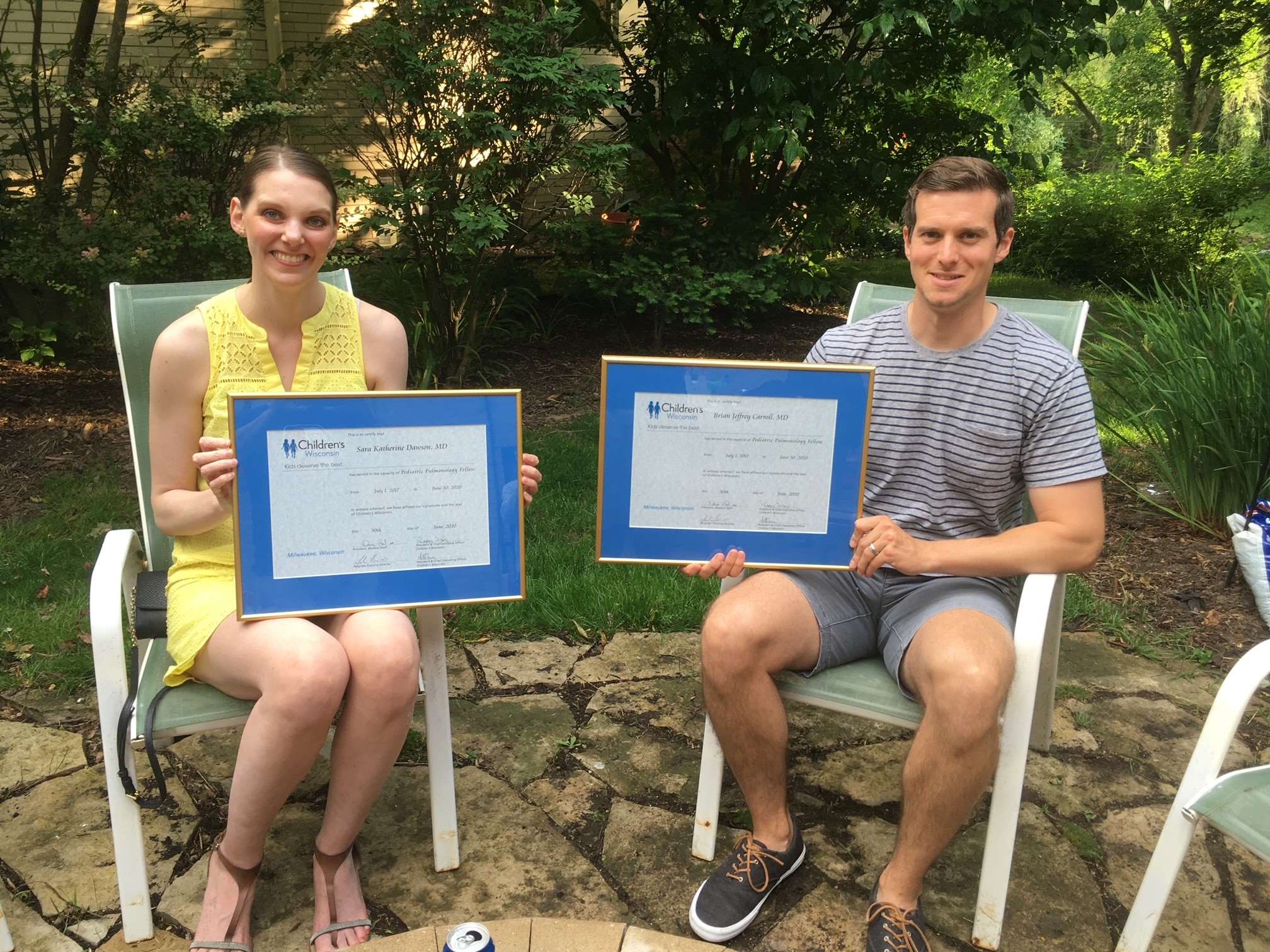
Brian Carroll, MD
Provider – Children's Respiratory & Critical Care Specialists, P.A.
Pediatric Pulmonary Fellow 2017-2020

Sara K. Dawson, MD
Staff Physician – Pulmonology, Children's Wisconsin
Assistant Professor – Department of Pediatric Pulmonary and Sleep Medicine, Medical College of Wisconsin
Pediatric Pulmonary Fellow 2017-2020

Meet Our Fellows

headshot

Maciej Miaskowski, MD

Pediatric Pulmonology Fellow, 2024-2027

headshot

Alexandra Kalinowski, MD

Pediatric Pulmonology Fellow, 2025-2028

Our Team

headshot

Julie E. Noe, MD

Associate Professor; Director, Pediatric Pulmonology Fellowship Program

headshot

Christopher Mertens, MD

Assistant Professor; Associate Director, Pediatric Pulmonology Fellowship Program

headshot

Giana Bultman, MFA

Education Program Coordinator II

Contact Us

Thank you for your interest in our program. We look forward to connecting with you!

Department of Pediatrics Pulmonary & Sleep Medicine
Children's Wisconsin
9000 W. Wisconsin Ave. MS# B620
Milwaukee, WI 53226


Julie Noe, MD
Fellowship Director
jenoe@mcw.edu


Giana Bultman, MFA
Fellowship Coordinator
gbultman@mcw.edu
(414) 337-7048