Collaboration Helps Stroke Survivors Regain Use of Muscles
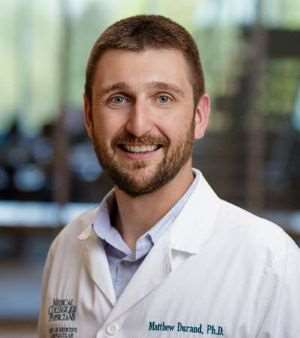
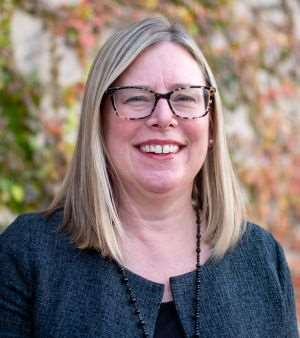
Matt Durand, PhD ’10, associate professor of anesthesiology at the Medical College of Wisconsin (MCW), met his longtime collaborator Allison Hyngstrom, PT, PhD, professor and chair of physical therapy at Marquette University, in 2011 as part of the Clinical and Translational Science Institute’s (CTSI) Clinical Research Scholars Program.
During one of their training sessions, Dr. Hyngstrom presented her ideas on why the nervous system might not be activating muscles correctly after stroke.
She understood that regaining movement after a stroke was much more complex than just rewiring the brain. Before entering academia, she had worked as a physical therapist at what is now the Shirley Ryan AbilityLab in Chicago. While leading a walking class for stroke survivors, she noticed that many participants wanted to keep going but said that their muscles “weren’t listening” to them. She wanted to understand why.
At the time, Dr. Durand was a postdoctoral scholar in the Department of Medicine at MCW studying how exercise affects blood vessels, and he had questions of his own. “But what about the vascular system?” he asked her. Could blood flow changes after the stroke help explain this fatigue? No one, it seemed, had studied this.
Dr. Hyngstrom was intrigued. “I was so focused on the brain, but I realized Matt was onto something,” she says. “That really sparked our partnership.”
Fourteen years later, they’ve amassed a portfolio of research showing just how blood flow affects movement in stroke survivors. They’ve also tested an intervention that could increase blood flow to muscles, allowing stroke survivors to gain muscle strength and move for longer periods of time. A new five-year R01 grant from the National Institutes of Health will dive deeper into the mechanisms behind the intervention.
“If we could help people walk a few feet further or be able to go to the grocery store by themselves, that's a real advantage,” Dr. Hyngstrom says.
An Affordable, Easy Way to Improve Blood Flow to Limbs
Physically recovering from a stroke involves rewiring and strengthening a complex network of muscle function, blood flow, and neural connections.
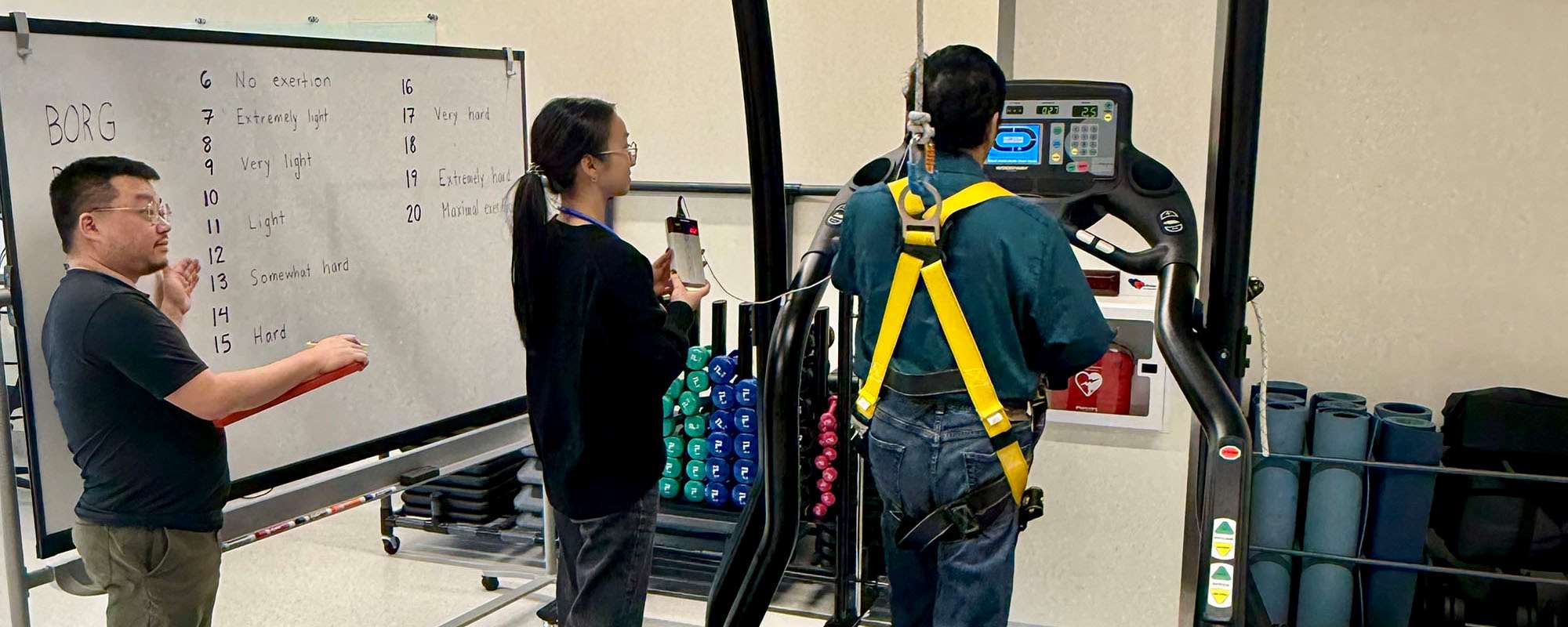
To better understand this system, Drs. Durand and Hyngstrom led a study where stroke survivors contracted their muscles as their research team measured blood flow. They found what they had suspected: blood vessels did not dilate as much during exercise in people who’d had a stroke.
“That was a great observation,” Dr. Durand says. “But what is really important is, what can we do to improve that?"
The team turned to ischemic conditioning, an intervention that uses a blood pressure cuff to occlude – or cut off – blood flow to a limb for a few minutes. After occlusion, blood flow is allowed to return to the limb for a few more minutes before cutting it off again. After a few cycles, this intervention both stimulates the brain to pay attention to that limb while increasing blood flow to it.
Other research groups had shown that this technique improved muscle strength and reduced fatigue in young healthy people, but Drs. Durand and Hyngstrom were the first to show that it did the same in stroke survivors.
“It not only increases blood flow, it also excites the nervous system to enhance neuromuscular activation,” Dr. Hyngstrom says. “That got us really excited about it."
The intervention is both cheap and easy to use. For example, some study participants performed five cycles of ischemic conditioning – five minutes with the cuff inflated plus five minutes with it deflated, with five repetitions of each – at home while sitting in a chair watching TV using a blood pressure cuff that costs less than $50.
“It’s not a substitute for exercise, but it regulates a lot of the same pathways as exercise that aren’t being stimulated by stroke survivors who are more sedentary,” Dr. Durand says.
In fact, the team hopes that this technique could be used in other patient populations where the nervous system can’t fully activate the muscles, like multiple sclerosis and spinal cord injury.
Developing a New Standard of Care for Stroke Rehab
With the new R01 grant, the team will further test ischemic conditioning through the lens of another intervention: high-intensity exercise.
Research over the last decade has shown that high-intensity exercise helps stroke survivors rehabilitate better. But stroke survivors have a harder time getting their heart rate up into the high-intensity zone. It’s more than not being able to use their limbs – even when they use their unaffected side, they just can’t get their heart rate up.
Drs. Durand and Hyngstrom proposed that this is because they are unable to fully activate their muscles and are therefore not generating metabolites – the molecules that muscles build up during exercises that tell the nervous system to increase blood flow to that area.
With the grant, they will run a study to test if the accumulation of metabolites in the muscles of stroke survivors causes increases in heart rate and blood pressure similar to healthy controls, while also performing studies to measure metabolites in stroke survivors’ muscles to test their hypothesis.
Then, they will test if ischemic conditioning can increase the cardiovascular response to exercise and accumulation of metabolites, ultimately allowing stroke survivors to exercise at a higher intensity.
The goal is to have ischemic conditioning be a part of the standard rehab for stroke survivors.
“It’s almost the ideal intervention that can help people recover better from stroke,” Dr. Durand says. “I truly believe it will help people recover better.”
This sort of discovery highlights the power of institutional collaborations: combining MCW’s strengths in cardiovascular science and clinical trials with Marquette’s strengths in physical therapy and exercise science.
Over the past 14 years, the two professors have developed an easygoing partnership – arguing, joking, collaborating, all without ego – that has gotten their research even further than they had initially hoped.
“We've really been able to leverage the best of both worlds from our institutions to make this work,” Dr. Durand says. “We hope this new study will lead to even more collaborations to help patients.”
Recommended


