MCW Student’s Life Experiences Shape Early Goals in Medicine
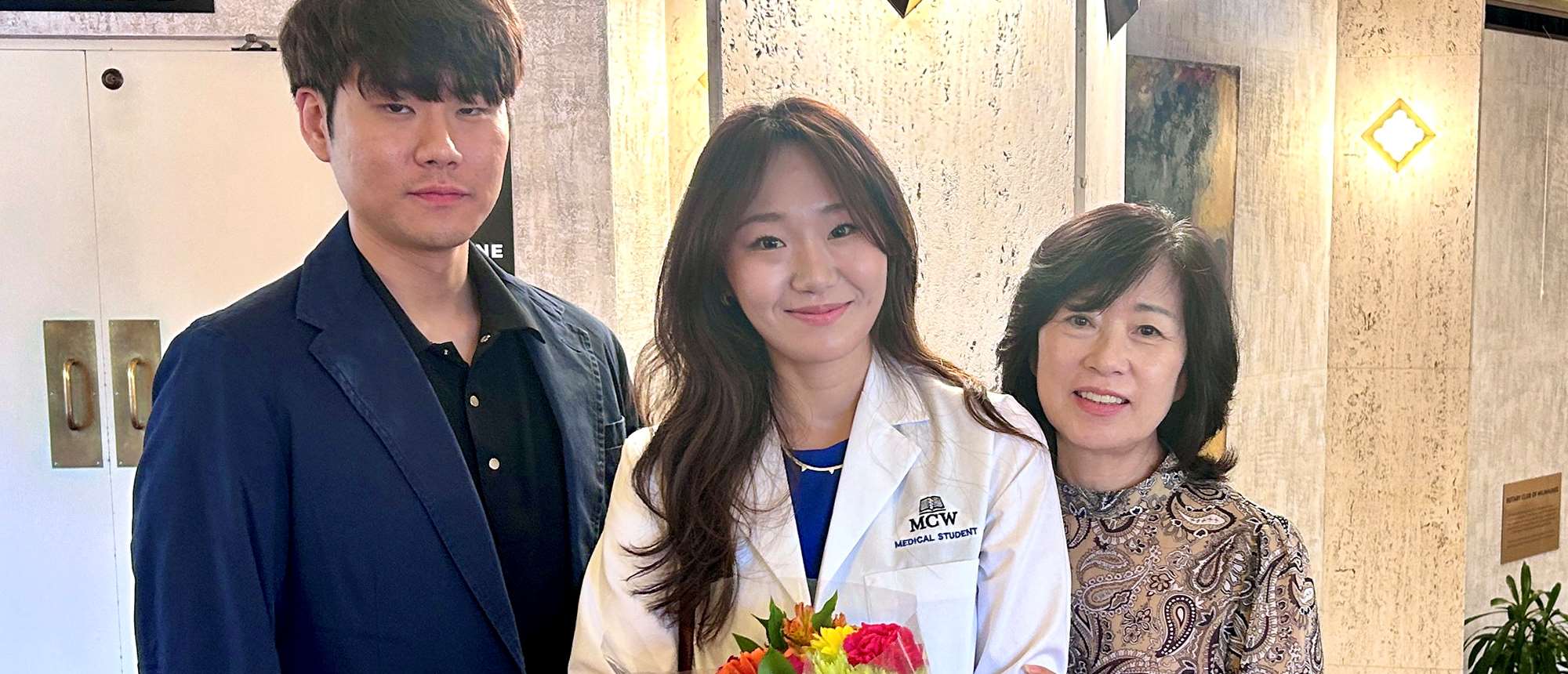
In many ways the path of Danica Cho, a first-year medical student at the Medical College of Wisconsin (MCW), has been guided by her life experiences. Her father was diagnosed with stomach cancer when she was 12. Seeing him receive care in their native country of South Korea led her to admire the medical profession.
Emigrating to America with her family at age 16 helped her learn a different side of medicine – the challenges immigrants face when trying to access healthcare in a new country.
“It is really difficult as an immigrant to obtain healthcare and communicate with physicians due to language barriers,” Cho says. “I decided I wanted to go to medical school so I can become the type of physician that understands what it means to have those barriers and the added layers of stress they cause.”
An Emigrant/Immigrant Perspective on Alzheimer’s Disease
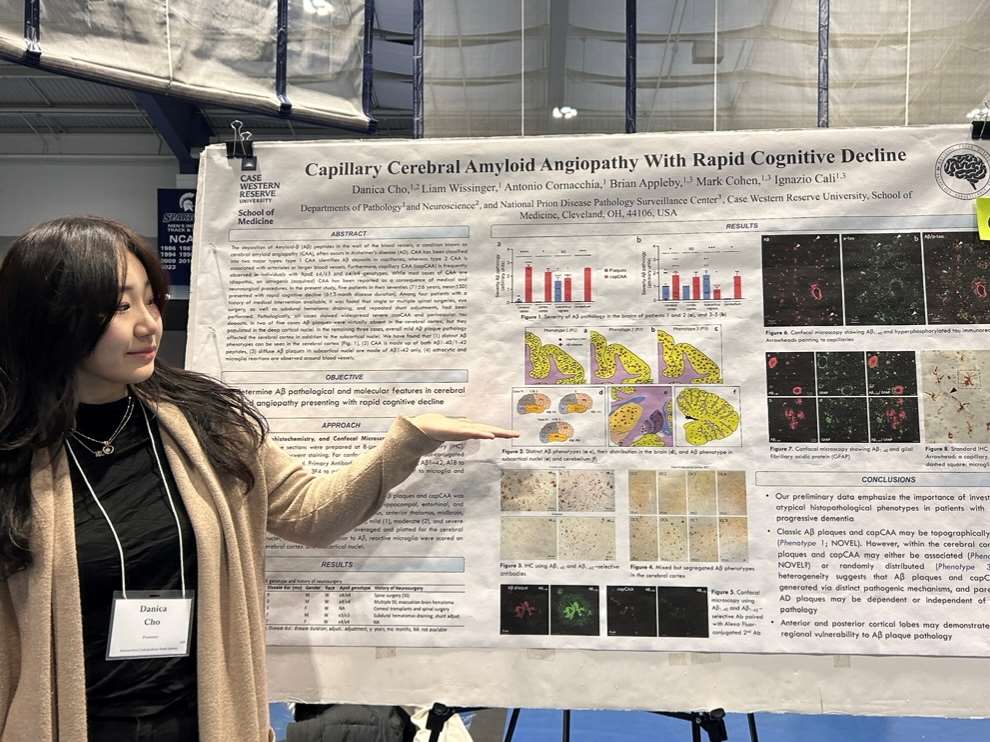
With eyes on medical school, Cho completed high school in her adopted hometown of Boston and started her undergraduate career at Case Western Reserve University in Cleveland, Ohio. She studied neuroscience and conducted research on Alzheimer’s disease. Simultaneously, she came across the opportunity to provide care for an older woman who had Alzheimer's.
The woman, the mother of an alum from Case Western, was an immigrant from the Philippines. Finding care for her was tough not only because of the cost of care and the nature of her disease, but also because of the needs she had as a Filipina who spoke English as a second language.
“They were having trouble finding a caregiver, someone who could bond with and relate to her,” Cho says.
Studying Alzheimer’s while caring for someone who suffered from it gave Cho a dual perspective on the disease.
“I saw the effects of Alzheimer’s and how it changes a person,” she says. “Although she had dementia, I learned so much from her. She gave me so much wise advice when I was facing difficult decisions.”
The Medical College of Wisconsin Provides a Sense of Belonging
Cho worked with the woman for three years, then made the transition to medical school. Since she did not live with her parents or have family in the states, Cho did not feel tied to any specific geographic area for her studies. Most important to her was fit, she says.
One of the schools she applied to was MCW, which offered her an interview.
“It was really nice because they mentioned how MCW is a family and how everyone is looking out for each other,” she says. “That part of having a sense of belonging or family drew me to MCW.”
MCW does a great job admitting students that value compassion and empathy in clinical studies, Cho says, a feeling she shares.
“I’m excited to meet more people that share similar values to mine,” she says.
She also looks forward to working with faculty and having the opportunity to learn from physicians at Froedtert Hospital and Children’s Wisconsin.
Advocating for Mental Health, Wellbeing
Aside from her studies, Cho is a strong advocate for mental health and wellbeing, something she plans to continue at MCW. In fact, she has been elected co-chair of the wellness committee for the MCW Student Assembly.
As an ambitious undergrad, Cho says she struggled to find a balance between studies, extracurriculars, and a healthy mind.
“I tried to check all the boxes and realized it wasn’t sustainable,” she says. “I couldn't keep up with schoolwork and have a healthy amount of sleep. I had a realization that things weren't going to get better or easier.”
To help herself and others, she founded a self-care club at Case Western Reserve University. In addition to sharing resources at bi-weekly events, the group practiced yoga, journaling, and other stress-management activities.
They also began to partner with local organizations to do community outreach and with schools to mentor teens about the importance of wellbeing and living healthfully.
“This is something that I absolutely want to continue,” Cho says. “I don’t think just because we’re in medical school that we have everything put together. Even as physicians we will need a space to talk about those uncomfortable things together.”
Goals at MCW and Beyond
Cho recently had the opportunity to work with her first standardized patient. She took the patient’s history and received feedback.
“These are the types of interactions I look forward to,” she says.
Cho says she’d like to shadow and learn about different specialties. Long-term, she wants to be involved with and serve the community, including helping immigrants overcome the barriers she faced as a newcomer to America.
“I think someone who is both a first-generation immigrant and a physician will be able to understand the challenges immigrants trying to receive healthcare in the United States face,” Cho says. “As an immigrant themselves, they can truly understand and empathize with them.”
MCW Medical School Admissions FAQ
MCW offers many program options to help you become the next generation of physician leaders. Here’s what you need to know if you are interested in applying to the MCW Medical School.
Recommended


