Using Artificial Intelligence to Identify High-Risk Cases of Rare Pediatric Eye Cancer
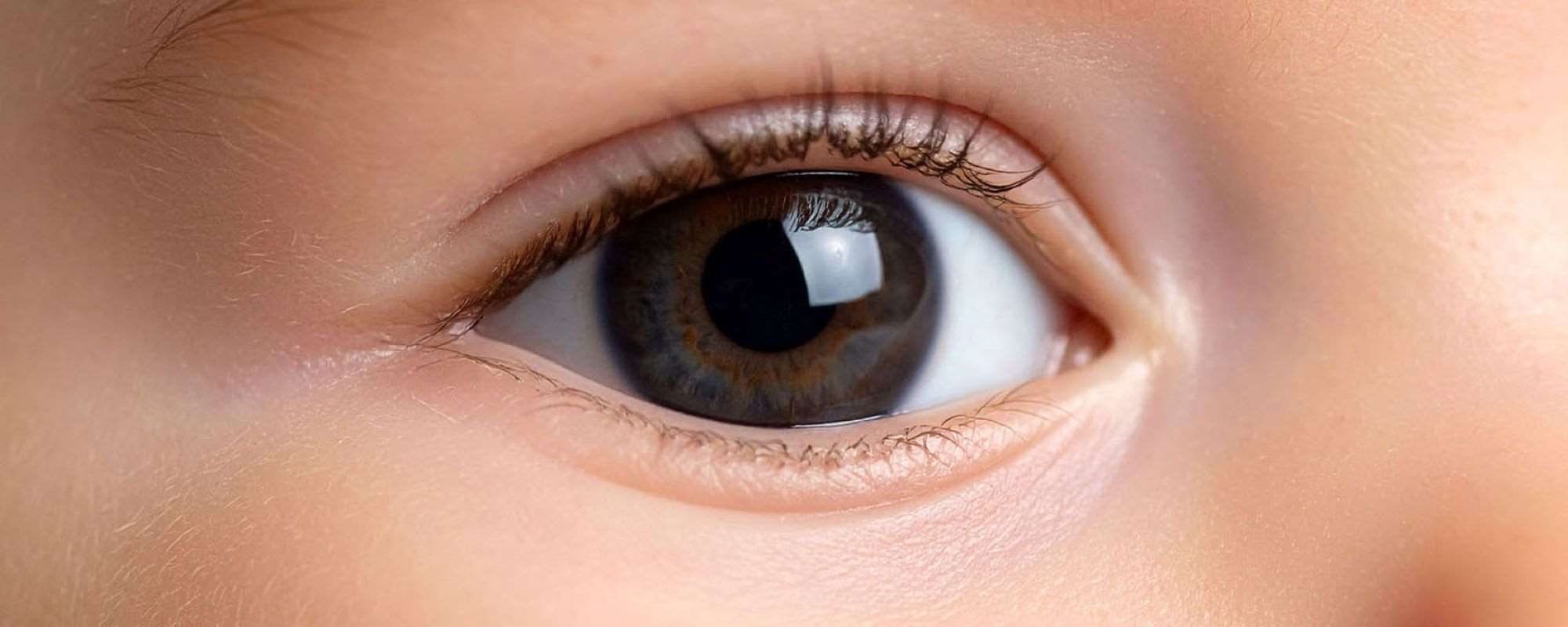
Retinoblastoma, a rare pediatric cancer that forms in the retina, has a high survival rate: more than 95 percent of children are cured.
But many children must have one or both eyes removed to prevent metastasis. Understanding which cases are at the highest risk for spreading can help physicians tailor treatment plans to each patient.
At the Medical College of Wisconsin (MCW), Aparna Ramasubramanian, MD, associate professor of ophthalmology, wanted to find a better way to quantify this risk.
She and her collaborators from Phoenix Children’s Hospital, City of Hope, and the Mayo Clinic used radiomics – a computational method that extracts features from medical images to find patterns to direct decision making – to find the clinical biomarkers within the eye that could predict which tumors invaded the optic nerve and the choroid (the middle layer of the eye). These cases are known to have a higher risk of metastasis.
Using several AI and machine learning tools, the team examined MRI images and pathology results from 29 patients and found that certain features of the optic nerve and the vitreous (the gel between the lens and the retina) could predict whether the tumor is likely to infiltrate these areas.
The results were published in Eye, a journal published by Nature that is the official journal of the Royal College of Ophthalmologists.
“With current treatment, most kids survive, but many still lose an eye,” Dr. Ramasubramanian says. “Radiomics allows us to see features that human eyes cannot detect. If we understand this risk from the start, we can tailor treatments to try to save the eye or to provide systemic chemotherapy in case of metastasis.”
Using AI to Identify High-Risk Features of Eye
At MCW, Dr. Ramasubramanian leads one of the few multidisciplinary retinoblastoma programs in the country. Though retinoblastoma is rare – it only occurs in about 300 patients per year, most of whom are under the age of 5 – the program draws patients from across the region.
The location of the tumor, and the age of the patient, makes diagnosis and treatment more specialized. First, these tumors cannot be biopsied, since doing so might spread the tumor within the eye.
Second, physicians often treat the cancer with localized chemotherapy, “but it has side effects, and these kids are often in the one-to-two-year age group,” Dr. Ramasubramanian says. “So, we want to make sure we tailor the treatment from the start.”
Researchers knew from pathology done on removed eyeballs that there seemed to be features that made some patients high-risk, but they wanted a way to find those features on an MRI scan.
“An MRI is a non-invasive test, and radiomics is a way to improve its efficacy without having any negative effect on the children,” says Dr. Ramasubramanian.
The team used radiomics to find patterns among 29 patient MRIs of 31 eyes. Among those, 14 eyes had optic nerve invasion and 6 had choroidal invasion. The radiomics process involves inputting the data into a training model and using AI and machine learning to find patterns among the images. The model then creates an analysis to explain what it found.
Using Results to Help Children with Retinoblastoma Around the World
The team found that optic nerve invasion was correlated with the diameter of the optic nerve on the unaffected eye.
“That means there is something inherent to the optic nerve architecture of each patient that predisposes them to have an invasion,” Dr. Ramasubramanian says.
They also found the flexibility of the optic nerve affected whether the tumor invaded it. Choroidal invasion was affected by the sphericity of the vitreous – the way the gel of the eye is configured.
Next, the team hopes to replicate its findings in a study of more than 200 patients. They are in touch with biorepositories of other countries to get access to more MRI images.
“The ultimate goal is to have this super accurate model that can risk-stratify patients so we can better understand how to treat them from the start,” Dr. Ramasubramanian says.
Having such a model could help patients both in the United States and around the world, since survival rates among retinoblastoma patients in developing countries are lower than in the United States.
“Our hope is that other countries could transport MRI images to us and we can risk-stratify on our end to say whether they should remove the eye or try to save the eye,” Dr. Ramasubramanian says. “The wide applicability of this is very attractive.”


