header-logo
Mother Child W Physician

Medical College of Wisconsin Pediatrics Simulation Program

The Pediatrics Simulation Program offers immersive, hands-on learning for trainees and care teams across the Medical College of Wisconsin and Children’s Wisconsin.

About Our Program

Mission: The Pediatric Simulation Program at the Medical College of Wisconsin/Children's Wisconsin cultivates a learning and training environment of integrity, collaboration, and innovation for health care professionals that promotes lifelong learning, maintenance of competence, and the best and safest care for children and families.

Vision: The Pediatric Simulation Program at the Medical College of Wisconsin/Children's Wisconsin aims to support the educational, research, patient safety, and quality facets of health care education and delivery to achieve the best and safest care for the children and families of Wisconsin and beyond.

Program Details

We operate with The Basic Assumption © Center for Medical Simulation. "We believe that everyone participating in activities at the Dairy Cares of Wisconsin Simulation Lab at Children’s Wisconsin is intelligent, capable, cares about doing their best, and wants to improve."

The Pediatric Simulation Program at the Medical College of Wisconsin/Children's Wisconsin is accredited in Teaching/Education through the Society for Simulation in Healthcare.

Dairy Cares of Wisconsin Simulation Lab
Children’s Corporate Center, Suite 430
999 N. 92nd St.
Wauwatosa, WI 53226

Pediatric Simulation Program Accreditation
all
History of the Pediatric Simulation Program

The Simulation Program was founded in 2010 utilizing unoccupied patient care space (Center 4) with the vision of promoting excellence in pediatric healthcare through simulation experiences in a structured, safe learning environment using state of the art equipment. Due to patient care, safety, and educational benefits, the need for a dedicated simulation-based education space was identified. Through the visionary leadership of invested individuals, along with generous philanthropic support, the Children’s Wisconsin (CW) Simulation Center was created in 2013 and is inclusive of state-of-the-art technology and a thoughtful design conducive of a safe, effective, and innovative learning environment. Through the generous cumulative donation of Dairy Cares of Wisconsin, in 2018 the Simulation Center was renamed the CW Dairy Cares of Wisconsin Simulation Lab. Together Children’s Wisconsin and the Medical College of Wisconsin offers many simulation opportunities within the Children’s Wisconsin Dairy Cares of Wisconsin Simulation Lab.

In addition to the simulation rooms located in the Corporate Center there is a simulation room on Center 7 located in Children’s Wisconsin main hospital.

About Simulation-Based Education

Simulation is a generic term that refers to an artificial representation of a real-world process to achieve educational goals through experiential learning. Simulation-based education is defined as an educational activity that utilizes simulation technology to replicate real life clinical scenarios. Simulation for health professional education is being utilized more frequently and has routinely been used in other high-risk professions such as aviation and shipping industries. Health professional simulation allows for more efficient acquisition of clinical skills through deliberate practice, in addition to the more traditional apprentice style of learning. With simulation tools as an alternate to a real patient, a trainee can make mistakes and learn from them without the risk or fear of patient harm. Health professional simulation research reveals significant advantages including improved patient safety, quality of care, improved team performance and reduction of health care costs.

The simulated scenarios and manikins are highly realistic and engage the learners emotionally and intellectually, thus providing a unique learning experience wherein the “patient” actually talks, breathes, blinks, and moves similar to a real human patient. Simulation can be adapted to replicate any health care environment, such as an operating room, emergency department, or intensive care unit; and to accommodate any health care professional, including physicians, nurses, paramedics, and respiratory therapists.

Health professional training programs have to ensure that the learners are exposed to a variety of learning opportunities to obtain the vital knowledge and skills necessary to provide excellent and safe care. Clinical competencies including but not limited to: communication, teamwork, gathering a history, professionalism, ethical considerations, physical examination, procedural skills, diagnostic reasoning, resuscitation skills, critical thinking and decision making, simple to complex problem solving, organization and prioritization, and information technology skills are all components of the simulation-based education curriculum at the Children’s Wisconsin.

Advantages of Simulation Learning

  • Health care simulation has four primary purposes—education, assessment, research, and health system integration with the goal of facilitating and promoting patient safety. Simulation education is a bridge between classroom learning and real-life clinical experiences. Advantages of simulation learning include:
    • Hands-on and critical thinking skill development including knowledge-in-action, procedures, decision-making, and effective communication.
    • Critical teamwork behaviors, such as managing a high workload and coordinating under stress, can be taught and practiced.
    • Allows for a safe learning environment with freedom to make mistakes and to learn from them without risk of harm to a real person.
    • By seeing the outcome of their mistakes, learners gain powerful insight into the consequences of their actions and the need to get it right.
    • Learning experiences can be customized to accommodate a range of learners from novices to experts.
    • Opportunity for detailed feedback and evaluation by training facilitators.

Who uses the Simulation Program space?

  • Health care and allied health professionals who care for children.
  • Patients and families
Simulation Resources

Children’s Wisconsin Dairy Cares Simulation Lab

Visit Children’s Connect for more information regarding services hosted within this space and how to schedule a session.

Educational Resources

The Pediatric Simulation Program provides an institution specific Simulation Facilitator Training through the virtual learning platform, Moodle. For access, please contact us at simulationprogram@childrenswi.org On this learning platform we have various simulation resources for simulation-based education such as Simulation Development Template, Simulation Scenarios, links to Simulation Societies, and more!

Pediatric Simulation Program Events

We support simulation-based educational events customized to meet the needs of individual groups such as Pediatric Fellowship Programs, Pediatric Residency Programs, Nurse education, Multidisciplinary Team Mock Codes, Transport Team orientation and education days, National Bootcamps, and Caregiver simulation events.

Donate

You can help support the Simulation Lab through your donation on the Children's Wisconsin website.

A simulated pediatric care situation

Midwest Sadie Abell Senior Pediatric Critical Care Fellow Simulation Bootcamp

Since 2019, Children’s Wisconsin has been collaborating with Johns Hopkins to host a Midwest Senior PICU Fellow Bootcamp. This multi-institutional event is targeted towards 2nd or 3rd year PICU fellows and takes place in our Dairy Cares of Wisconsin Simulation Lab, and we host fellowship programs from across the region and country. Over the course of three days, fellows participate in simulation scenarios ranging from difficult airways, neurocritical care patients, ECMO/VAD management, post-operative cardiac complications, and more. They also participate in didactic and advanced technical skills stations to build upon their critical thinking and procedural abilities. Topics covered included advanced airway skills, physician transport of critically ill patients and more.

After Sadie’s death, her parents approached team members who had cared for their daughter and inquired how they could help PICU team members, particularly those in training or early in their careers, to learn to work together in such critical situations as they had witnessed, not only for the benefit of health care workers working so closely to save critically ill children, but also for the families and patients who are directly impacted by these amazing collaborations. Sadie Abell’s story and life inspire us all to be the best physicians, communicators, and team members we can be.

Dr. Kristen Nelson-McMillan, Bootcamp Creator

Primary Operational Team

headshot

Tara Petersen, MD, MSED

Professor; Division Chief; Dept. of Pediatrics Vice Chair of Education; Medical Director, Pediatric Simulation Program

headshot

Katie McDermott, PhD, MSN, MEHP, RN, CPNP-AC

Program Director

headshot

Kate E. Hilgers, PhD, MA

Medical Education Program Director II
headshot

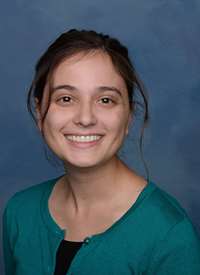
Sharon Stiles, MBA

Program Manager I-Simulation

headshot

Lucia Lee, MS

Simulation Specialist

Secondary Operational Team
headshot

Christopher Jensen

Director, Educational Services

headshot

Jennifer Doerr, MSN, RN

Clinical Education Manager, Educational Services

Bootcamp Event Directors & Coordinators
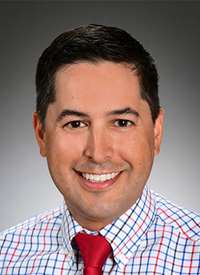
headshot

Sharon Stiles, MBA

Program Manager I-Simulation

headshot

Lucia Lee, MS

Simulation Specialist

headshot

Angie Koepke

Administrative Assistant Sr.

Contact Us

For all Children's Wisconsin Dairy Cares of Wisconsin Simulation Lab questions, please contact us via email.

simulationprogram@childrenswi.org

Sharon Stiles, MBA, Program Manager I-Simulation
Lucia Lee, MS, Simulation Specialist