Balancing Motherhood and Graduate School
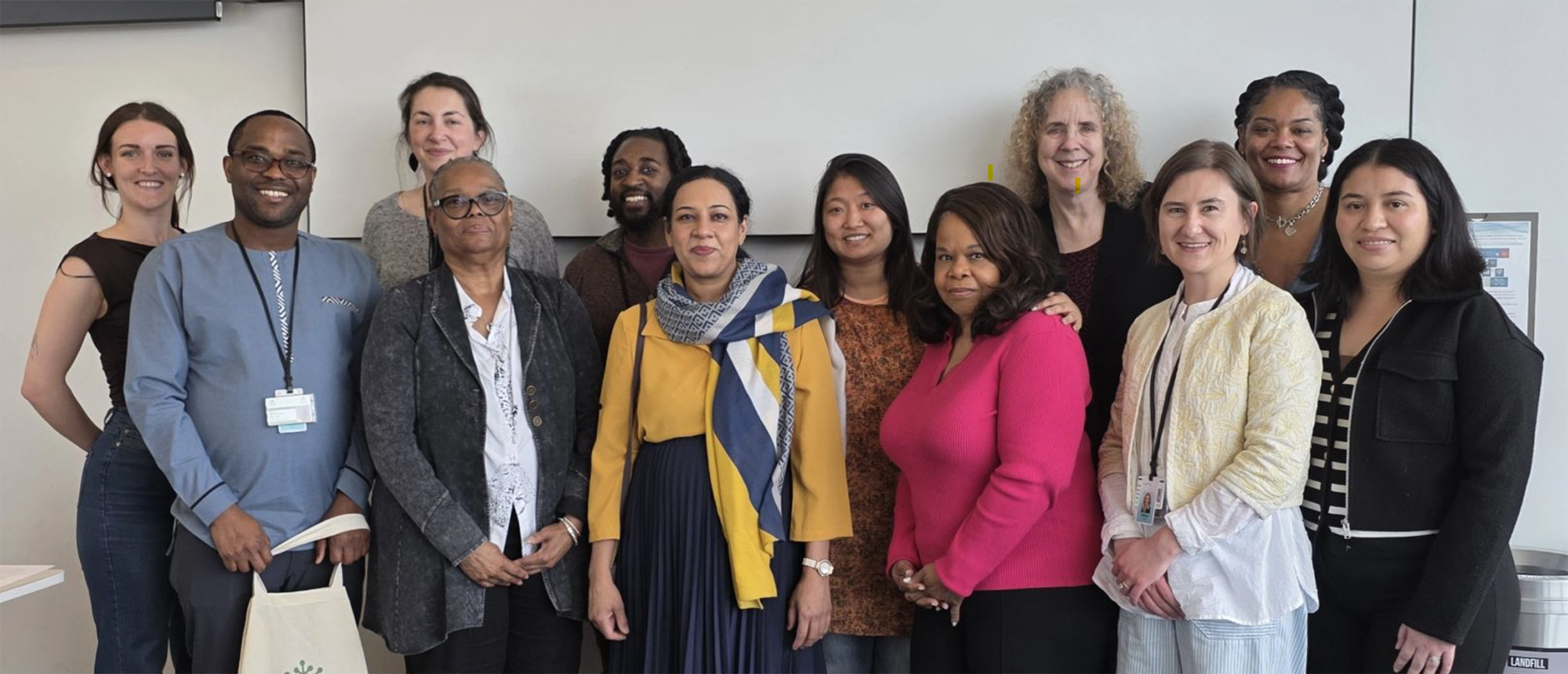
Sadaf Siddiqie, MD, MPhil, MPH ’26 (first row, center), is a doctor of public health student at MCW and a mother of three. Dr. Siddiqie’s journey has been guided by the mindset that women, especially mothers, can achieve anything that they set out to do.
For Sadaf Siddiqie, MD, MPhil, MPH ’26, growing up in Pakistan meant medicine felt out of reach. There was a traditional belief that women belong at home rather than in the classroom and that educated women couldn’t properly care for a family. Undeterred by this societal pressure, Dr. Siddiqie studied intently and eventually gained admission into medical school.
Medical school, however, was two hours away from Dr. Siddiqie’s home, and her lengthy commutes swallowed much of her already precious time. While at home, she often experienced electrical outages, water shortages, and a gas stove that didn’t work.
“I would come home and sometimes the Internet was so slow, it would take me over two hours to download a single research paper,” says Dr. Siddiqie, now a doctor of public health student at the Medical College of Wisconsin (MCW). “Today, I can download a paper in a split second.”
Despite these struggles, Dr. Siddiqie persisted and after residency, intended to become an oncologist. While practicing as a chief medical officer, she encountered many patients whose cancer was diagnosed after their tumor cells had spread, making most treatments ineffective.
Struck by the pattern she was observing, Dr. Siddiqie began conducting research to understand why diagnoses were delayed. After earning a master’s of philosophy in pathology, Dr. Siddiqie moved to the U.S. in 2010, galvanized to continue her academic quest.
Public Health In and Out of the Classroom
In the U.S., Dr. Siddiqie passed two United States Medical Licensing Examinations (USMLE), which she needed to practice medicine here. Her plans were halted when she became pregnant and suffered from severe preeclampsia – or high blood pressure during pregnancy.
Dr. Siddiqie shifted her focus to her health and to raising her first child and two more who were born shortly after. She also volunteered in a community outreach clinic. During the COVID-19 pandemic, she decided to apply to MCW’s certificate in public health, which provides students with a broad introduction into the field.
“MCW’s certificate in public health was the only program that was fully online, which allowed me to take care of my children while in school,” Dr. Siddiqie says. “The flexibility was unparalleled elsewhere.”
During her first semester, her children caught COVID-19, which caused their tonsils to swell. This put them at a higher susceptibility to a slew of other viruses: RSV, influenza and strep, as well as triggered sleep apnea. With her children up all night, so was Dr. Siddiqie.
Once more, Dr. Siddiqie persevered, graduated from the certificate program, and began MCW’s Master of Public Health program. Her research focused on creating a culturally relevant decision aid for Black women who smoke. The decision aid aimed to increase the community’s awareness that smoking elevates the risk of cancer and to introduce cancer screening options. Importantly, Dr. Siddiqie’s work explored other cancer risk factors outside of smoking.
“Social determinants of health, such as access to the healthcare system, stress, and cultural beliefs also play a role in the development of diseases,” she says, adding that she hopes her research could spin off into a program or policy at a local health department.
MCW’s Support for Working Mothers
While conducting her research, she received support from faculty and staff in the MPH program to help balance work and home life.
“When I was in virtual meetings at home, my kids would come in and talk to me. My instructors and professors would reassure me that it was okay and that mothers were encouraged here,” she says.
Dr. Siddiqie plans to enter MCW’s doctor of public health program this fall – a program she was drawn to due to its flexible online curriculum. In this next journey, Dr. Siddiqie will rely on the grit that has already taken her this far.
“My passion for health equity is very personal. I have faced challenges getting into medical school, with my own health, and with my kids’ health. I learned resilience is not about being stubborn, it’s about being flexible,” she says.
To her, this flexibility is strengthened by her various identities.
“I am more flexible because I have multiple roles – I am a doctor, a researcher, a student, and a mother. I want to be the voice of women who are often told their certain circumstances limit what they can achieve,” she says. “I am here to show them they can achieve whatever they set their minds to.”
Recommended


