MCW Medical Student Aids Globally Underserved Populations
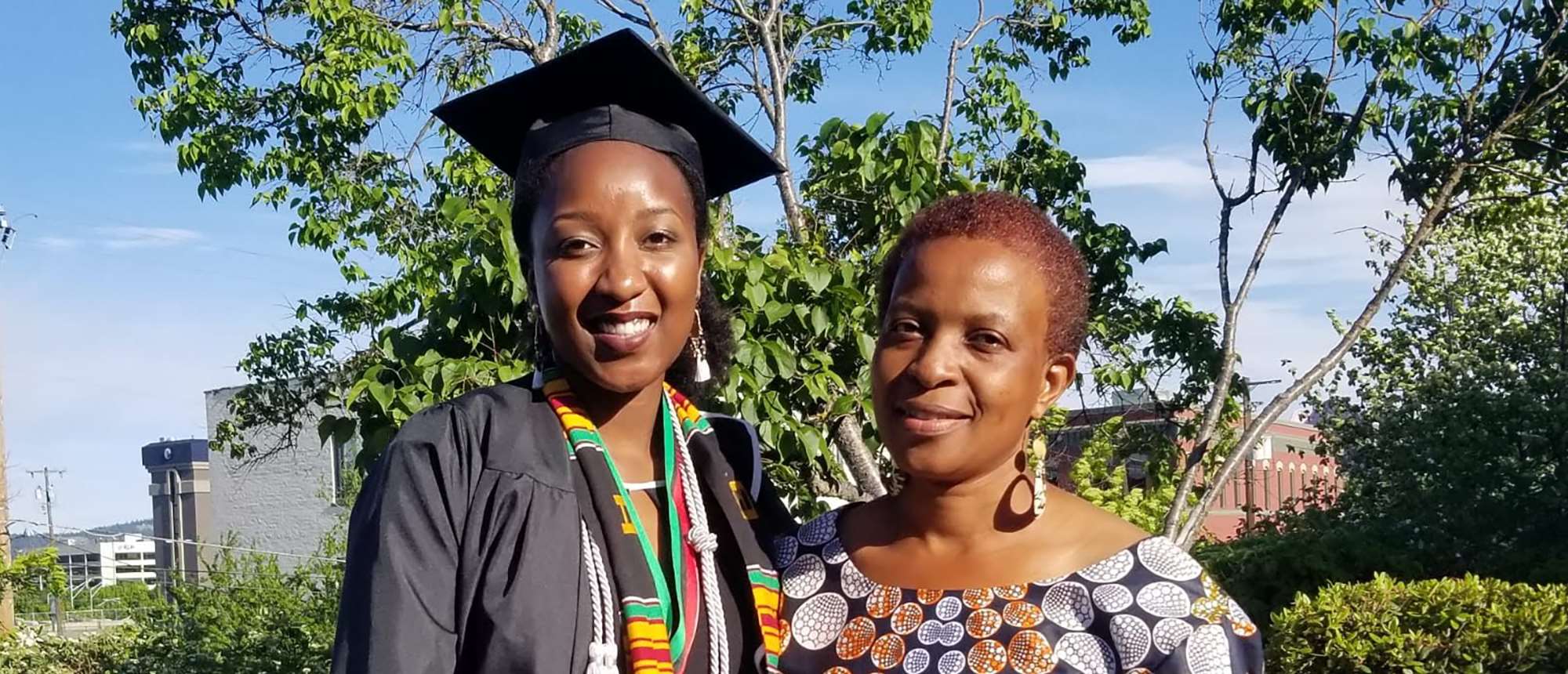
Graduating medical student Mutsa Chiromo with her mother and inspiration, Dr. Eugen Manyora.
Captured on film during her sixth birthday party, Mutsa Chiromo, a fourth-year medical student at the Medical College of Wisconsin (MCW), can be heard answering the age-old question, “What do you want to be when you grow up?”
“A doctor,” she confidently replies.
Raised in Harare, Zimbabwe, Chiromo’s interest in medicine stems from her mother, Eugen Manyora, MBBS, a family medicine doctor. As members of their community – including close relatives – fell sick with HIV and related illnesses, Chiromo’s mother lent a healing hand.
“Our home was an extended hospital of sorts, as people who were ill would stay with us,” says Chiromo. “My mom was not only a doctor, but a single mother, a farmer, and the owner of a hospital that she built and ran. She was defying all odds in a patriarchal community. I learned from her that I can do anything I put my mind to.”
Growing up, Chiromo’s mind was dialed in on the basketball courts, where she played competitively. In fact, when Chiromo first traveled to the U.S. in high school, it wasn’t to hit tourist hotspots, but to watch a college basketball game.
Initially, Chiromo planned to play at the collegiate level in the U.S. while also chasing her dream of becoming a doctor. After realizing that maintaining a balance between both aspirations would be unsustainable, Chiromo decided to focus on medicine. In this pursuit, she graduated with a biochemistry degree from Whitworth University in Washington state.
Community Engagement Beyond the Walls of MCW
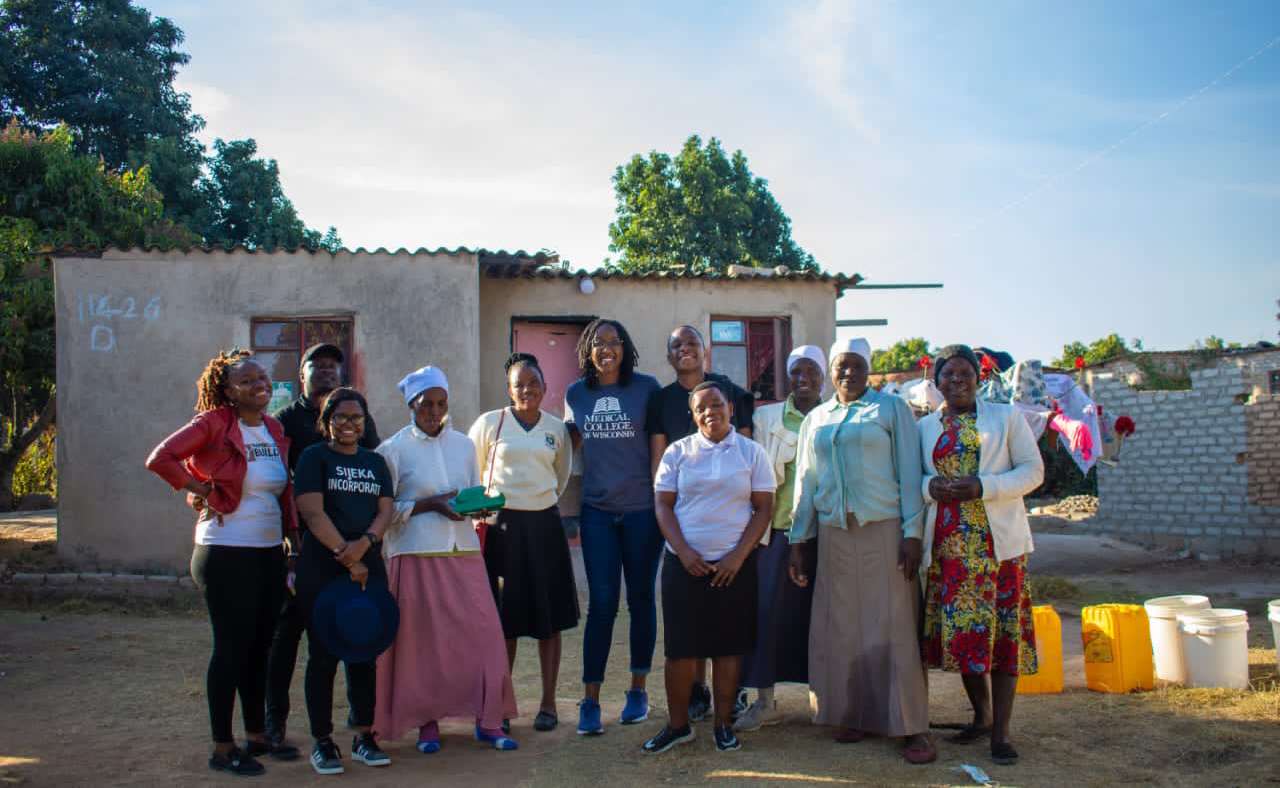
Mutsa Chiromo, a graduating medical student at MCW (sixth from the left), created the organization Project 25 Zim to provide textbooks, food, and other resources to communities in her native Zimbabwe.
When Chiromo was deciding where to attend medical school, MCW stood out.
“I remember getting a birthday card and a Christmas card [from MCW] before I had committed,” says Chiromo. “After coming here, I can say they have been very true to their word in terms of their level of intentionality.”
As a student, Chiromo chaired and volunteered in the Saturday Clinic for the Uninsured, providing medical care for those who could not afford it. Chiromo’s dedication to the underserved crossed borders during her participation in the Dr. Elaine Kohler Summer Academy of Global Health Research, where she studied how the development of informal settlements in Rwanda affected residents’ well-being and safety.
Chiromo’s most meaningful community engagement, however, involves her own community. Since 2020, Chiromo and her friends have spearheaded an organization called Project 25 Zim, which provides resources such as textbooks, food, and shoes to communities in Zimbabwe. They even built a six-classroom school serving first through seventh graders. It replaced a small, rundown building in Epworth, a suburb in southeastern Harare, Zimbabwe.
“In the U.S., I feel like I have opportunities that some people in Zimbabwe just don’t have,” says Chiromo. “So, I started seeking ways that I could give back. The community in Epworth has a lot of children with parents who have died of HIV and related illnesses, so being able to provide them support has been incredibly meaningful.”
Making Connections and Making Change
Despite being more than 8,000 miles away from home, Chiromo has – to her surprise – found a thriving Zimbabwean community in Wisconsin. First, one of her classmates, Audrey Makope, is also from Zimbabwe. While they had never met prior to medical school, they quickly discovered that Chiromo’s uncle and Makope’s dad were family friends back in Zimbabwe. Second, Chiromo is close friends with two Zimbabweans living in Madison, whom she met via a college friend.
The spiderweb of connections goes beyond peers, as Constance Shumba, PhD, director of the Master’s of Science Global Health Equity, is also from Zimbabwe. Dr. Shumba has become a meaningful figure both professionally and personally in Chiromo’s life. Chiromo has conducted global health research with her, earning graduate honors in global health. They have also enjoyed long, laughter-filled dinners.
“How is this happening in such a small place?,” muses Chiromo about finding so many connections to her home country. “Most Zimbabweans in the U.S. live in warmer climates, so the fact that you’re so far away from home and you are not only finding community, but actual connections is pretty cool.”
Connection and community are two words Chiromo, who matched into family medicine at Mayo Clinic in La Crosse, Wisconsin on Match Day this year, hopes to make central to her practice as a physician.
“Medicine is the gateway to much deeper interaction with your community,” says Chiromo. “I want to and have been forming connections with and advocating for others throughout medical school, and I’m looking forward to building on that influence as I start my career.”
MCW Medical School Admissions FAQ
MCW offers many program options to help you become the next generation of physician leaders. Here’s what you need to know if you are interested in applying to the MCW Medical School.
Recommended


