Committed to Serving the Rural and Underserved
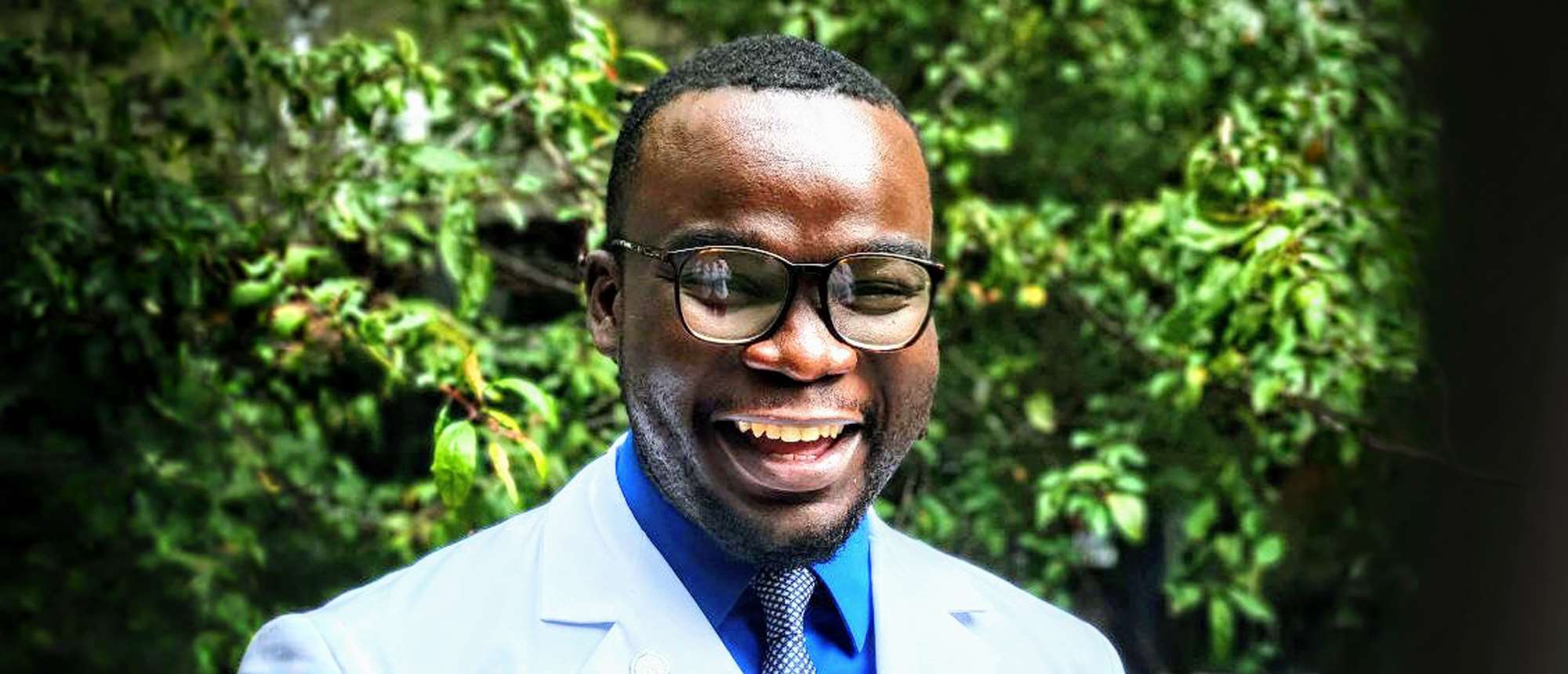
When a devastating earthquake struck Haiti in 2010, then sixteen-year-old Mike Mathieu found himself at the epicenter’s aftermath, ready to help. While doling out essentials – medication, food and water – Mathieu, a Haitian-native, had a life-altering realization.
“As I was a part of the volunteer crew, I started realizing this is something I would like to do in the future, and I made a promise to myself,” says Mathieu. “I told myself that when I finish high school and come to the United States, I would like to go to medical school.”
That promise was kept, as Mathieu is now a fourth-year medical student at the Medical College of Wisconsin (MCW)-Central Wisconsin.
MCW’s Deep Compassion and Care
After high school, Mathieu crossed the Caribbean Sea and attended the University of Florida, earning a degree in biology. As an undergraduate student, he continued to give back to the Haitian community, acting as a translator for Haitian patients.
Around the same time, he also worked in a research laboratory that studied pathogens. The lab director, hailing from Wisconsin, encouraged him to consider MCW for medical school.
Now, at MCW-Central Wisconsin, Mathieu has found a home within a close-knit campus community shaped by faculty and staff whose care extends beyond academics.
Case-in-point: when Mathieu first arrived in Wisconsin, faculty provided him with a list of must-haves for chilly Wisconsin winters. And, when Haiti’s Independence Day rolled around one year, faculty and fellow students learned to cook Haitian food, and celebrated the day over soup joumou, a hearty, vegetable-filled stew.
For Mathieu, being able to contact staff, particularly Student Services Manager Chris Knight, about nearly anything – a bad midterm, STEP exam preparation or even a headache – is a distinguishing characteristic of the Central Wisconsin campus. That communication and compassion also flows the opposite way.
“If you don’t show up to class, you will receive an email for sure. Or a text saying, ‘Are you okay? Do you need something? What do you need?’ You don’t see that kind of care everywhere,” says Mathieu.
Unparalleled Opportunities at MCW-Central Wisconsin
Mathieu also appreciates the opportunities MCW-Central Wisconsin offers. For instance, the school partners with neighboring institutions for students’ clinical rotations.
During one of these rotations, Mathieu was more than a student shadowing, he also practiced prescribing medication, inserting IVs and suturing wounds.
MCW-Central Wisconsin has also curated a two-year course called Physicians in the Community, where students work with a local group to address unmet community needs. Mathieu worked with a nearby middle school to create a program for students who needed additional academic, social and emotional support.
The program aimed to forge healthy relationships between adult mentors and students. Mathieu stepped in himself, cooking food for the students and accompanying them on outings to restaurants and fairs, experiences many had to forgo due to economic barriers.
“We collected data based on their behaviors and grades in school,” says Mathieu. “Over time, their grades got better, and I also think they became more social and emotionally available.”
Perseverance and Finding Purpose in Community
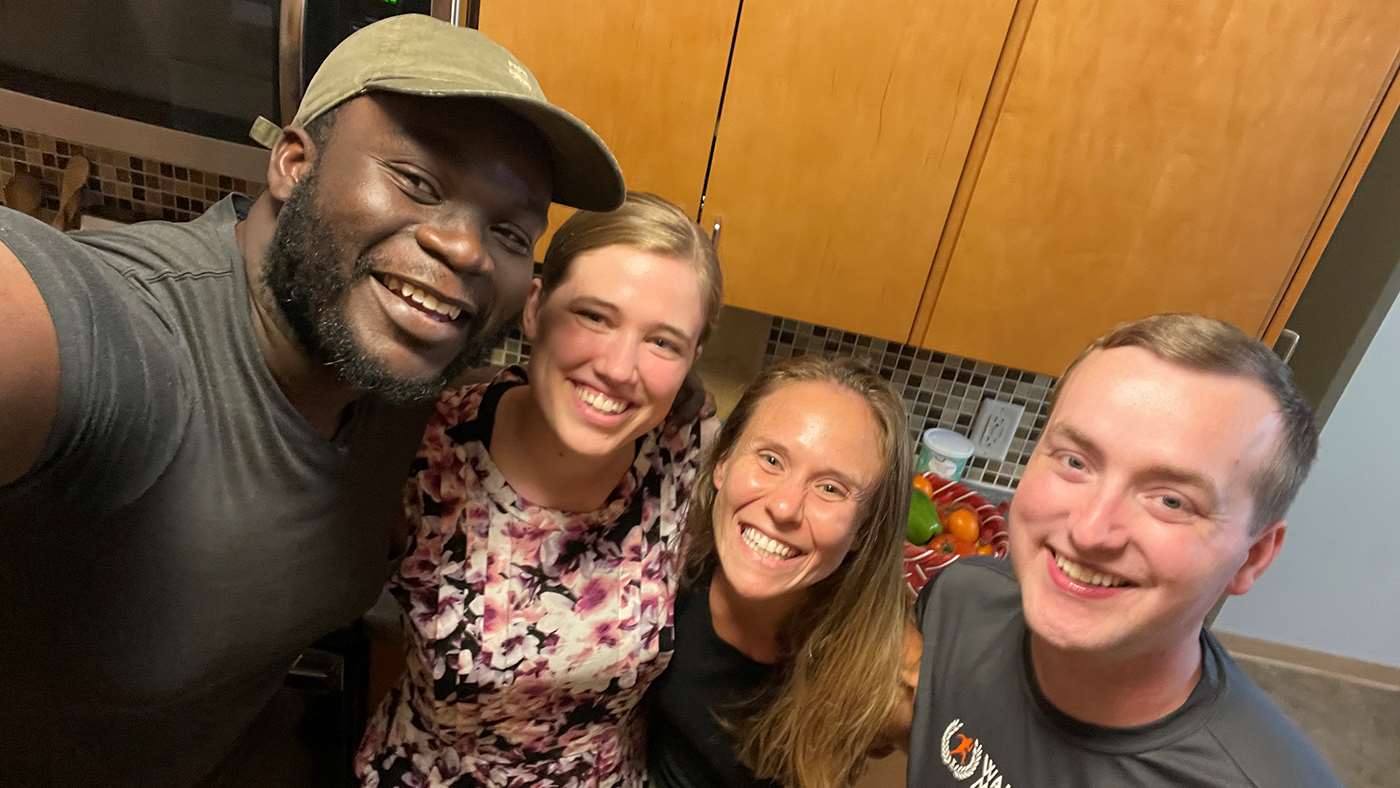
M4 Mike Mathieu has found a home on the close-knit campus of MCW-Central Wisconsin. He hopes for a career where he becomes similarly embedded within a community.
After graduation, Mathieu aims to continue working closely with the community he serves as a physician, particularly in a rural setting. However, last year this plan seemed fragile when his mother was diagnosed with endometrial cancer and his father was diagnosed with Parkinson’s disease. Mathieu considered returning to Florida to be near them.
“At the time, I wondered if I needed to give up and go back to Miami. But because my parents have such a positive mindset, they kept me in Wisconsin. I’m interviewing now and next year I’m going to be a doctor,” says Mathieu.
Mathieu credits his parents’ outlook and gratitude – the same traits that compelled them to open their home to displaced persons during the 2010 earthquake – for keeping him grounded during this time.
Currently, he is interviewing for family medicine and OBGYN residencies across the United States. He also hopes in some capacity to return to Haiti and care for his community there, a full-circle moment.
“I am really interested in staying and helping rural areas and underserved marginalized communities because that’s the whole reason I started my journey to become a doctor,” says Mathieu. “In a rural area, it’s easier to get involved in your community. You know everyone and you invest in them. You will probably see your patient at Walmart or Publix. I love that because it means I’m actually part of the community.”
MCW Medical School Admissions FAQ
MCW offers many program options to help you become the next generation of physician leaders. Here’s what you need to know if you are interested in applying to the MCW Medical School.
Recommended


