Making the Humanity Behind the Science Front and Center
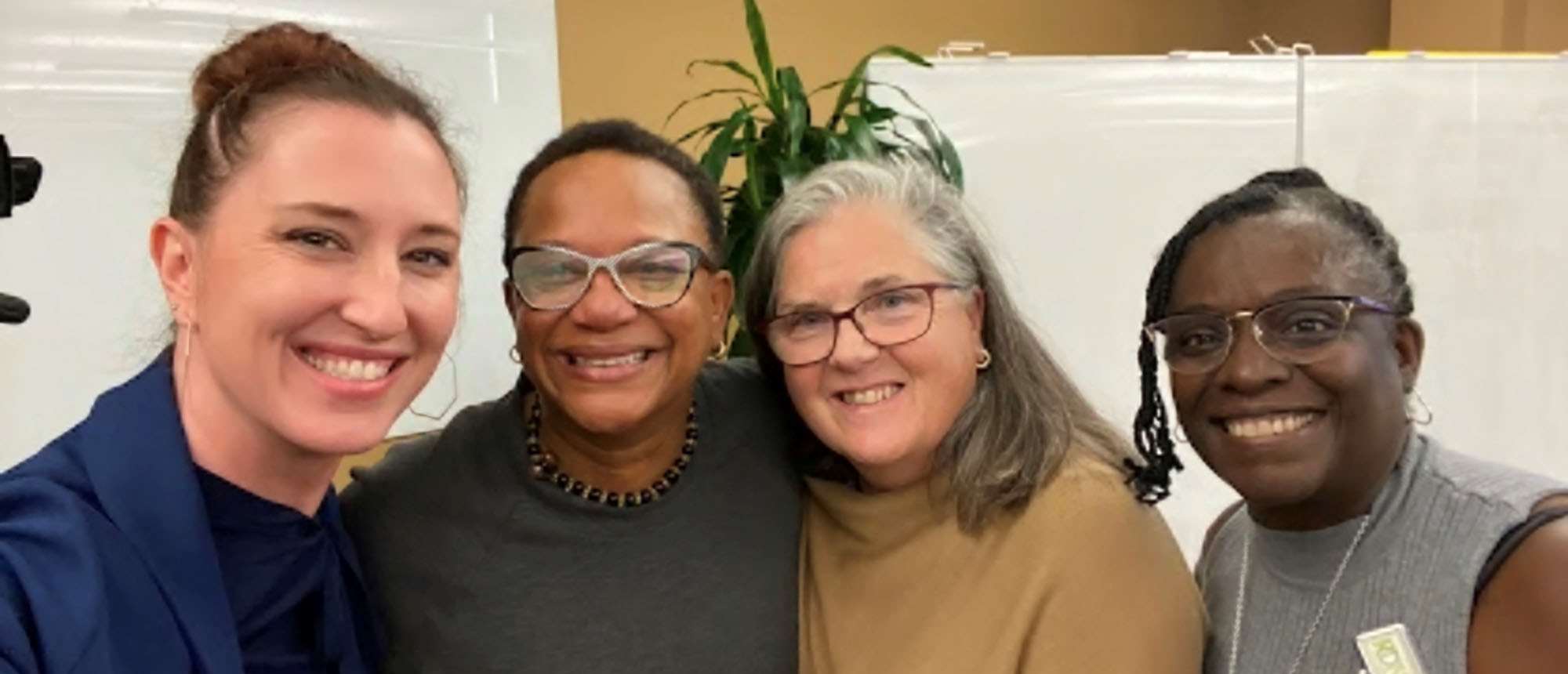
Jessica Olson, MPH ‘15, PhD ‘17, started her graduate training in the physiology department at the Medical College of Wisconsin (MCW) looking at heart cells from diabetic and non-diabetic patients in a petri dish and measuring the cellular changes that made the first group more susceptible to cardiovascular injury.
This basic science research was interesting, Dr. Olson says, but something was missing.
 “I wanted to know more about who was in my dish, and how those difference contributed to what I was measuring in the lab,” she says. “Were they working two jobs and raising four kids versus someone who had a relatively calm, self-sufficient lifestyle?”
Realizing her curiosity extended beyond the lab, she eventually switched from physiology to public health, and today she is an associate professor in the Division of Community Health within MCW’s Institute for Health & Humanity (IHH).
“It was a tremendous opportunity to become what one of my mentors calls a ‘boundary spanner,’ taking what I had learned at the bench, getting that public health training, and then figuring out how to bring them together in a meaningful way,” says Dr. Olson, who recently won a President’s Community Engagement Award from MCW.
Recognizing Breastfeeding Inequity
Her public health focus led her to Melinda Stolley, PhD, Ann E. Heil Professor of Cancer Research at MCW, who studies behavioral changes that can affect cancer outcomes.
Under Dr. Stolley’s mentorship, Dr. Olson began exploring how breastfeeding can help protect women against breast cancer and how women in marginalized communities often lack the support to take advantage of this health benefit.
At the time, Dr. Olson had just had her second child and found herself reflecting on the fact that she had a nice facility to breastfeed her baby in while working.
“I could just relax and do what I needed for my baby, and I got really interested in the fact that many women don’t have that kind of space,” she says.
She then connected with Dalvery Blackwell, executive director of the Milwaukee-based African American Breastfeeding Network (AABN). They hit it off and began applying for grants together, taking the unusual step of including photos and community quotes within the application narrative.
“She really showed me how to infuse humanity into this rigorous grant writing structure that I'd spent so much time learning,” says Dr. Olson, also a past-president of the MCW/Marquette Medical Alumni Association. “Our application was full of these really beautiful pictures about what they do and some preliminary data that we'd gathered together – and we started getting funding with that approach.”
Empowering Community Organization Leaders to Become PIs
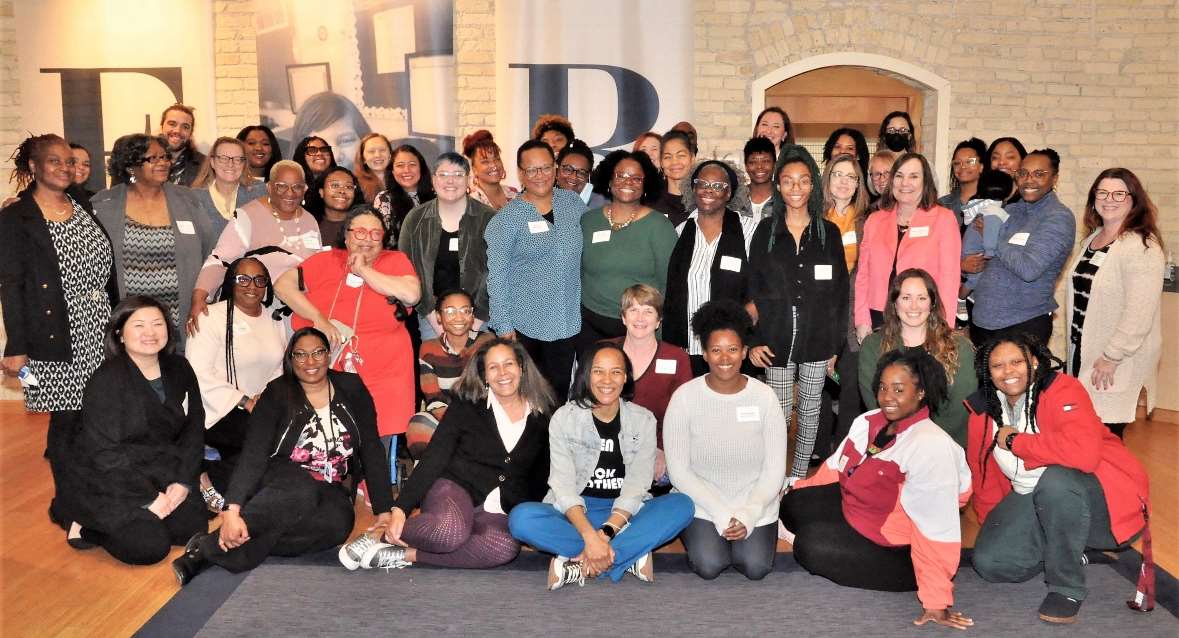
Dr. Jessica Olson partnered with the Milwaukee-based African American Breastfeeding Network to create the WeRISE Doula program, which supports multiple projects that examine the role of doulas in bridging patient-physician relationships.
In turn, she and Jennifer Foley, department administrator for IHH, have helped the AABN and community non-profits overcome the barriers that prevent them from applying for grants and serving as principal investigators. They’ve supported organizations in their efforts to establish a 501c3 and obtain an eRA Commons ID, which is needed to apply for National Institutes of Health (NIH) grants.
“We helped them with their back-end paperwork,” Dr. Olson says. “We explained how the process works and, as a result, each one achieved funding and was able to pursue bigger opportunities.”
For Blackwell, that has meant being a co-leader with Dr. Olson on a series of grant-funded initiatives. During the COVID-19 pandemic, for instance, the two secured over half a million dollars to create AABN’s WeRISE Doula program.
They expanded the program in 2023 after Anna Palatnik, MD, GME ‘13, associate professor of obstetrics and gynecology, asked Dr. Olson to collaborate on a $10.2 million NIH grant focused on addressing maternal health inequities.
That grant funds several different projects, including a clinical trial testing whether Black birthing people trust their OB/GYNs more if they have a community doula and that doula has an equitable partnership with the doctor. Blackwell and Dr. Olson co-lead the community partnership component of the project, helping to build bridges across clinical, academic, and community spaces.
“We're building trust between all three of these entities and saying that it will improve outcomes if we have these trusting relationships established between clinical healthcare workers, community-based doulas, and families,” says Dr. Olson.
Legislation to Improve Maternal Inequities, Outcomes
In addition to her work with AABN, Dr. Olson also led the development of the Wisconsin Maternal Health Innovation Strategic Plan, and worked to advance key legislative efforts, including reimbursement for community-based doula services and extending postpartum Medicaid services beyond the current limit of six weeks.
For the latter, Dr. Olson says she dug through clinical research data to find a case study of a woman on Medicaid who had a severe maternal morbidity, got six weeks of treatment, then lost coverage. She ended up in the ER at five months postpartum, where she died.
“I was able to pull cases like this one where the death was very likely preventable and then pass that along to our folks in policy who know how to take that and tell that story, honor her life, and translate loss into policy level change,” she says. “I hope that we can ensure that all mothers in Wisconsin have safe and healthy birth experiences through this work.”
Recommended


