From Observation to Action: Medical Student Builds Pathways to Equitable Care
Growing up in Columbia, South Carolina, Wentrell Bing learned early that illness did not affect all families equally. Some neighbors and relatives grew sick and struggled to get better, while others with better access to care recovered quickly after visiting a doctor.
Those early observations, paired with a natural pull toward science, planted the seed that would eventually grow into a career dedicated to medicine, equity, and community engagement.
Now a third-year medical student at the Medical College of Wisconsin (MCW), Bing has turned that early curiosity into action through health disparities research, mentoring the next generation of physicians, and striving to ensure that every patient, regardless of background, receives high-quality care.
His approach is grounded in a fundamental belief in the connection between health and opportunity.
“I often think about health disparities among people in poverty, and I see it this way: by helping them get better care, I can help them get to a better situation. Once their health improves, they can pursue the advanced opportunities they may have been limited from because of adverse healthcare outcomes,” he says.
Empowering Communities by Tackling Disparities, Social Determinants of Health
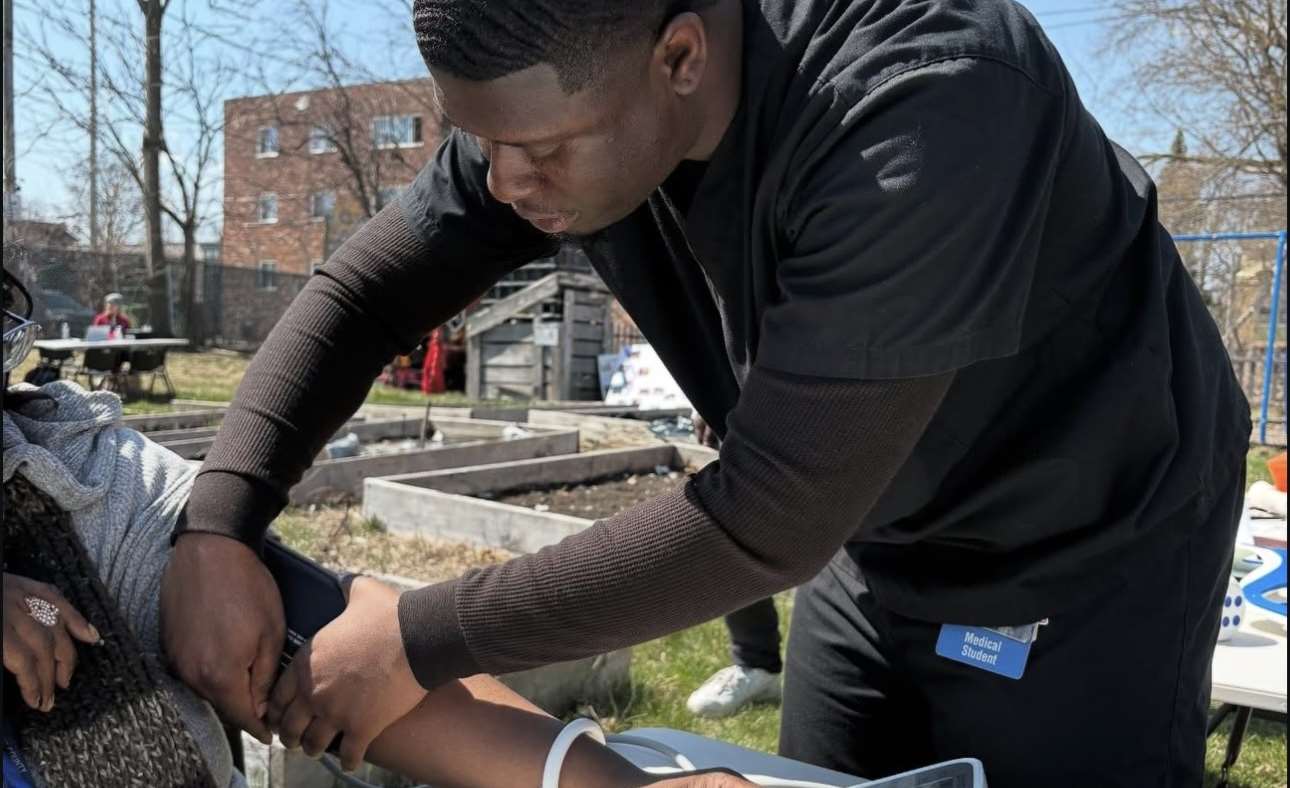
Third-year medical student Wentrell Bing recently received an MCW President's Inclusive Excellence Award for modeling the institution's values of caring, collaboration, curiosity, inclusivity and respect.
Bing has developed a strong portfolio of equity-focused research and service. His work has examined the social determinants of health, disparities in pancreatic cancer outcomes, and barriers faced by underrepresented medical students.
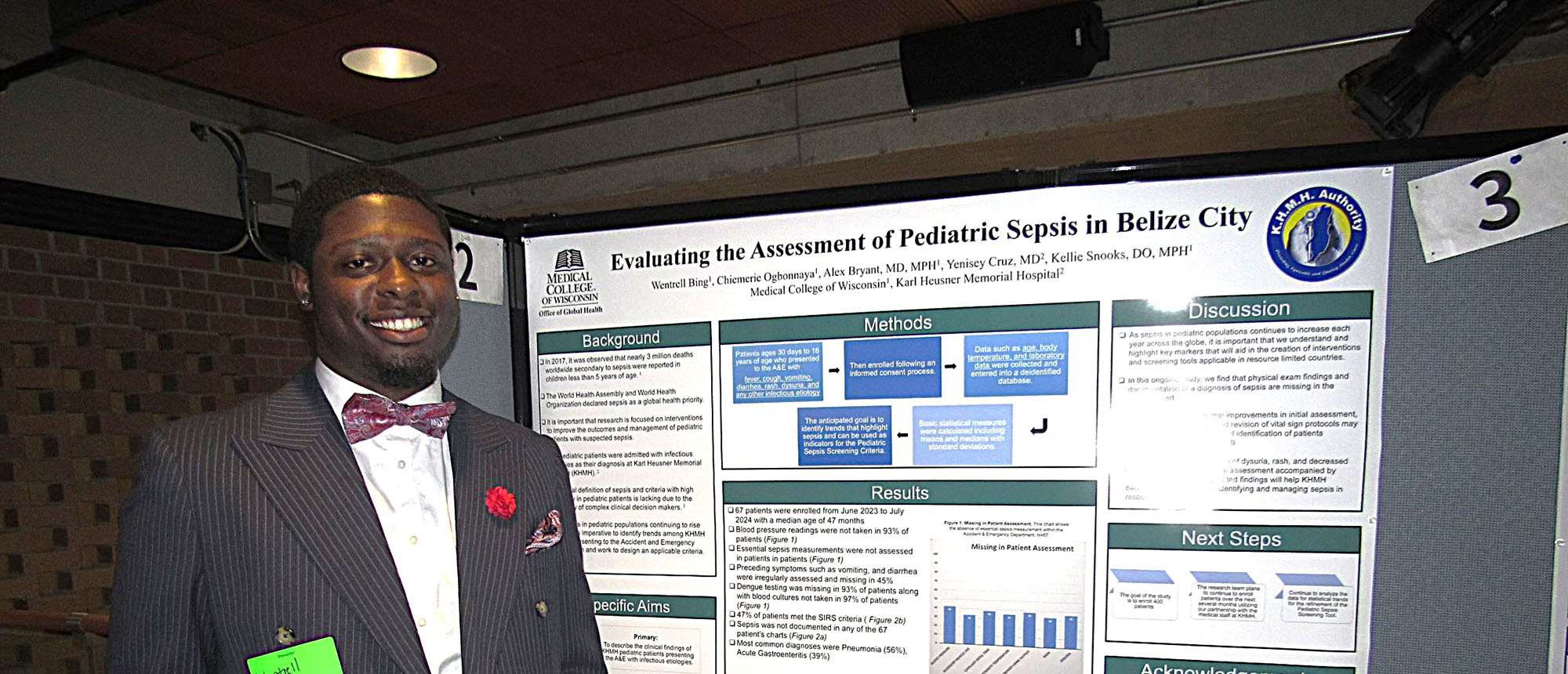
He has also participated in global health projects in Belize, Uganda, and the Dominican Republic. One such project was researching pediatric sepsis in Belize, a condition that often went unrecognized in its earlier stages due to a lack of diagnostic markers. Bing and his colleagues helped establish guidelines for early detection – part of an ongoing effort to heighten sepsis awareness around the world.
“I really believe we’re all interconnected,” says Bing. “By providing better healthcare in one place, we also extend that healthcare abroad.”
In Milwaukee, Bing mentors high school and undergraduate students, many of whom are the first in their families to consider medicine. As former co-president of the Student National Medical Association, he has helped build initiatives that create pathways into the profession. As the student representative on the Inclusion Committee of the Student Assembly, he advocates for learning environments where every student feels safe and affirmed.
“There are so many people out there – underrepresented students who lack direction and need guidance, patient populations who don’t see themselves reflected in medicine, and people who need someone to advocate for them,” Bing says. “I want to be that voice and that representation.”
His dedication and commitment were recognized this fall when he received an MCW President’s Inclusive Excellence Award, which acknowledges individuals who model the values of MCW through meaningful contributions to the institution and the communities it serves.
Finding a Home in the Midwest
Bing knew little about the Midwest before someone suggested he consider medical schools in the region. He researched MCW online and visited campus. Despite the 14-hour distance from home and 30-degree weather in April, the institution won Bing over.
“MCW is one of the most aesthetically pleasing places I’ve ever seen. If you’re a health science person like me, you marvel at the state-of-the-art research center, the teaching institutions all around, the well-connected hospital, and the incredibly friendly atmosphere,” he says.
That sense of belonging has only deepened over time. Bing describes MCW as “an academic institution with unlimited potential,” where he’s been afforded countless opportunities to grow and connect with mentors invested in his success.
“MCW truly has that family feel from day one,” he notes. “The school makes sure that everyone feels welcome no matter where you come from and how different you are.”
Carrying His Mission into the Next Chapter
Looking to residency, Bing is weighing general surgery or urology, particularly the latter because of its implications for Black men’s health.
“One of the leading causes of death among African American males is prostate cancer,” he says. “Being able to be part of the solution – showing patients they’re not alone and that they have support from someone who looks like them – is incredibly important to me.”
Beyond clinical practice, Bing envisions building “a collaborative network of physician scientists who are committed to advancing healthcare through translational research that builds evidence-based, policy-oriented solutions.”
His goal is to move beyond data collection toward actionable solutions to healthcare inequities.
Bing offers straightforward advice to individuals considering a career in medicine: take action, seek mentorship, and ground yourself in your purpose.
“Develop your why and remember it every time it gets hard, every time you feel like giving up,” he says. “It’ll carry you through your entire training.”
Recommended


