Student’s Passion for Medicine Solidified Thanks to MCW Pathway Programs
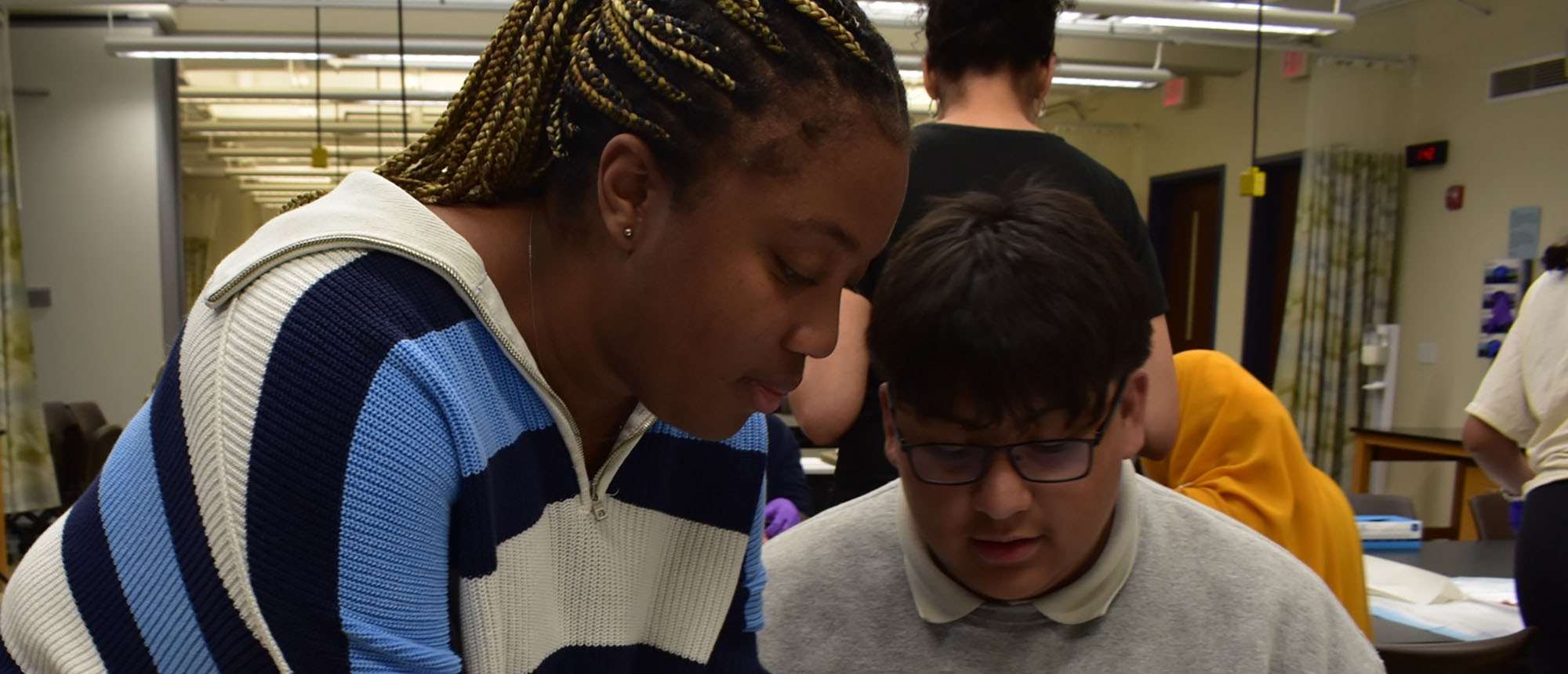
When second-year Medical College of Wisconsin (MCW) medical student Kenisha Kounga moved to New Berlin, Wisconsin, from the Boston area during high school, she understandably had a tough time with the transition.
“Wisconsin was a new place for me, and I didn’t know a lot of people,” she says.
One thing she did know was that she loved medicine. She volunteered at hospitals, took an anatomy course in high school, and participated in a healthcare pathways program at her school.
“I already had an interest in healthcare, but I didn't know what to make of it,” Kounga says.
Then, her teacher introduced her to MCW’s Health Science and Medical Career Pathway Programs.
Kounga says the programs changed her life.
Pathway Programs Help Forge a Path
The Medical College of Wisconsin offers a wide array of science and clinical career preparatory programs for middle, high school, college-age, and current medical students.
Through these programs, Kounga explored different healthcare professions and learned how to conduct research. Seeing others in the field who reminded her of herself proved to her that she belonged.
“The mentorship I was able to gain in the program was a game changer for me,” Kounga says. “Seeing physical examples of people in medicine was the reason I kept pushing because I knew it was possible.”
She says it was incredible for her to be part of a group of students all interested in healthcare. It helped her create the community she had missed since moving to Wisconsin.
“I knew I had things I could talk with them about,” she says. “It expanded my network and gave me a space to belong and where I could cultivate relationships.”
 Kounga conducted research on gun violence and youth suicide disparities for two summers as part of the Pathway Programs.
After graduating from high school, Kounga attended college at the University of Wisconsin-Madison. While in Madison, she participated in more Pathway Programs at MCW, joining the Summer Health-related Research Education Program (SHREP) after her freshman year and College STEP-UP from her freshman through senior years and for two more years after she graduated.
SHREP is a 10-week program designed to foster careers in medicine and biomedical research. Participants in STEP-UP get the chance to shadow a preceptor, study for the MCAT, and get further support to prepare them for matriculation to medical school.
Helping Patients Understand Their Rights
Although Kounga was born in Massachusetts, both her parents are from the Central African country of Cameroon. As a first-generation resident, Kounga understood the challenges that immigrants face while navigating the health system or even supporting their child’s education and knowing their rights.
Her family’s experiences led Kounga to become active in efforts to support others from Africa. At the University of Wisconsin-Madison, she joined the African Students Association, serving as president of the group for two years.
“A lot of our work was to help students in the same position as me,” she says.
The group hosted activities and events to help students feel supported at the university, Kounga adds.
Kounga graduated with a bachelor’s degree in global health and human development and family studies. Rather than make the jump right to medical school, she decided to take a short break.
During that time, she continued to help others, working at a student health center at her undergraduate institution and then a women’s health clinic.
“A big part of what I did was advocacy and helping patients know their rights,” Kounga says.
Returning to the Supportive Community of MCW
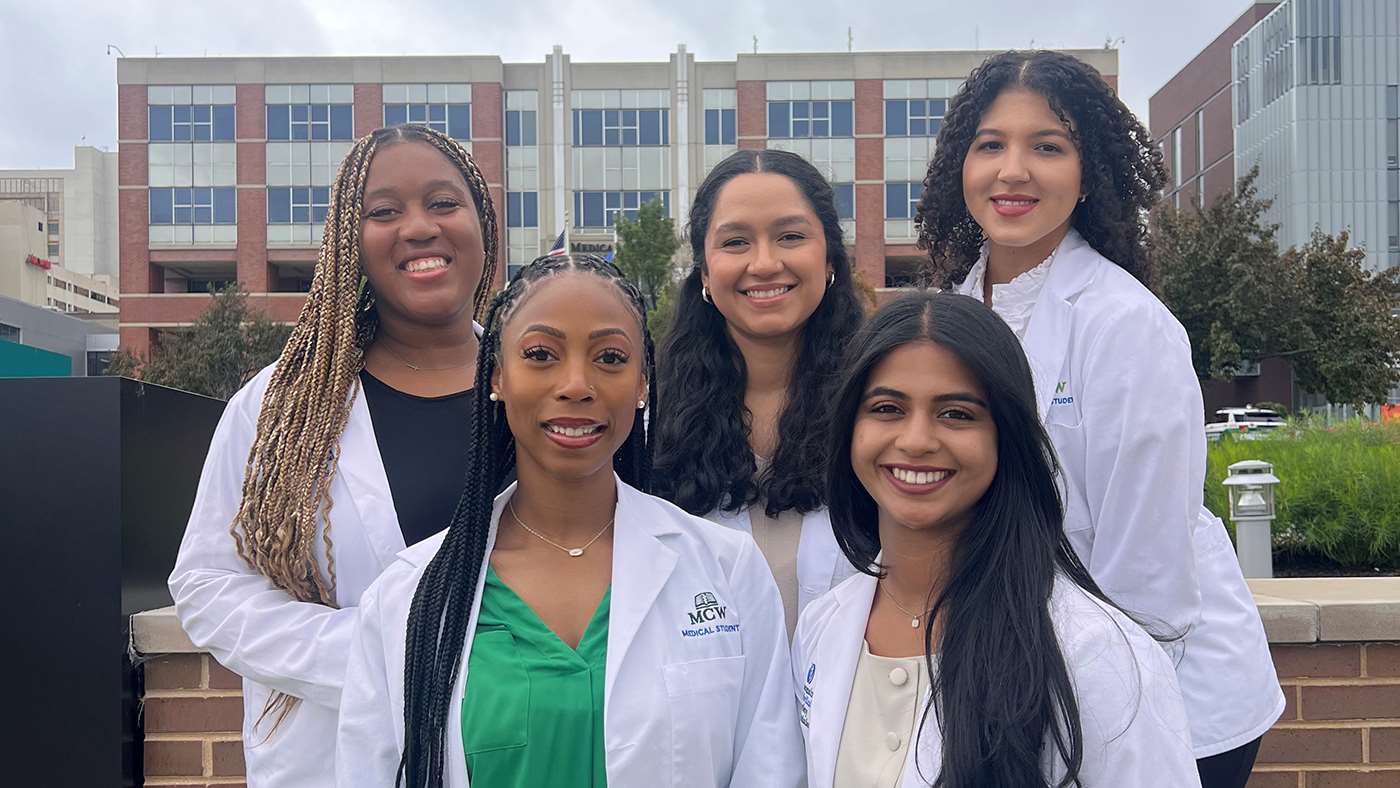
M2 Kenisha Kounga (back row, far left) says the connections she built through MCW's Pathway Programs made it easy to select the school as the place to complete her medical education.
After taking two years off, Kounga decided it was time to complete her journey to medical school. She had no doubt where she wanted that road to take her.
“MCW was honestly the only option,” she says. “I had the unique and privileged situation to already have a support system there and to be familiar with the halls and many of the faculty.”
She was accepted and began her first year in 2024. At MCW she quickly continued her advocacy efforts, joining its Student National Medical Association (SNMA) chapter. SNMA supports current and former medical students from underrepresented backgrounds.
She describes her experience with SNMA as extremely rewarding.
“We were able to bring in a plethora of faculty and staff and create experiences that showcase Black history and how Black history has contributed to medicine,” Kounga says.
What Kounga enjoys most about SNMA is its community initiatives, such as Mini Medical School Day, where area high schoolers visit MCW to learn about medicine and meet with students like Kounga.
“I want to be an inspiration to participants and also show them that medical students have different personalities and interests, but we all want to take care of people and improve our communities,” she says.
Kounga also remains engaged in the Pathway Programs by serving as a mentor for its Apprenticeship in Medicine (AIM) program, which introduces Milwaukee-area high schoolers to careers in medicine, biomedical research, and allied health.
“It was another full circle moment of being the example of what I looked up to when I was a high school student,” she says.
In addition to AIM, Kounga taught a gastrointestinal course to high schoolers over the summer.
A Plan to Give Back
Kounga says her experience as a participant in MCW’s Pathway Programs and more recently as a mentor solidified her passion for teaching and working with youth. She envisions her career trajectory landing her in an academic setting while also being able to treat youth.
“Maybe an adolescent gynecology position,” she says.
What she is sure about is that MCW has been key in her journey and that she wants to reciprocate that blessing.
“I’m such a believer that you have to give back to the things that made you who you are today,” Kounga says. “MCW helped me get where I am today.”
MCW Medical School Admissions FAQ
MCW offers many program options to help you become the next generation of physician leaders. Here’s what you need to know if you are interested in applying to the MCW Medical School.
Recommended


