Community Support Fuels Next Generation of Neuroscience Breakthroughs
More than 450 people gathered in Milwaukee for the Imagine More Dinner, raising a record $1.5 million-plus to advance groundbreaking discoveries and treatments in neuroscience.
Event chairs Ted and Mary Kellner welcomed community leaders, researchers, and clinicians at Discovery World on June 23 to support the Medical College of Wisconsin’s Neuroscience Research Center (NRC), which serves as a catalyst for new, cutting-edge medications and strategies to prevent and treat neurological disorders.
At the 2026 Imagine More Dinner, attendees dared to imagine a future without the pain of neurological and psychological conditions – widespread health challenges that touch all of us.
“Neurodegenerative disease doesn’t just happen to someone else’s family. It happens to all of our families. And that’s not a call to fear. It’s a call to recognize that you’re already in this story. You’re part of the neighborhood. So, too, is the Neuroscience Research Center and the Medical College of Wisconsin,” said Allison D. Ebert, PhD, NRC director.
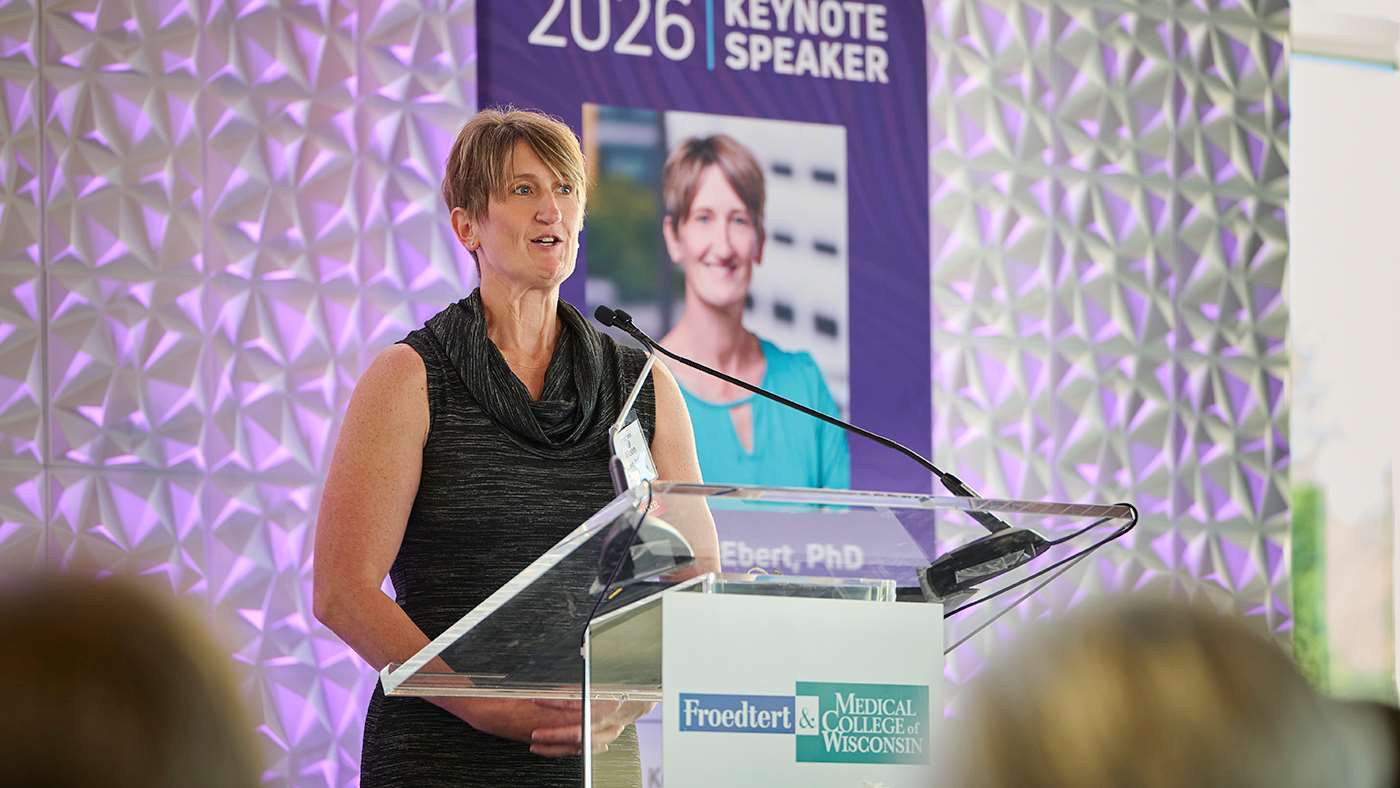
Achieving scientific breakthroughs and translating them into new treatments takes time, but families cannot wait. Philanthropic support is crucial to speeding up the pipeline from discoveries in the lab to bedside treatment. Dr. Ebert pointed to the more than 20 years that passed between the discovery of the genetic mutations that cause spinal muscular atrophy (SMA) and a treatment that now allows children born with this once-fatal genetic condition to survive.
“During those two decades-plus, every experiment that asked a question and got an answer that moved the field forward. We can take 20 years of basic science and follow it step-by-step to a child who is alive and thriving because someone made that investment,” Dr. Ebert said during her keynote address. “What we can’t do is any of that alone.”
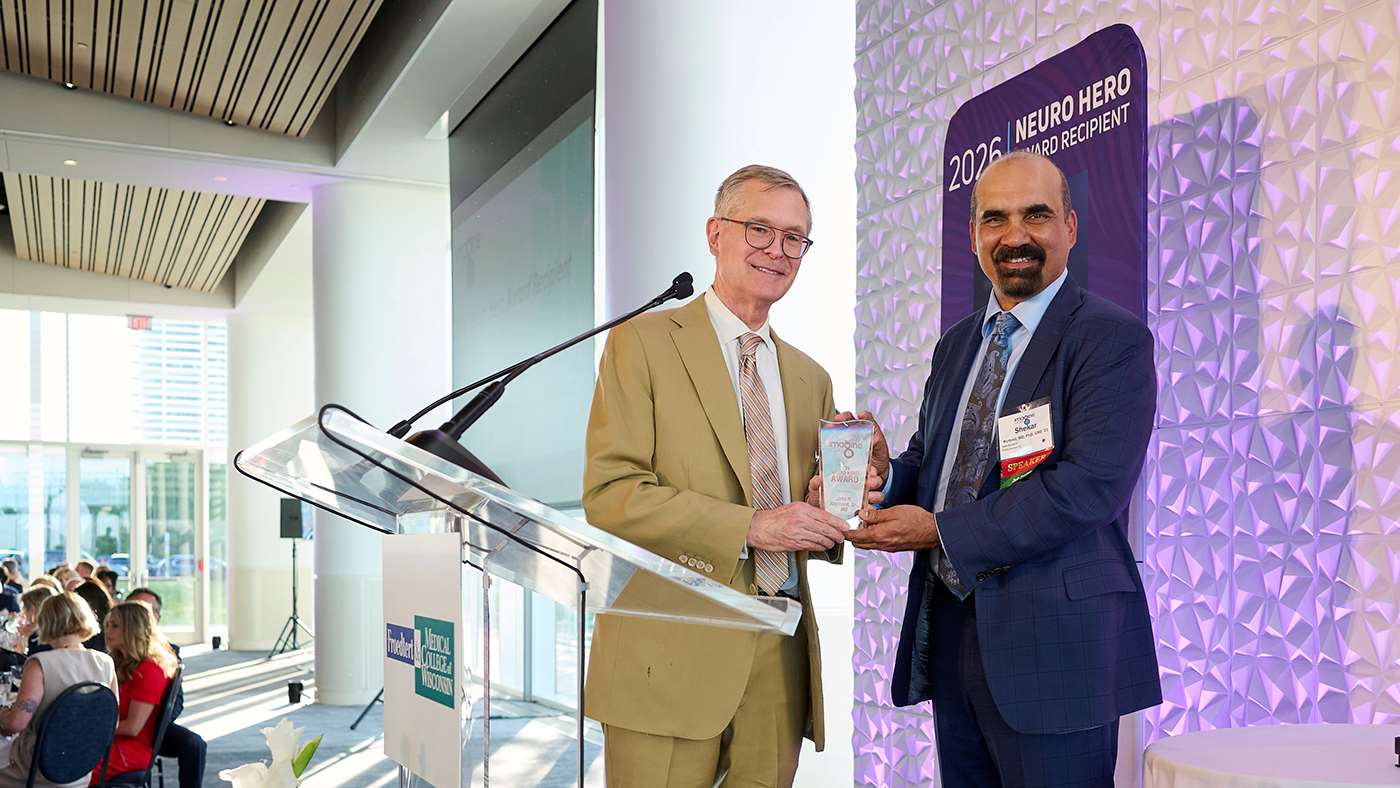
Collaboration at MCW and beyond is a guiding principle in the NRC’s work, making it apt that John R. Raymond, Sr., MD, MCW president emeritus and professor of medicine, was honored with the 2026 Neuro Hero Award for being “a true champion of the neurosciences and a dedicated supporter of research” across campus and the region during his 16-year tenure as president.
The evening also celebrated the 2026 Imagine More Research Award recipients whose innovative and collaborative work could yield the next major breakthroughs in the neurosciences:
- Constanza Garcia Keller, PhD, assistant professor of pharmacology and toxicology
- Pablo Nakagawa, PhD, assistant professor of physiology
- Jia-Qing Tong, PhD, postdoctoral researcher in the Department of Neurology
From advancing our understanding of how brain cells become more vulnerable to developing Alzheimer’s disease as we age to developing technologies that enable earlier, faster diagnosis, Imagine More research awardees have and will continue to transform medicine for generations to come. Recognizing this opportunity, donors came together to invest in the future of research, helping raise a grand total of more than $1.5 million through a challenge gift from Sallie Davis in memory of her husband Don, leadership commitments from the Kellners and Ann and Warren Pierson, and an inspiring paddle auction.
The promise of the NRC’s work is what motivates longtime supporters Bonnie and Ned Timarac, who recently funded the new Timarac Science in Action Award to help speed up the transition from lab to bedside.
“We are proud to support a world-class neuroscience research center right here in Wisconsin. Together, when we imagine more, we can accelerate discovery and create a brighter future for generations to come,” the Timaracs said.