Healing, Then Helping: A Student-Athlete Finds His Path in Medicine
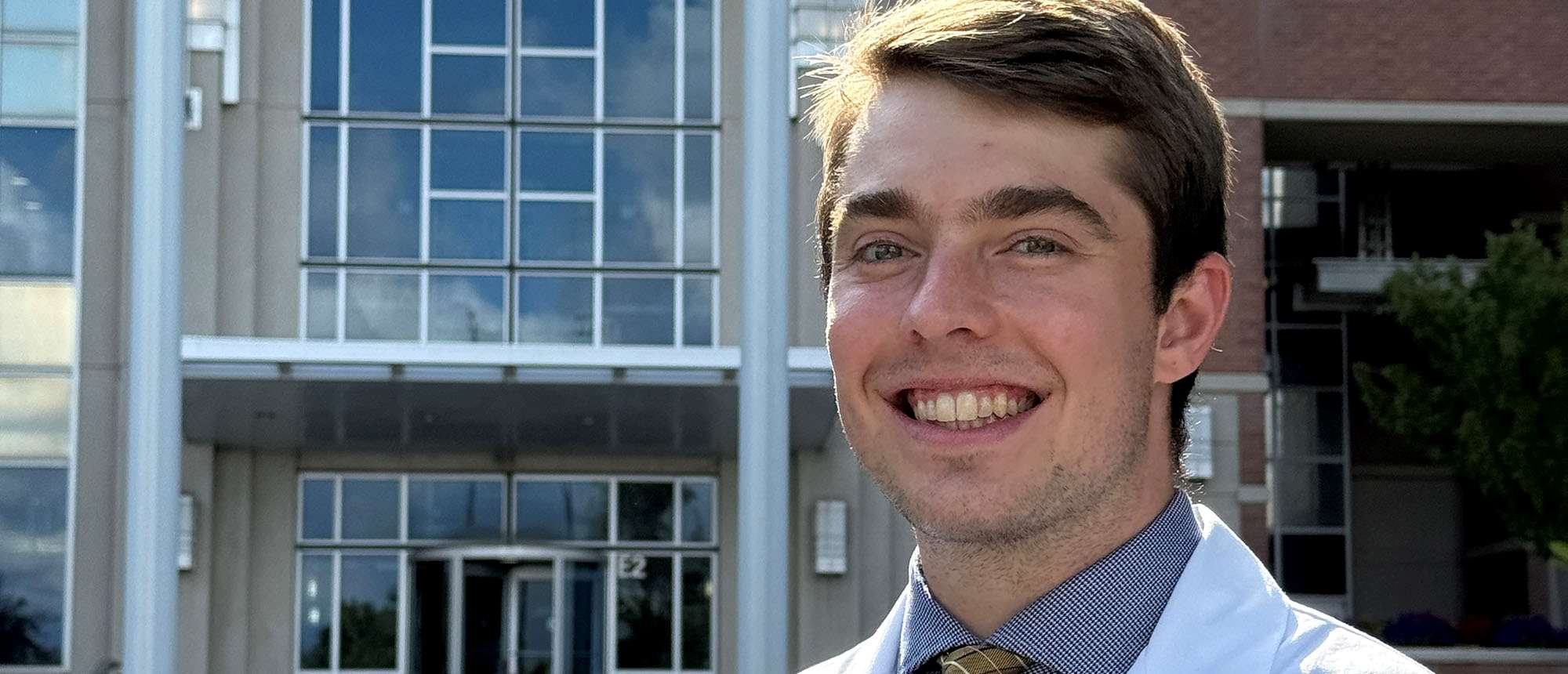
Growing up, Patrick Quinn and his younger brother Michael lived on the tennis court, competing on the USTA junior circuit and pursuing their dream of playing college tennis at the D1 level.
But Quinn’s world shifted in 2015 with a diagnosis of femoroacetabular impingement (FAI), a painful hip condition that would require three surgeries.
On the eve of his first procedure, his surgeon, hip arthroscopy specialist Marc J. Philippon, MD, walked into Quinn’s hospital room and asked one simple question: “Young man, tell me about your tennis.”
The fear and doubt Quinn carried disappeared in that moment, replaced by a sense of being truly seen and heard – a spark that would shape his path toward medicine. Today, a photo of Dr. Philippon still sits in Quinn’s apartment and on his medical flashcards, a daily reminder of his “why.”
"Dr. Philippon is a world-class surgeon and an even better person – someone who makes every patient feel as though they are the most important person in the world,” says Quinn. “That same intentionality is what I strive to share with others daily.”
A Global Perspective on Medicine
Quinn’s journey to the Medical College of Wisconsin (MCW) was not only guided by personal health challenges, but also by his endeavors to embrace new values, understand medicine on a global stage, and learn how to build meaningful connection through language.
While an undergraduate at the University of Notre Dame, he studied abroad in Angers, France, where he researched residents’ experience with the French health care system and their perspective on the U.S. approach to care. He also joined a volunteer trip to Nicaragua that deepened his interest in addressing health inequities and social determinants of health back home.
After graduating in 2020, Quinn took several years before medical school to gain a more comprehensive understanding of the medical field. He interned at a youth foundation in Las Vegas, launched a health and wellness podcast, learned Japanese as a hip preservation orthopedic research fellow in Fukuoka, Japan, and grew his clinical skillset as an orthopedic medical assistant (MA) in Portland, Oregon.
Along the way, Quinn found himself drawn not just to the science of medicine, but to the collective human effort behind every healing moment.
“The most surprising part of my time as an MA was discovering and sharing the joy of teamwork – how an entire team of doctors, PAs, MAs, and surgical techs would come together for one person’s healing. That sense of shared purpose and community is powerful,” says Quinn.
Finding a Supportive, Inclusive Community at MCW
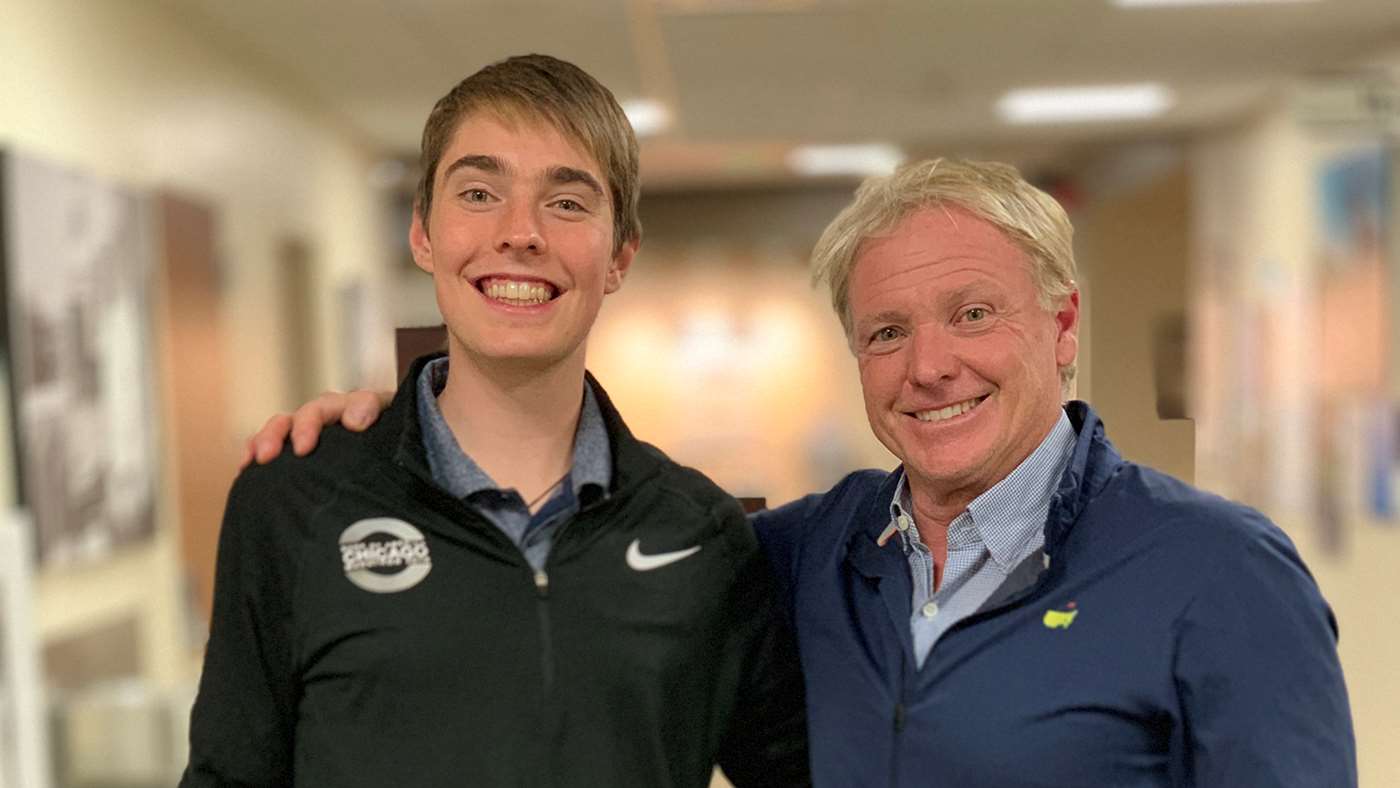
First-year medical student Patrick Quinn with Dr. Marc J. Philippon, the surgeon who inspired his career path.
When Quinn’s MCW acceptance email arrived on the same day that Notre Dame won its first home playoff football game in its history, he saw it as "a visible sign and the magic of life working at its finest."
That sense of alignment grew even deeper during a visit to campus in April 2025 for MCW’s Second Look weekend, where he connected with faculty and future classmates.
“The community, care, and opportunities were the three main factors that drew me to MCW,” he says, adding that whether connecting with upperclassman about research opportunities or orthopedic faculty about their life journeys, he has experienced firsthand the richness of MCW’s community.
“MCW fosters a thriving culture where people don't wait for you to ask for help, they actively seek ways to help you,” he says.
Quinn also says that MCW’s commitment to collaboration and inclusion stood out to him. The school welcomes students from all walks of life – international, non-traditional, and reapplicants – creating a welcoming community for tomorrow’s physicians.
A Medical Student’s Advice for Future Healers
Having successfully navigated the long and competitive process of applying to medical school, Quinn shares a simple message with prospective students hoping to train as future physicians: ‘Don’t give up. Don’t ever give up.”
After five gap years filled with health challenges, global perspectives, and many unexpected turns, Quinn realizes that progress doesn't have to be dramatic – even one percent effort each day compounds over time.
Quinn is excited by the upcoming opportunities at MCW and motivated to make the most of them. He encourages others to remember the value in their own path and to never forget their “why.”
“Let your journey unfold. It doesn’t have to be linear,” Quinn says. “You deserve to embrace and appreciate the uniqueness of your journey.”
MCW Medical School Admissions FAQ
MCW offers many program options to help you become the next generation of physician leaders. Here’s what you need to know if you are interested in applying to the MCW Medical School.
Recommended


