MCW Creative Writing Group Gives Those in Medicine, Science a Chance to Tell Their Story

The Medical College of Wisconsin (MCW)’s creative writing group Moving Pens aims to encourage individuals in the medical and scientific communities to put pen to paper and express themselves.
The group is part of the Medical Humanities Program in the Center for Bioethics and Medical Humanities, which is led by Arthur Derse, MD, JD, FACEP, professor of bioethics and emergency medicine. While the program had offered informal writing sessions prior to Moving Pens, the idea of a formalized writing group first surfaced in 2011.
That year, Bruce Campbell, MD, professor emeritus of otolaryngology and communication sciences and a member of the center’s faculty, met Kim Suhr, a Wisconsin author. Suhr directs Red Oak Writing, a community dedicated to advancing writers’ skills and goals. The organization offers programs like writing critique groups, which Dr. Campbell had attended.
That experience gave Dr. Campbell an idea: why not bring a similar group led by Suhr to MCW?
“Dr. Derse and I wanted to bring a writing group to campus because everyone says they want to write better, but they don’t know how,” says Dr. Campbell. “Moving Pens is a way for those at MCW who are interested in creative writing and narrative practice to have a way to write, share their work, and benefit from feedback.”
Connecting through Stories
 Moving Pens fully materialized in 2015 when Professor John Raymond, MD, then MCW’s president and CEO, established the President’s Prize in Creative Medical Writing. The annual award recognizes an MCW learner or faculty member who has composed an outstanding narrative essay or poem about medicine. Through this sponsorship, Moving Pens was also supported.
“Dr. Raymond's support was essential,” says Dr. Derse. “He gave us the engine to be able to do this.”
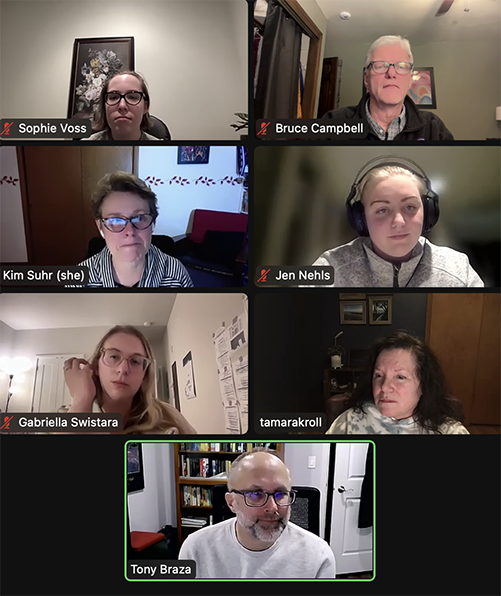
While Moving Pens was initially based in the medical humanities, all MCW learners, faculty, and staff can join the group, no matter their writing skills or experiences. Before each two-hour session, participants submit their writing – which can be anything from fantasy to poetry to medical narratives. During the virtual get-together, everyone reads their work, typically around 200 to 750 words, aloud.
“In the face of starting medical school, I wanted an outlet where I could write things down and explore how I was feeling,” says Aidan Zeimet, a second-year medical student who has taken part in Moving Pens. “It's also been really cool to see how multi-dimensional people are beyond being medical students, doctors, or employees.”
After the writer shares, the group discusses the piece and offers praise and constructive criticism. If a participant has not produced a piece, they can still provide feedback. Suhr moderates the discussion in addition to providing her own insight.
“Moving Pens reverses the hierarchy we have built within the medical community,” says Dr. Campbell. “A first year-medical student can critique my piece with authority. It’s really wonderful for the students to be able to interact with faculty and residents in ways that they can’t do in the hospital setting.”
Beyond the Pages of MCW
Many Moving Pens alumni have gone on to publish their pieces, everything from short stories to full-length books. One alumna, Brittany Bettendorf, MD ‘11, RES ‘15, FEL ‘17, MFA, who participated in Moving Pens during her residency training, even rooted her career in the medical humanities.
As the next step in her career path, she included pieces she had developed as part of Moving Pens in her writing portfolio for the University of Iowa’s nonfiction MFA program.
“My time in the Moving Pens was invaluable to growing my writing and improving my ability to critique the work of others,” says Dr. Bettendorf. “When I started looking for a job, I knew I wanted a position that would allow me to incorporate teaching medical humanities into my career.”
Dr. Bettendorf, along with fellow MCW alumna Elizabeth Fleming, MD ‘11, launched the Midwest Physician Writers Retreat last year, which has now become The Society of Physician Writers. The association provides a network for physician-writers to share their work, receive feedback, and build community.
Emphasizing Humanistic Patient Care
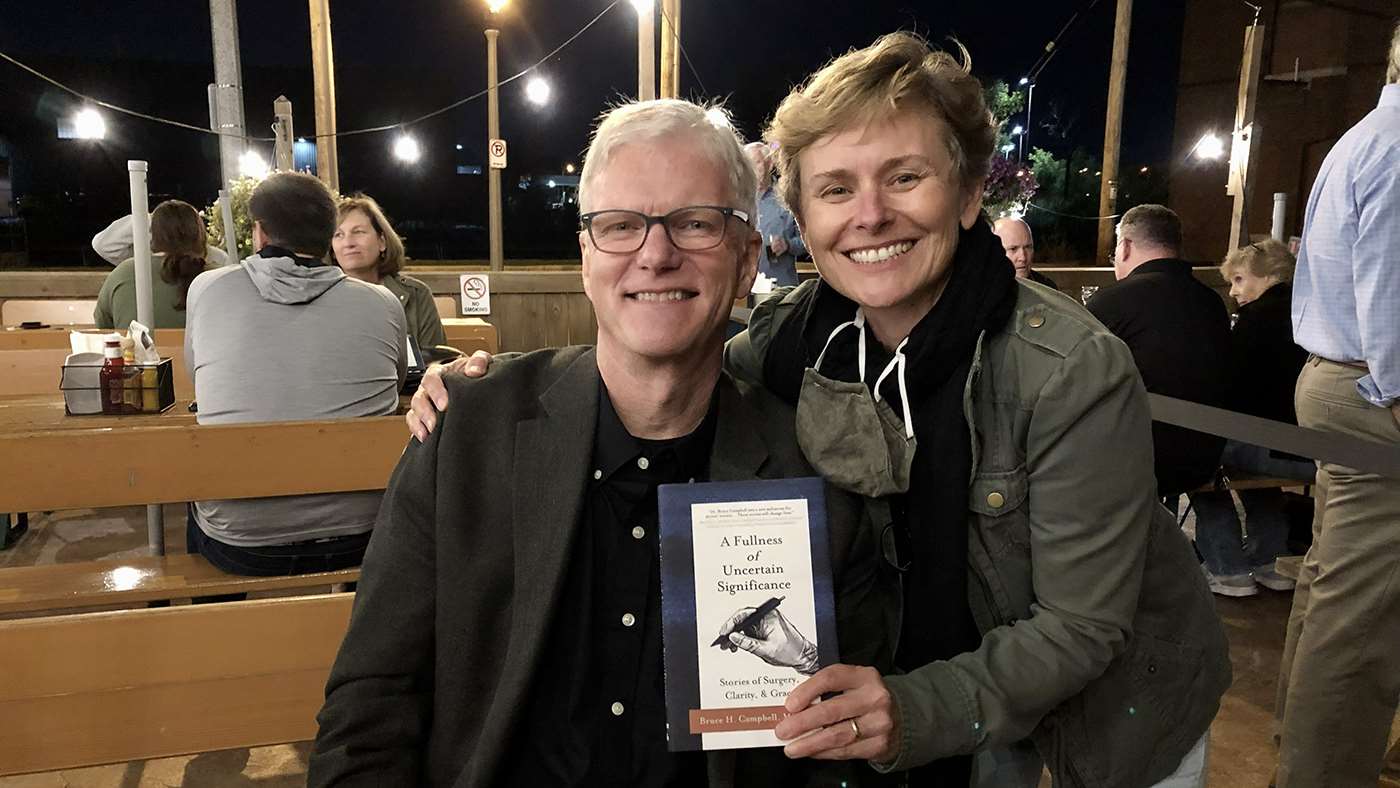
Dr. Bruce Campbell and Wisconsin author Kim Suhr helped launch Moving Pens in 2015 and continue to moderate sessions.
Moving Pens reflects a broader shift in medical education that aims to integrate the arts and humanities into the curriculum. By doing so, students have the chance to explore and express their creativity.
“The curriculum [of medical and graduate school] can be pretty tough and the lifestyle can be pretty brutal. The students who find these little niches where the humanities are loved and practiced will find it is an important part of their community and training,” says Dr. Campbell.
Ongoing research suggests that adding the arts and humanities into medical education can benefit patients and physicians.
“The arts and humanities can help develop communication, reflection, and empathy skills, and advance professionalism,” says Dr. Derse.
“When I tell people what I’m doing at MCW, I tell them that research has found that when medical professionals study the humanities, they become better humans,” says Suhr. “And that’s what we want, right? A really good human giving us medical care.”
Recommended


