
Unlocking the Body’s Defenses Against Microsporidia and Other Infections
The parasites known as microsporidia are found all over the world and can cause lethal infections in humans, and there is currently no known treatment to combat them.
Studying just how these fungi infect species is difficult. They either kill the model organism too quickly, or the infection is cleared promptly, making long-term studies difficult.
At the Medical College of Wisconsin (MCW), Eillen Tecle, PhD, is working to change that. As an assistant professor of microbiology and immunology, Dr. Tecle studies tiny worms called C. elegans to better understand how microsporidia infect them.
That, in turn, allows her and her team to discover how epithelial cells – the barrier cells around organs – mount an immune defense. Understanding these genetic and cellular pathways can illuminate scientists’ basic understanding of both immunity and metabolism while laying the groundwork for future therapies.
“In my heart, I’m a basic science researcher,” Dr. Tecle says. “But my aim is to have a lab where C. elegans is our workhorse to identify novel but conserved pathways that regulate immunity with the ultimate goal of determining how they impact human health.”
A Model System for Studying Immunity
While microsporidia infections are more widespread in developing countries, they can occur in the United States, especially among elderly people and those who are immune compromised – such as people with HIV.
C. elegans are an ideal system to study parasites like microsporidia because they are transparent, which allows researchers to alter and tag certain genes with fluorescence and watch how gene and tissue expression changes over the lifetime of the millimeter-length worm.
 For someone like Dr. Tecle, who was encouraged as a child to take devices apart to understand how they worked by her chemist father, the C. elegans system is the perfect biological system to replicate that feeling of wonder.
“You spend 70 percent of your day at a microscope watching the effects on worms,” she says. “I always joke that before my PhD I didn’t wear glasses, but everyone who goes into studying C. elegans gets bad vision.”
As a postdoctoral researcher at the University of California, San Diego, Dr. Tecle identified regulators of the immune response to microsporidia. She found that the genes related to regulators were also related to metabolism. She then worked to understand how naturally occurring metabolites regulate immune function.
As a member of MCW’s Center for Infectious Disease Research, she is continuing that research to understand how one metabolite, called deoxyadenosine, acts as an activator of the immune system.
She’s also continuing a path of research that she started during her PhD at Albert Einstein College of Medicine, where she studied glycobiology – examining how sugars within cells called glycans affect the immune systems.
Today, she’s studying how O-GlcNAc – a sugar attached to proteins inside of cells – activates the immune system.
“Animals that have too much O-GlcNAc are good at resisting viral infection, but those who are devoid of it are hypersensitive,” she says. “We’re studying the pathways to better understand how this sugar may have an impact on immune response.”
She’s also studying how epithelial cells within the body have an active role in immunity. Specifically, she studied C. elegans’ intestinal immune response to pathogens. “We previously thought these cells were just barriers within the body, but they have an active role in destroying pathogens,” she says.
Extending Findings to Other Systems
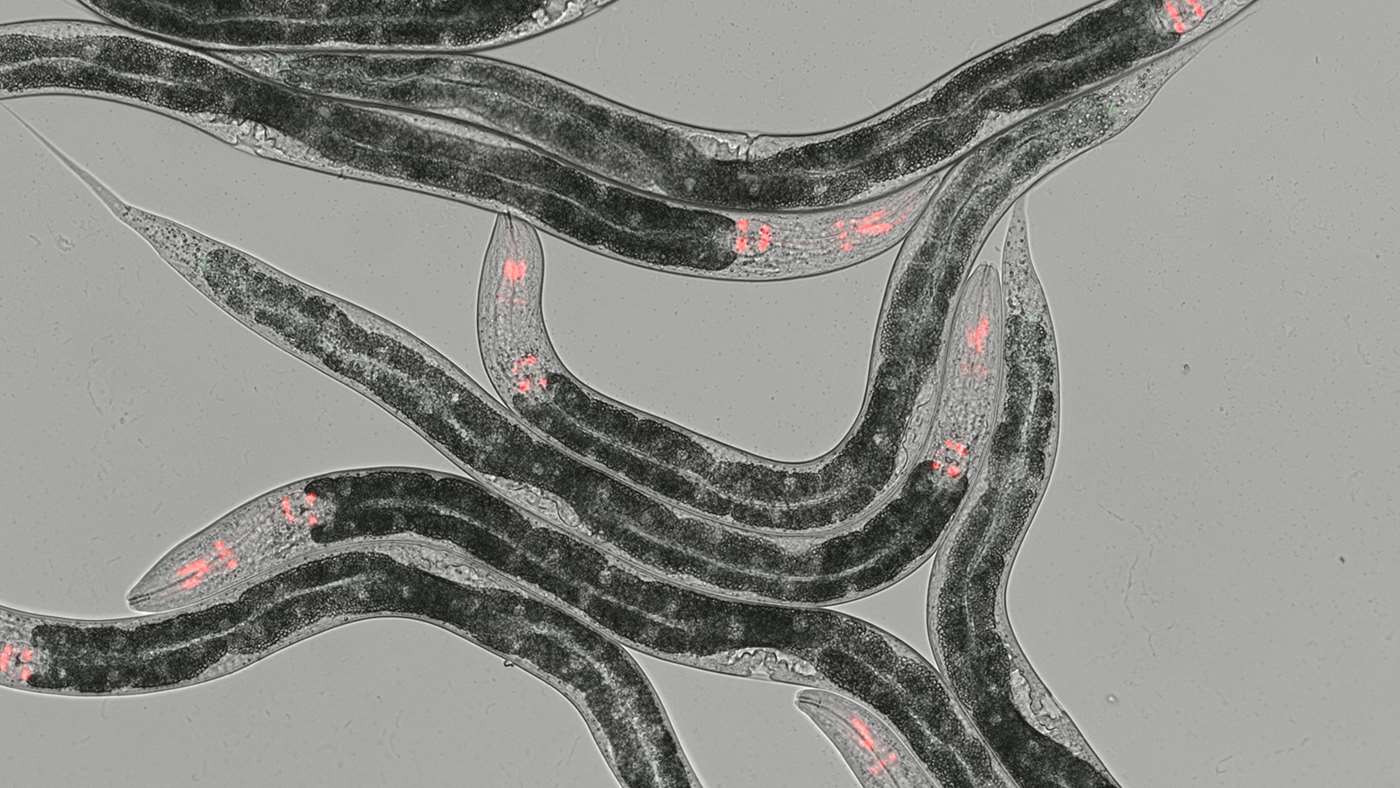
Dr. Eillen Tecle uses the tiny worm model C. elegans to better understand the human immune system.
Studying a model system like C. elegans allows researchers to uncover new knowledge about genes and pathways, and Dr. Tecle plans to build on that research by moving onto more complex organisms as she establishes her lab at MCW.
“I always want to be the person who says, ‘Okay, we found this in worms, but what does it do in other systems?’” she says.
Since coming to MCW in 2024, she has found colleagues who are supportive, helpful, and collaborative – the kind of environment necessary to take her research to the next level.
“That was a major motivating factor to come to MCW – to be surrounded by people from different specialties who can help translate my research further,” she says. “I want my skills to be pushed into new areas with the help and guidance of my colleagues. That’s why MCW is the best place for me to do my research.”
Recommended


