
To Create Better Vaccines and Therapeutics, Researchers Study How Leptospira Bind to Hosts
In many parts of the developing world, leptospira – a bacteria found in soil and stagnant water in humid environments – is a persistent public health issue. In the U.S., the bacteria’s presence is also rising and outbreaks are becoming more common.
Typically, leptospira colonize small rodents, which excrete the bacteria in their urine. Leptospira can live in soil or bodies of water for months or years. In animals such as cattle and pigs, infection leads to reproductive issues, causing significant economic losses in the U.S.
When it gets into humans – through a cut in the skin, for example – it can cause a deadly infection called leptospirosis. Symptoms of the infection range from a mild, flu-like illness to multiorgan hemorrhage, kidney failure, and death. It is estimated that there are 1 million cases a year worldwide with 60,000 deaths, but this is likely underestimated due to limitations in surveillance.
At the Medical College of Wisconsin (MCW), Matthew Surdel, PhD, assistant professor of medicine, is examining the bacteria at the smallest levels to determine how it adheres to its host – with the goal of creating a new vaccine or therapeutic.
“Infectious disease is one of the highest causes of death worldwide, but treatment options for bacterial infections are getting more limited as bacteria develop antibiotic resistance,” he says. “We need to find new strategies to combat these infections. But before you can create that, you need to better understand the bacteria itself.”
Bacteria Found in the Kidneys
 Dr. Surdel has a long history of understanding the effects of bacteria. As a graduate student at Vanderbilt University, he studied staphylococcus bacteria – the cause of major infections in humans – and discovered a new strategy to treat staph infections.
He joined MCW as a staff scientist in the lab of Jenifer Coburn, PhD, professor of medicine and microbiology and immunology and a world leader in the kind of bacteria known as spirochetes.
“She is one of the best funded experts in these diseases, so she built up a lot of resources at MCW and created a great foundation for me to work off of and build on,” he says.
As Dr. Surdel’s research in leptospira took off, he moved into a faculty role. Now, with his own lab and funding, he is using in vitro assays and mouse models to study how the bacteria bind to cells in hosts.
He and his collaborators found that one specific protein called LIC13411 seems to be particularly important to this binding. If you add this protein to a strain of leptospira bacteria that doesn’t have good binding, it binds just as well as the strain that causes infections in people.
Determining just how bacteria bind to a host could help researchers develop anti-adhesion therapies that stop it from binding and infecting the body.
“Many scientists hypothesize this strategy won’t lead to the same levels of resistance, like typical antibiotics do,” Dr. Surdel says.
To better understand where it binds in the body, Dr. Surdel has developed a mouse model and a new infection method that mimics how animals are infected in the wild.
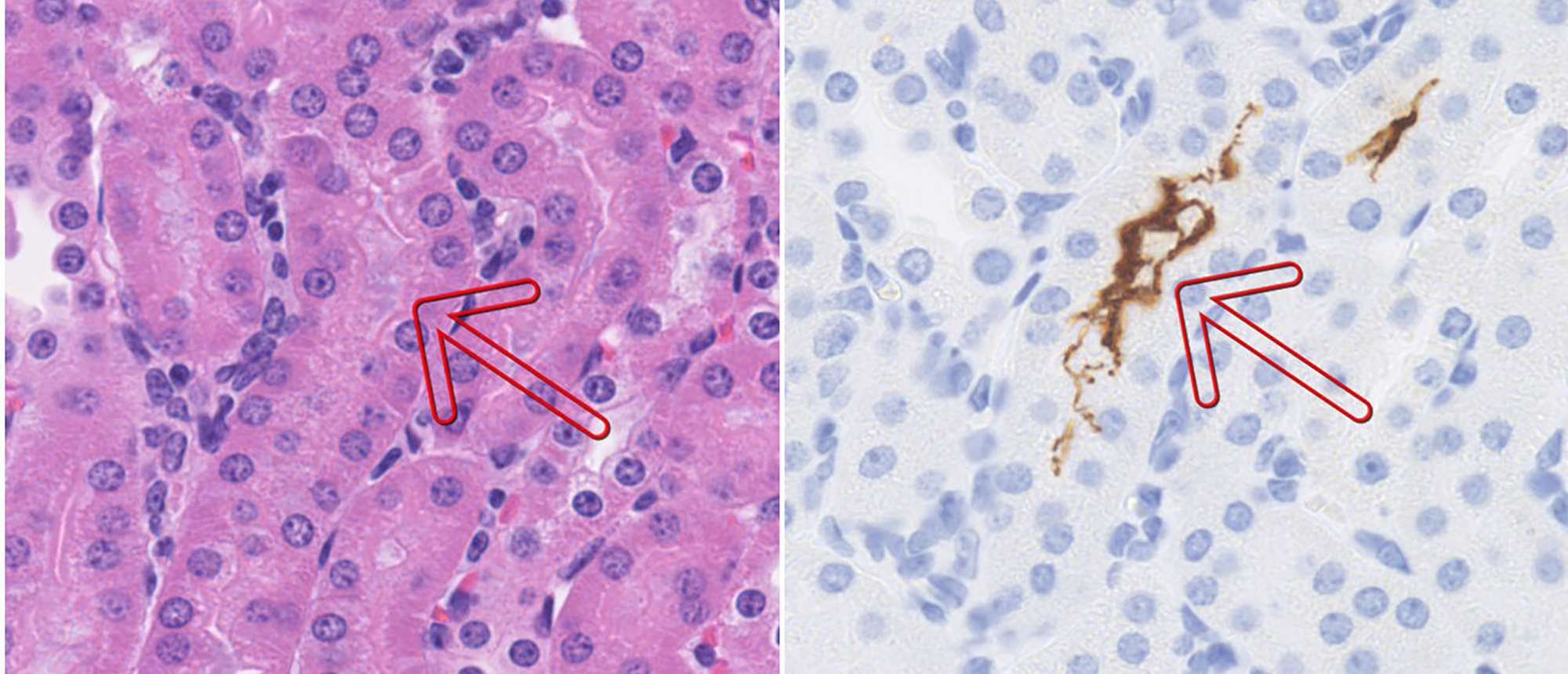
With funding from MCW’s Research Affairs Committee New Faculty Pilot Grant program, he found that the bacteria colonize the kidneys and cause damage even in animal hosts. This parallels what is seen in humans. Scientists globally are reporting that patients who are colonized by the bacteria without immediate disease can often develop chronic kidney disease. Therefore, this provides a new model to study kidney disease that directly relates to human health.
“The thought has been that mice and rats don’t get sick from leptospira, they are just hosts, but we found that mice are also getting kidney injury from leptospira,” Dr. Surdel says.
Understanding How Bacteria Bind
With a new R21 grant from the National Institutes of Health, Dr. Surdel is working to understand how leptospira binds to kidney cells – how it gets into the kidney, which cells it interacts with, and how those interactions work – with the ultimate goal of interrupting that process to treat and prevent infection.
Using CRISPR technology, a genetic engineering tool that can be used to modify the DNA , Dr. Surdel has altered the genetics of leptospira strains to better understand which genes are necessary for binding – and how to target them.
Leptospira vaccines do currently exist, but they work by injecting a small amount of bacteria into the body to let the immune system build up a defense against them. These vaccines don’t provide long-lasting or strong immunity and have significant side effects.
“We really need to figure out exactly what’s going on with the bacteria so we can design a better vaccine to prevent leptospirosis,” he says.
Recommended


