

Dr. Tom Aufderheide Celebrates 40 Years of Discovery in Emergency Cardiac Care
Somewhere in an airport terminal, a defibrillator hangs on the wall. In an ambulance racing toward a hospital, a paramedic transmits a digitized 12-lead ECG ahead to the emergency department. Neither of these now-common tools existed as they do today before Tom Aufderheide, MD, MS, FACEP, Hon FACC, FAHA dedicated his career to reimagining how the world responds to cardiac emergencies.
Dr. Aufderheide is a professor and director of the Resuscitation Research Center at MCW, where he also serves as medical director of the Trial Innovation Network for the CTSI of Southeast Wisconsin. In his 40 years at MCW, his research has reshaped emergency cardiac care on a global scale.
His path to MCW began with a decision to pursue a road less traveled. Already board-certified in internal medicine, he chose to complete a second residency in emergency medicine at MCW, at a time when the specialty itself was brand new.
"It was a new frontier of medicine," he said. "I wanted to continue to improve care that was delivered in this field."
That drive led him to pursue a master's degree in translational research at MCW, laying the foundation for a research career that would go on to influence clinical practice worldwide.
For Dr. Aufderheide, the appeal of research has always come down to "original discovery, improving clinical practice, survival and quality of life for the patients we treat," he said, while describing what he enjoys most about his work.
Over four decades, Dr. Aufderheide's research has produced a series of advances that changed the standard of care for patients experiencing cardiac emergencies around the world.
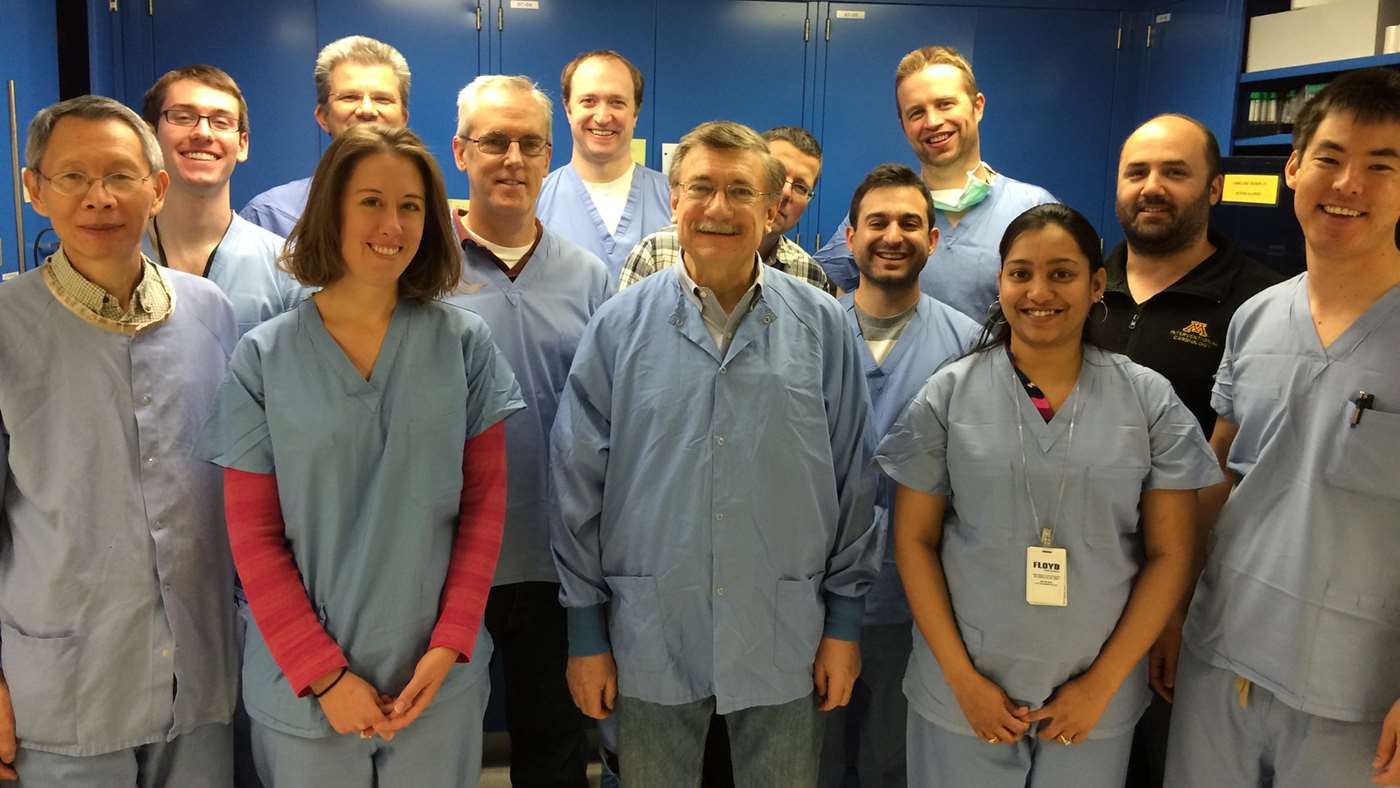
Dr. Aufderheide collaborating with Dr. Demetris Yannopoulos in his basic science and animal laboratory, developing new treatments for study in humans.
He conceived of, developed and pioneered the use of out-of-hospital 12-lead ECGs, technology that now forms the basis of heart attack treatment programs in most developed communities worldwide and has reduced mortality from acute myocardial infarction by 38% in the United States alone.
He was instrumental in establishing layperson use of automated external defibrillators (AED), known as public access defibrillation, which doubled survival rates from cardiac arrest in public settings and provided the scientific basis for revising national health care policy.

Pictured left: Call 911, do CPR and use an AED
His research also uncovered how blood actually flows during CPR, a discovery that led to the development of active compression decompression CPR and the impedance threshold device. Approved by the FDA, these devices are now in widespread use and have improved intact survival at one year by 52%.
That same body of research revealed the detrimental effects of hyperventilation and incomplete chest recoil during CPR, findings that have since been incorporated into American Heart Association CPR guidelines followed nationally and internationally.
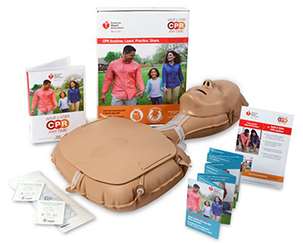
Pictured right: Dr. Aufderheide conceived of and helped develop the AHA CPR Anytime Kit, designed for independent, home use, training millions of laypersons each year in CPR and AED use.
More recently, Dr. Aufderheide's collaboration with Dr. Demetris Yannopoulos at the University of Minnesota has advanced extracorporeal membrane oxygenation (ECMO) facilitated resuscitation for patients with refractory out-of-hospital cardiac arrest, an approach that has transformed survival and quality of life for patients who previously had no chance of recovery.
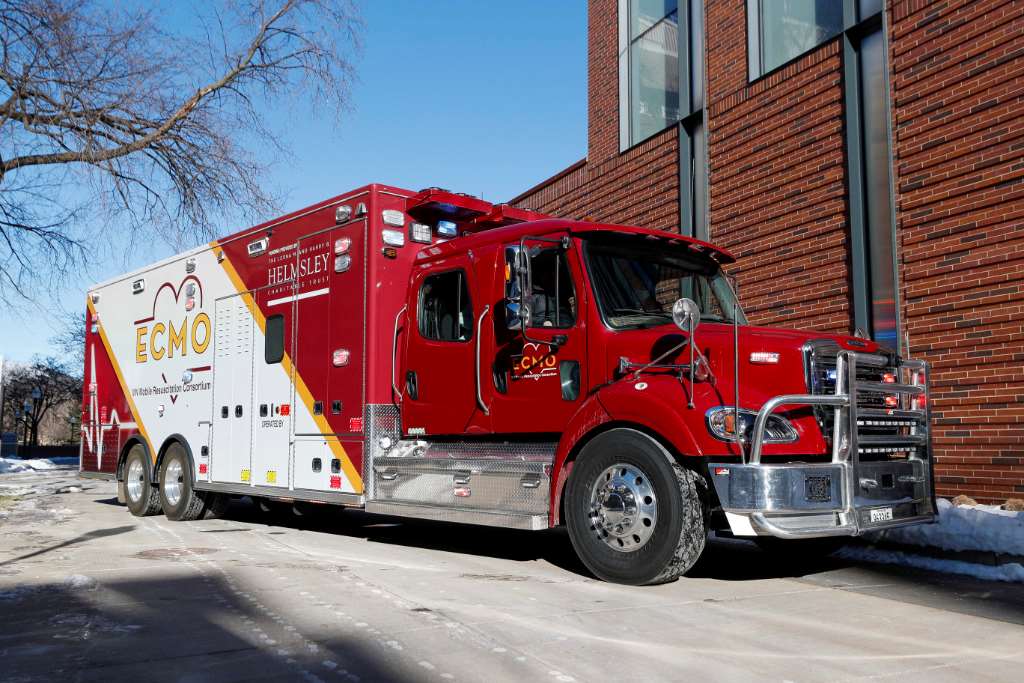
The Minnesota Mobile Resuscitation Consortium’s specialized ECMO truck, bringing emergency room heart-lung bypass capabilities directly to out-of-hospital cardiac arrest patients who do not respond to standard CPR or defibrillation.
One memory stands out to him as a reminder of what his research means in human terms. At a press event for the National Academy of Medicine report, “Strategies to Improve Cardiac Arrest Survival: A Time to Act,” three strangers approached him holding signs he couldn't quite make out.
"These three people just came up to me. I didn't know them at all. They had these signs, and I couldn't see what was on them," Dr. Aufderheide recalled. "They sent [the picture] to me later, and it was so touching to me because it was only then that I realized these were survivors who had lived through cardiac arrest. This is the end result of what we strive to achieve, and it was so meaningful to me personally."
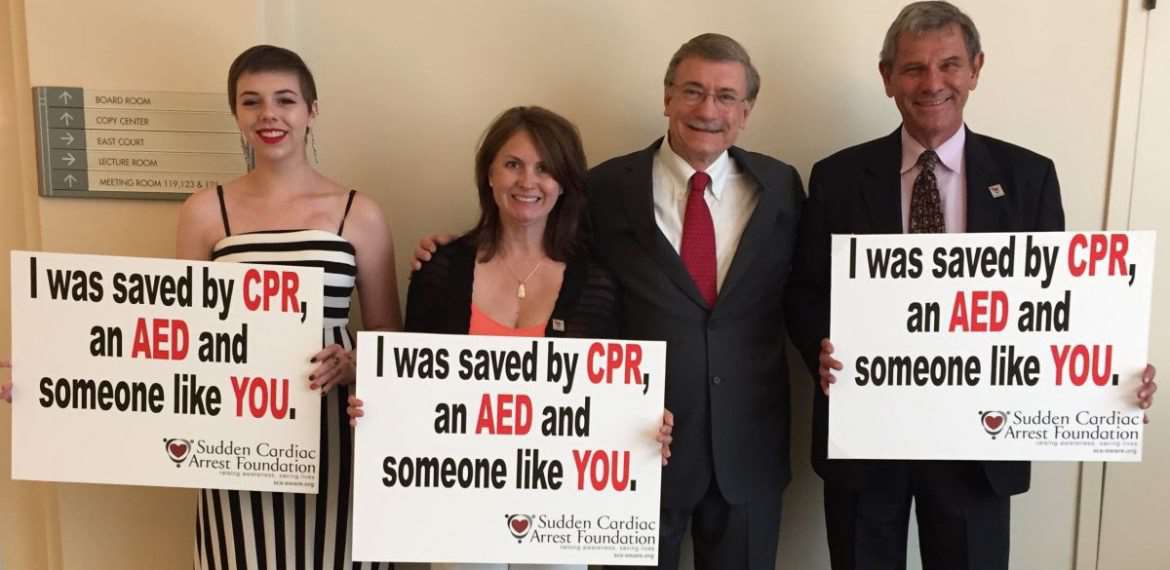
Three survivors of cardiac arrest standing next to Dr. Aufderheide hold signs that read, “I was saved by CPR, an AED and someone like YOU.”
Dr. Aufderheide's contributions have earned him many honors, but two of the most personally meaningful include his election to the National Academy of Medicine and honorary fellowship in the American College of Cardiology, the latter awarded for his collaborations with the Department of Cardiology.
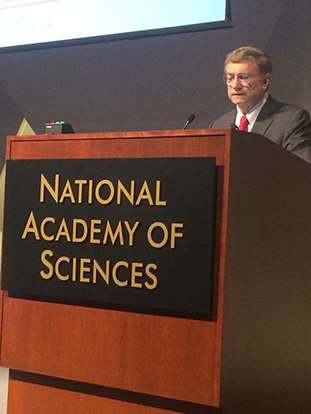
Pictured left: Dr. Aufderheide accepts his election into the National Academy of Medicine of the National Academy of Sciences.
Ask Dr. Aufderheide what has kept him at MCW for 40 years, and he points to two things. The first is MCW's culture of collaboration, which he said robustly supports interdisciplinary clinical research. The second is the Milwaukee County Emergency Medical Services system, which he considers one of the most sophisticated and high-quality EMS systems in the world.
"To improve delivery of clinical care, very little can be accomplished alone," he said. "It takes enthusiastic collaboration from the entire system to accomplish clinical trials that change practice."
He credits his closest collaborations with the directors, administrators and clinicians of the Milwaukee County EMS system, along with the Department of Cardiology, as some of the most rewarding of his career.

However, for all his professional accomplishments, Dr. Aufderheide was very clear about where his ability to do this work comes from: "Whatever I have been able to contribute, it is only because of the commitment, love and support of my beautiful wife, Anne!"
Pictured right: Dr. Aufderheide and his wife Anne at their wedding in 1988.
Please join us in congratulating Dr. Tom Aufderheide on 40 remarkable years of service to MCW. His research has saved countless lives, shaped national and international clinical guidelines, and reflected the very best of what collaborative, purpose-driven medicine can achieve. We are deeply grateful for his contributions and for the legacy of discovery he continues to build.