For Families Facing Rare Diseases, Genetic Research Delivers Answers
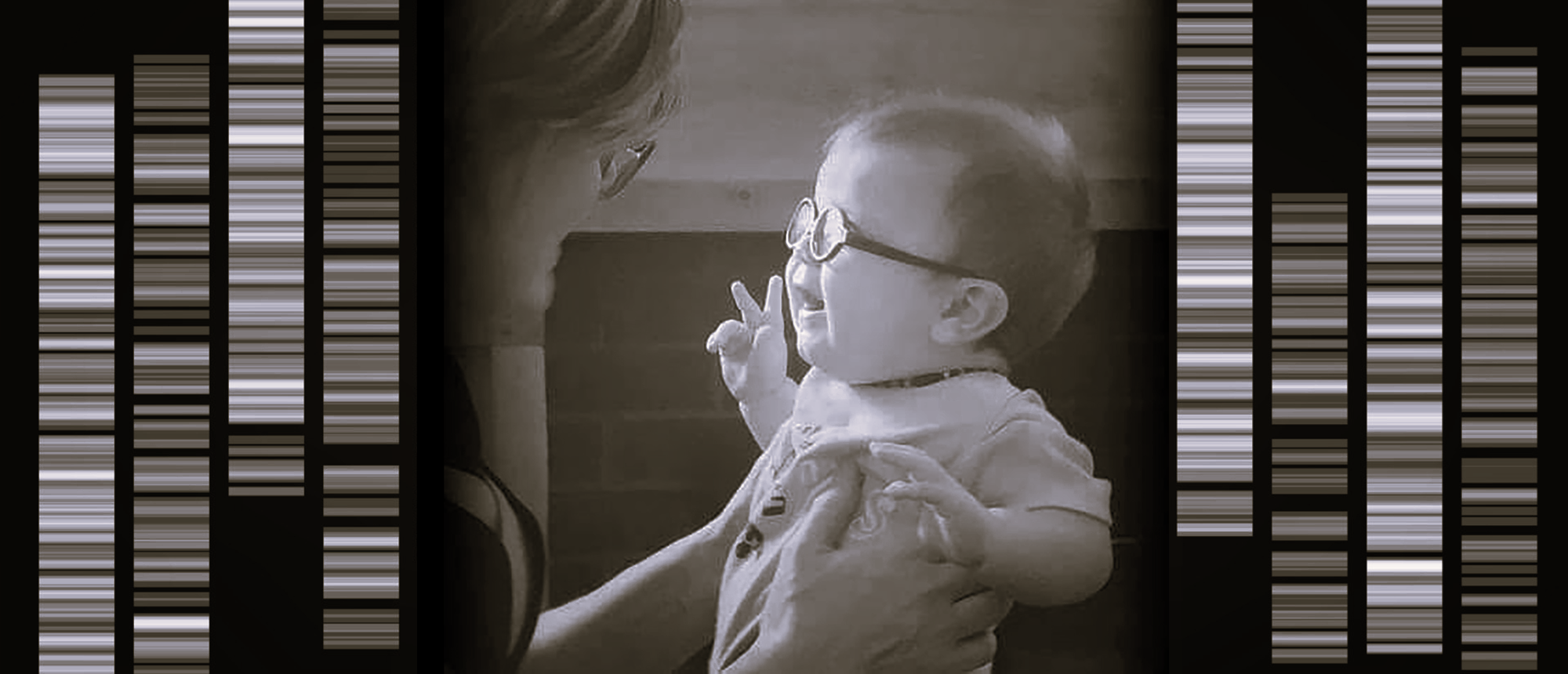
When Andrea Carlson's son Joe was born, she knew something was wrong before anyone said a word. "I have five children," she says. "His eyes didn't look like the rest of my kids' eyes."
There was a cloudy white cast over them. The pregnancy had been a difficult one, and she wondered if she was imagining it due to nerves. But soon she got a diagnosis: Peters anomaly, a rare condition that affects the cornea and can lead to severe vision loss.
Joe's eyes were only part of the picture. He was also missing his corpus callosum – the structure that connects the two halves of the brain – and had a heart defect.
Carlson felt the conditions must be connected, but basic genetic testing didn't turn up anything. Some doctors suggested he might have an even rarer condition called Peters Plus syndrome, but Joe didn't quite fit the profile.
"Children with Peters Plus typically are of short stature," she says. "They typically have a cleft lip or a cleft palate. He had none of that."
Connecting with a Leader in Rare Disease Research
When Joe was just a few months old, he had corneal implants that kept him from going completely blind, but his vision was far from good. He was also diagnosed with ADHD and autism.
As he grew into toddlerhood, Carlson wanted more answers. She especially wanted to know what the future might hold for Joe, but she wasn't sure how to find them.
Then, she learned from an online support group about a study being run at the Medical College of Wisconsin's (MCW) Genomics, Genetics and Epigenetics Laboratory, directed by Elena Semina, PhD, the Marjorie and Joseph Heil Professor of Ophthalmology & Visual Sciences.
The Medical College of Wisconsin is a leader in rare disease research and diagnosis and is home to several programs dedicated to the field – among them Dr. Semina's Genomics, Genetics and Epigenetics Laboratory and the Linda T. and John A. Mellowes Center for Genomic Sciences and Precision Medicine, which focuses on inherited diseases.
Such programs can offer patients and their families something as rare as their diagnoses: answers. Carlson didn’t hesitate. She took Joe in to have his blood drawn and gathered cheek swabs from all the family members.
"It was a Hail Mary for us," says Carlson. "One last chance to find out what truly was going on with Joe."
Shedding Light on Genetic Causes of Disease
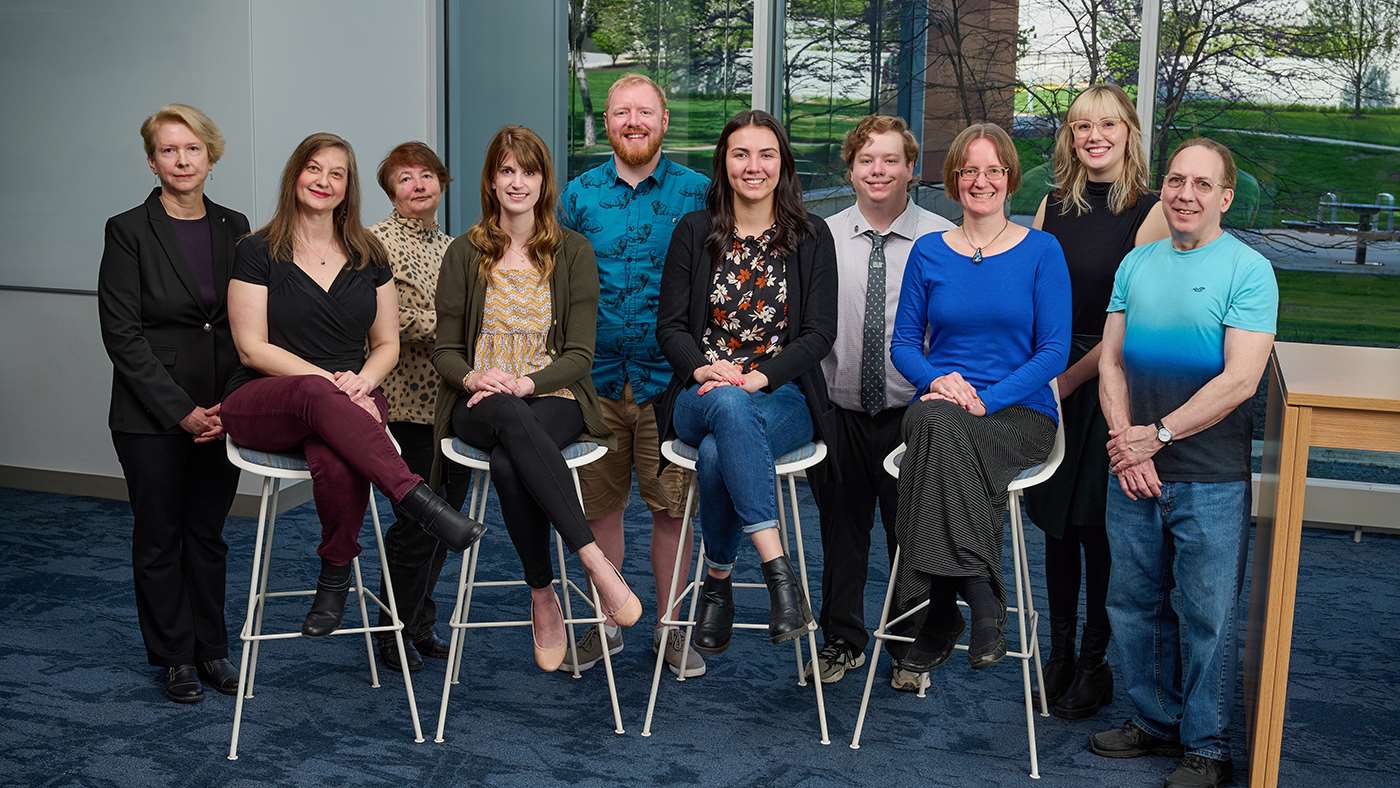
MCW's Genomics, Genetics, and Epigenetics Lab, led by Dr. Elena Semina (back row, far left), works with families and individuals with rare diseases to identify the genetic factors behind their diagnoses.
Carlson's desire for answers was all too familiar to Dr. Semina, an expert in characterizing the genetic factors behind particular congenital diagnoses.
Eye disorders and the syndromes that affect them have long been central to her work. As a postdoc at the University of Iowa, she successfully identified the gene, PITX2, responsible for a congenital ocular disorder called Axenfeld-Rieger syndrome.
At the time, gene discovery was painstaking – what she describes as "working in the dark." Researchers relied on positional cloning – wherein specific genes are tagged based purely on their location on the chromosome – to track down disease-causing genes, a slow and laborious process.
The discovery was significant, as PITX2 was only the second gene ever linked to front-of-eye anomalies. Dr. Semina presented her findings at a major genetics meeting and was personally congratulated by a leading figure in the Human Genome Project.
The gene she found was the first of its class, but there were others in its family later identified by Dr. Semina and also tied to hereditary disorders affecting the front of the eye. When she dug into the literature, she discovered that how this part of the eye develops was still largely unknown.
"That intrigued me," she says. "I also felt like this was an opportunity for discovery."
Building a Genomics, Genetics, and Epigenetics Lab
Dr. Semina wrote her first independent NIH grant on one of these genes, was funded, and moved to MCW – where she started the research program studying anterior segment eye disorders. Over the years, her work has evolved into a diversified, continuously NIH-funded program that now encompasses a broad range of pediatric conditions.
Over the years, gene sequencing has become much easier than in the early days of positional cloning. With the Carlson family samples, Dr. Semina's team used a technique called exome sequencing to rule out variants in genes already known to cause Peters anomaly. Exome sequencing reads only the protein-coding portions of a person's DNA, roughly 1% of the entire genome, where the vast majority of disease-causing mutations are found.
When none of those known gene variants turned up, the team began analyzing variants not previously linked to ocular disorders. They identified a variant in a gene called CDH2 that was unique to Joe and absent in both of his parents, and was predicted to affect the function of the protein it produces: N-cadherin.
This protein plays a critical role in cell adhesion – helping cells hold on to each other within tissues – and is central to the development of the eyes, brain, heart, and other parts of the body.
In studies of mouse embryos, Dr. Semina’s collaborators also confirmed this protein is active in exactly the right place and time – in the developing lens and cornea – when Peters anomaly would originate.
The team also identified three more people with variants in CDH2 and diagnoses of Peters anomaly, some of whom also had a missing corpus callosum and/or heart defects.
Around the same time, another research group reported nine additional individuals with CDH2 variants and gave the syndrome a name: Agenesis of the corpus callosum, Cardiac, Ocular, and Genital syndrome, or ACOGS.
"I cried when I found out," Carlson says. "It just made sense because all these three things all lined up together. Now we know there's a cause."
Providing Patients with Answers
That reaction is what makes it all worth it for Dr. Semina and her team.
Dr. Semina's team has continued to study the role of CDH2 and is preparing to publish a second paper, with new cases bringing the number of known individuals with ACOGS to more than 30 and offering new insight into how the gene's function is disrupted.
It is that connection to real patients and families, she says, that fortifies her and her team through the inevitable setbacks and challenges of research.
"This is what helps me to keep going. It’s the reason I’ve always wanted to stay focused on human disease," she says.
Recommended


