MCW Experience Prepares Alum to Tackle Global Health Disparities
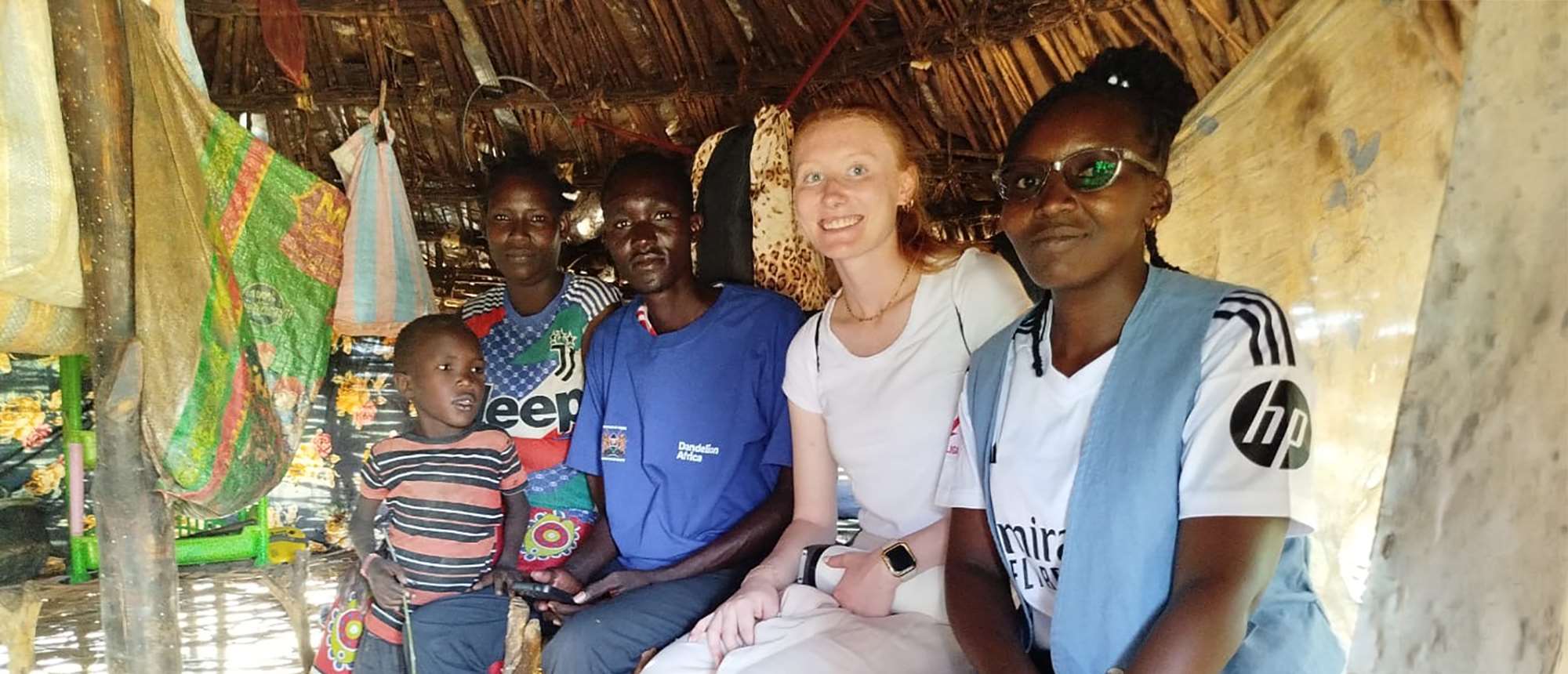
Last summer, Jordan De La Hunt, MS ’25, found herself walking miles while conducting nutritional outreach in and around Chemolingot, Kenya. Her tasks included taking the weight of the children she met, handing out nutrition bars, and going from house to house to meet community members.
“Going to meet the children had a huge impact on me,” De La Hunt says. “We were really able to see a difference in their growth.”
She was in Kenya as part of the Medical College of Wisconsin’s (MCW) Global Health Equity Master’s Program. The two-year program prepares students to tackle global disparities and hone their skills through interdisciplinary and hands-on learning, including immersive educational experiences in global health inequities with communities unlike their own.
In Kenya, De La Hunt was paired with the African Centre for Community Investment in Health, learning about tropical diseases and observing nutritional outreach. She says it was eye-opening to see how difficult it was to obtain healthcare for residents of Chemolingot and the surrounding villages.
“We probably walked half an hour before we got to the first house,” she says. “It was a long distance that people or healthcare providers needed to travel to give or receive care.”
Where Community Becomes the Classroom
While some may see this type of outreach as beneficial to the villagers, De La Hunt views the experience as reciprocal.
“There is so much you can learn from these communities,” she says, noting with admiration the patience and gratitude the villagers showed even though they sometimes had to wait for hours before being seen.
“They don’t complain. They are grateful. Those are some of the values I have taken away from this educational experience,” she says.
De La Hunt’s reflections capture the kind of transformative, community-centered learning the program seeks to foster in its students, says Connie Shumba, PhD, program director of the master’s program and an associate professor in the Institute for Health and Humanity.
“Jordan exemplifies what the master’s in Global Health Equity program is designed to cultivate: professionals who approach global health with humility, curiosity, and a deep respect for community knowledge,” Dr. Shumba says. “Her experiences reflect our belief that addressing health disparities is a reciprocal process, where students learn as much from communities as they contribute. We are deeply grateful to our collaborating partners, the African Centre for Community Investment in Health for hosting Jordan in Kenya.”
“Jordan had the best exposure to life in the Kenyan community and had unforgettable and life-changing experiences, adds Richard Wamai, PhD, executive director of the African Centre for Community Investment in Health. “This is a very rich experience in the global health space and we are keen to continue providing these opportunities. We certainly look forward to welcoming more MCW students.”
Twin Goals: Cultural Immersion and Medical Practice
Raised in Kimberly, Wisconsin, De La Hunt traveled often with her parents, where they immersed themselves in unfamiliar communities.
“The greatest way you can learn about a culture is from the people themselves,” she says.
By high school, her two passions were learning about different cultures and the medical field. She carried her passions to college at Marquette University. While an undergrad, she participated in week-long medical clinics in Panama for three years, conducting health education and shadowing physicians.
“We set up clinics in small schools or whatever space the community could give us,” she says. “I was seeing global health firsthand.”
She led the group for two years, coordinating student roles at clinics and supporting fundraising efforts, among other tasks.
The Advantages of Earning a Master’s in Global Health Equity
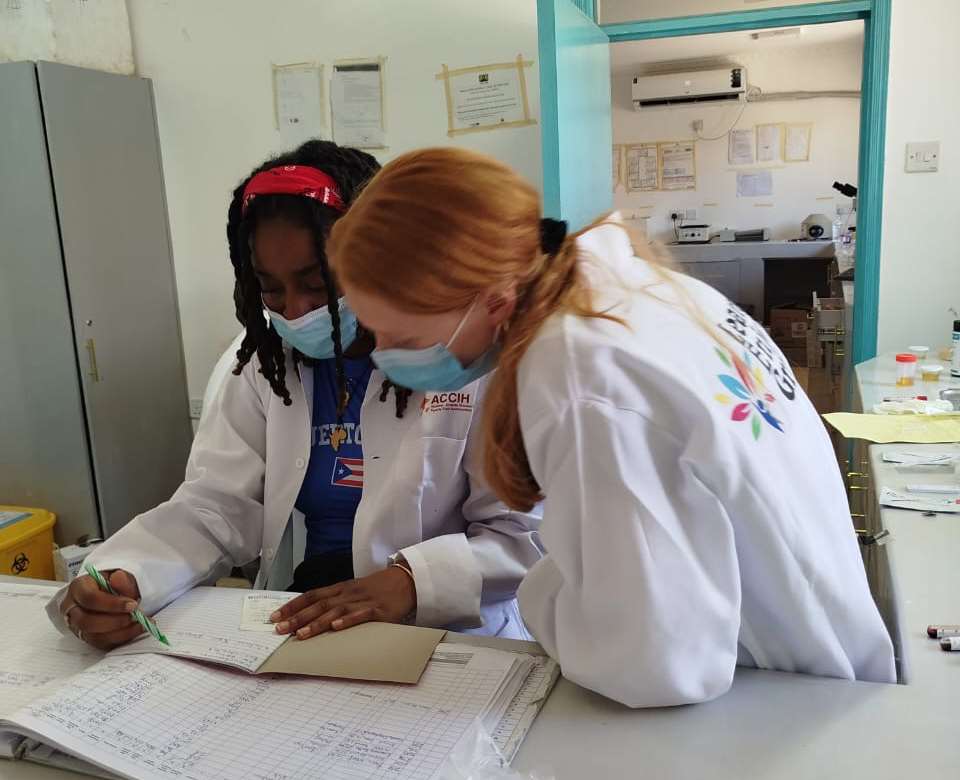
Jordan De La Hunt, MS ’25, completed a nutritional outreach project in rural Kenya through MCW's Global Health Equity Master's Program.
During her senior year at Marquette, where she graduated with a bachelor’s degree in biomedical sciences, she entered MCW through a dual degree program between the two institutions.
The master’s program allowed De La Hunt to expand upon her experiences by taking courses that taught her about health both locally and globally, and about different communities.
“We learned how we could have cultural humility with different groups of people, and the most ethical way to do research with different communities,” she says.
Her thesis project, chaired by Leslie Ruffalo, PhD, MS, an associate professor of community medicine at MCW, was on a food access program in northern Wisconsin that supported Muslim immigrants and refugees.
The program she studied involved working with local farmers to provide fresh produce and halal meat to an organization that works with this population.
“I interviewed farmers and the people of the coordinating organization about how the program worked, any improvements they saw, and successes and challenges as I evaluated that program,” De La Hunt says.
Her thesis showed how community-driven, culturally relevant food programs can support healthier eating habits and strengthen local connections. What stood out to De La Hunt the most during the interview process was how often participants described the dignity clients expressed when receiving high-quality, culturally familiar foods.
“It illustrated the emotional significance of this program for people,” she said.
Crossing More Borders
Currently, De La Hunt lives in Cleveland, Ohio, conducting a Jesuit year of service as a food as medicine patient advocate at a local clinic.
“I’m working with lower income individuals, giving fresh produce and healthier food options for people with diabetes and other chronic diseases,” she says.
She plans to attend the National University of Natural Medicine in Portland, Oregon, a naturopathic medical school grounded in holistic care. Her long-term goal is to serve with Naturopaths Without Borders.
De La Hunt encourages others who are passionate about health and other cultures to lean into the discomfort of the unknown.
“When you lean into that and talk to other people and you intentionally interact, that’s when you’re going to really have an impact on them and on yourself,” she says. “The beauty of global health is that it’s so reciprocal."
The Dr. Rachel Thompson Global Health Equity Scholarship provided the funding for this transformative internship.
Master’s of Science in Global Health Equity Frequently Asked Questions
MCW’s interactive, interdisciplinary program prepares future leaders to address health disparities both locally and globally. Interested in advancing your career in global health?
Recommended


