
Student Garden Sprouts Fresh Produce and Community
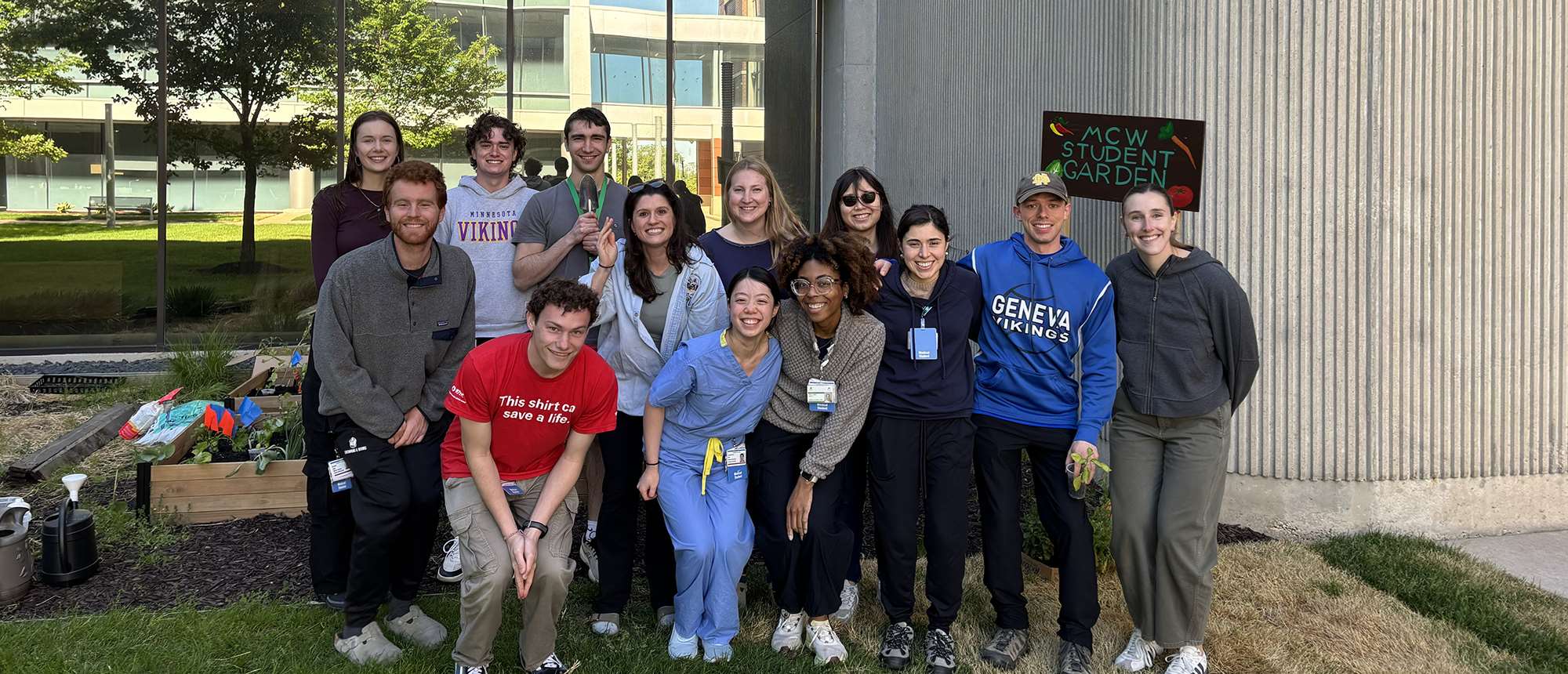
A group of Medical College of Wisconsin (MCW) medical students pats soil over freshly planted seeds. In the coming months, the seeds will sprout into tomatoes, peppers, lettuce, and many other vegetables, creating the third annual student garden. Nestled in a corner of the school’s campus, the garden provides fresh produce for students each growing season.
The garden was first conceived in 2024 by Christa Wagner, PhD, assistant professor in the Division of Community Health. She chose its location based on the recommendation of a colleague who had planted a thriving herb garden in the area.
MCW’s Facilities and Operations team routed an existing irrigation system to the garden, bringing a regular water supply. All other essentials, including the manpower to construct the garden, comes from the student organization Medical Students for a Sustainable Future (MS4SF).
“The intent was to provide students with an accessible greenspace to foster well-being, community, and a connection to nature, as well as provide vegetables for students who may be food or nutrient insecure,” says Joanne Bernstein, MD, associate professor in the Division of General Internal Medicine and MS4SF faculty advisor.
Combatting Student Food Insecurity
Students plant the garden in May, a time when Wisconsin’s frost hibernates for the summer. While there are staple plants sown each year, such as tomatoes and peppers, first-year medical students weigh in on additional picks. This year, they include strawberries, lavender and radishes.
Throughout the summer, MS4SF student volunteers help nourish the plants by weeding, pruning, and watering. Once the plants bloom, students – even those not a part of MS4SF or the medical school – can stop by the garden as they please and harvest the vegetables.
The unharvested produce is donated to the Dr. Karen Marcdante Student Food Center, a food pantry on campus serving all students and learners, particularly those that are food insecure.
“Food insecurity is a major public health issue, especially among graduate and medical students,” says Dr. Wagner. “We wanted to fight student food insecurity by providing access to nutrition-packed food.”
Nature’s Natural Stress Reliever
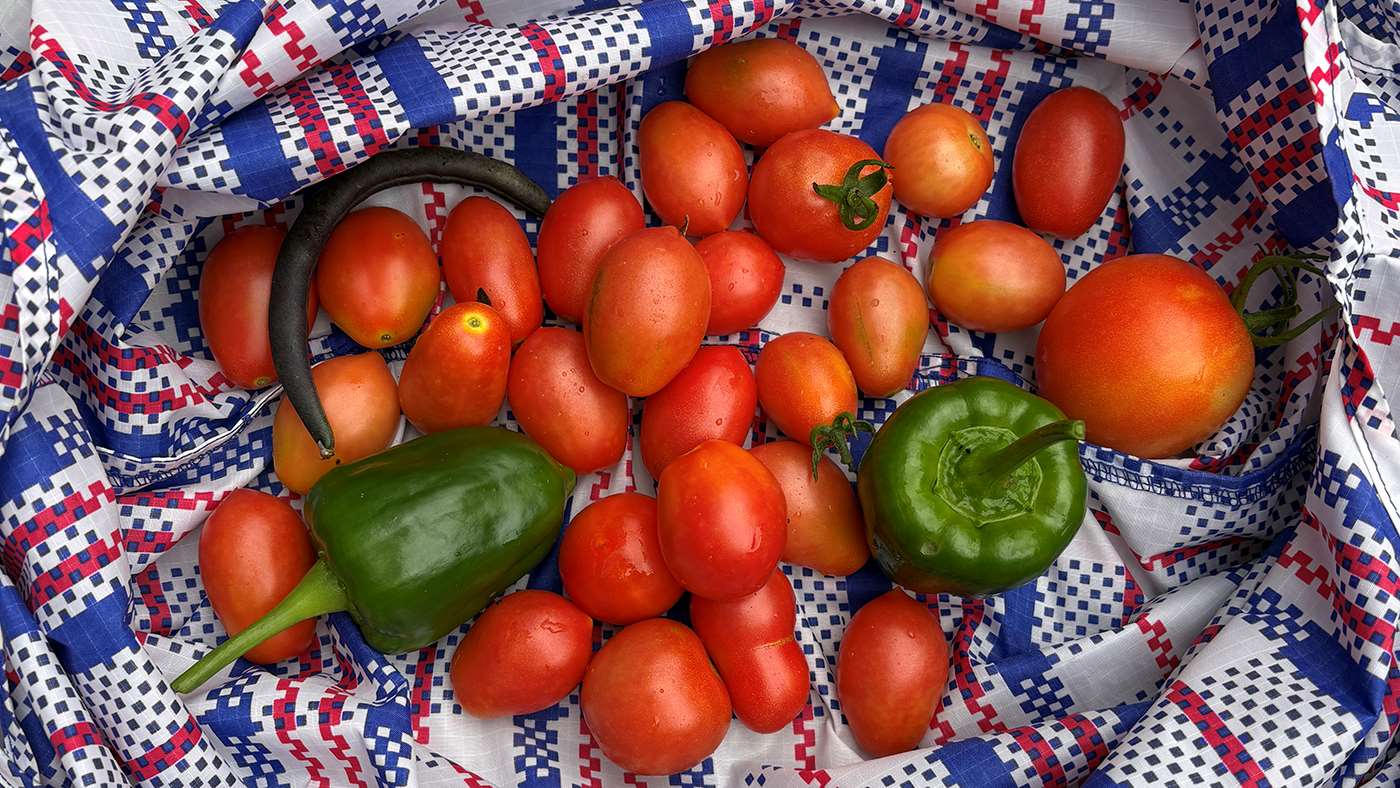
The harvests occur informally throughout August and September, in cadence with what nature offers. At the end of the growing season, the group hosts a potato harvest, which can bring a host of surprises – a leafy, luscious top might mean a waifish potato and vice versa.
After gathering the produce, students use the vegetables and herbs in healthy dishes, such as tomatoes for an aromatic pasta paste. Beyond food, the garden also provides a respite from a packed school schedule, boosting students’ mental and physical health, as well as creating ties with other students.
“During school, everyone is cooped up inside and the joke is, ‘Go outside and touch a tree,’” says Brian Wagner, a second-year medical student who was the garden’s community chair last year. “I say, ‘Go outside and plant a garden.’ The student garden gets people out from the libraries or our rooms, which alleviates stress and gets us physically moving.”
“It was a great way as a new student to meet older students,” says Brian Constantinecu, first-year medical student and the garden’s current president. “We could find a sense of community with others who share a similar passion.”
Although the garden offers a break from school, it can also be an unorthodox place where classroom learning manifests.
“The garden encapsulates a lot of the skills we learn in clinical practice,” says Constantinecu. “For example, when you help the plants grow straight, you are splinting it just as you do for a broken bone or sprained ankle. There are a lot of transferable skills that some people might not consider.”
Pollinating Future Opportunities
Still in its infancy, the group has plans to broaden the scope of the garden. One development, enacted last year, was the creation of the garden’s sign, crafted by MCW’s Art Club with the help of Wagner.
Other possible evolutions include expanding the number of garden beds and adding beds to additional locations on campus, such as Kathy’s House, a place where Froedtert hospital guests can stay. The group also envisions letting students transplant a piece of the garden in their homes, where they could propagate herbs like garlic during the winter.
Broadening the garden would lead to a greater amount and variety of food, a reality that would also allow the group to partner with ThriveOn King, a non-profit created through a partnership between MCW, the Greater Milwaukee Foundation, and Royal Capital. The organization offers an array of social services and community-building activities, including cooking classes, which the group hopes to donate produce to.
The garden’s evolution mirrors broader shifts in medicine and medical education, which place growing emphasis on the environment's role in human health.
“The environment and health are interconnected,” says Dr. Wagner. “Obviously, healthy food improves health outcomes, but there are other ways that the environment can impact health. For instance, the effects of climate change could lead to an increase in the instances of heat stroke. The garden is a small, but powerful way to combat climate change and increase environmental health awareness.”
Recommended


