MCW Medical Students Celebrate During Match Day 2026
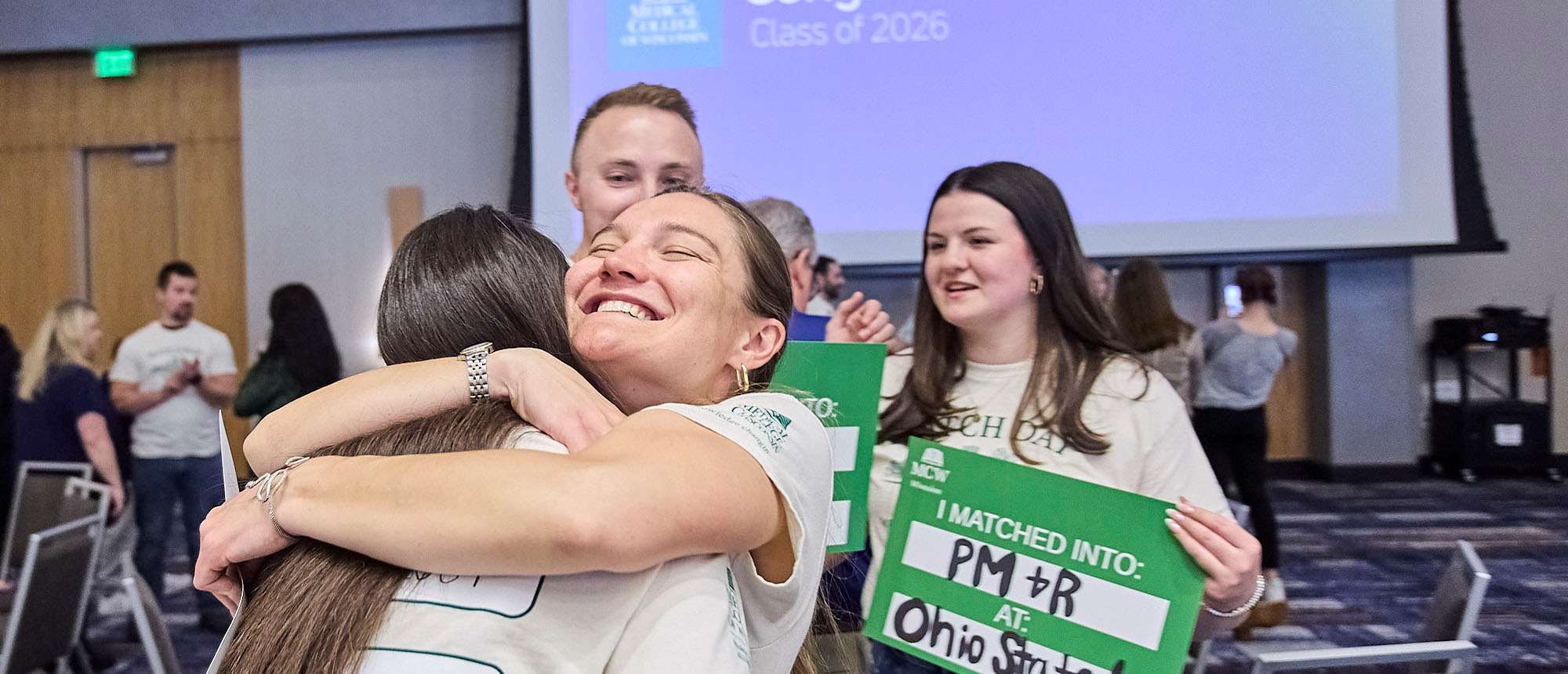
From sweaty, eager palms to joyous cheers and confetti made from torn envelopes. That was the scene on March 20, when the graduating class of Medical College of Wisconsin (MCW) medical school students discovered where they will complete their residency training.
On Match Day, held annually on the third Friday of March, medical students nationwide simultaneously learn where they will train as resident physicians – a celebration preceded by years of lengthy study sessions, demanding clinical rotations, and undeniable grit.
“Match Day is one of the most joyful and meaningful milestones in medical education. We are incredibly proud of our graduating students and the dedication, resilience, and compassion that have brought them to this moment,” says Deborah Costakos, MD, MS, dean of the School of Medicine. “Today is a celebration of their hard work in the classroom, in the clinic, and in service to their communities – and a reflection of the bright future ahead.”
“Congratulations to each of our students on this remarkable achievement. Match Day is a celebration of the dedication and growth you’ve demonstrated throughout medical school, and a launching point into the next chapter of your careers,” says Matthew L. Hunsaker, MD, FAAFP, campus dean at MCW-Green Bay and interim campus dean at MCW-Central Wisconsin. “As you step forward into residency and the practice of medicine, you carry with you the skills, compassion, and commitment that will make a lasting difference in the lives of your patients and communities.”
Before Match Day, students interviewed at hospital and clinic systems around the country with open residency training positions. Afterwards, a matching algorithm, run by the National Residency Matching Program (NRMP), paired together students and residency training programs, optimizing both parties’ preferences.
“Match Day represents both an ending and a beginning. Our students have grown tremendously during their time in medical school – as scholars, clinicians, and leaders,” says Jose Franco, MD, senior associate dean for education at the School of Medicine. “Today, they take the next step in their journey as physicians, carrying forward the skills, values, and commitment to patient care that will shape their impact for years to come.”
A Day of Anticipation and Excitement
Match Day celebrations were held in-person for all three of MCW’s campuses – Milwaukee, Central Wisconsin, and Green Bay.
“This is such a special day being here with all of my friends and family, including my seven-week-old daughter,” says Maddie Edgerly, an MCW-Milwaukee student who matched into family medicine at Aurora Milwaukee. “MCW has been so supportive of helping students balance their personal lives and their education. I have only positive things to say about my past four years at MCW.”
“These four years in Milwaukee have really changed my life and provided me the opportunity to do something I have dreamed about forever,” says Cordelia Elaiho, an MCW-Milwaukee student who matched into emergency medicine at Brown University. “MCW has prepared me to head into residency to become a physician who is not only knowledge-based, but values-based and engaged in the community.”
“As I begin residency, I’m most excited to practice emergency medicine in a way that meets patients where they are, especially those from underserved or rural communities,” says Megan Schleusner, an MCW-Central Wisconsin student who matched into emergency medicine at Cooper University Hospital in Camden, New Jersey.
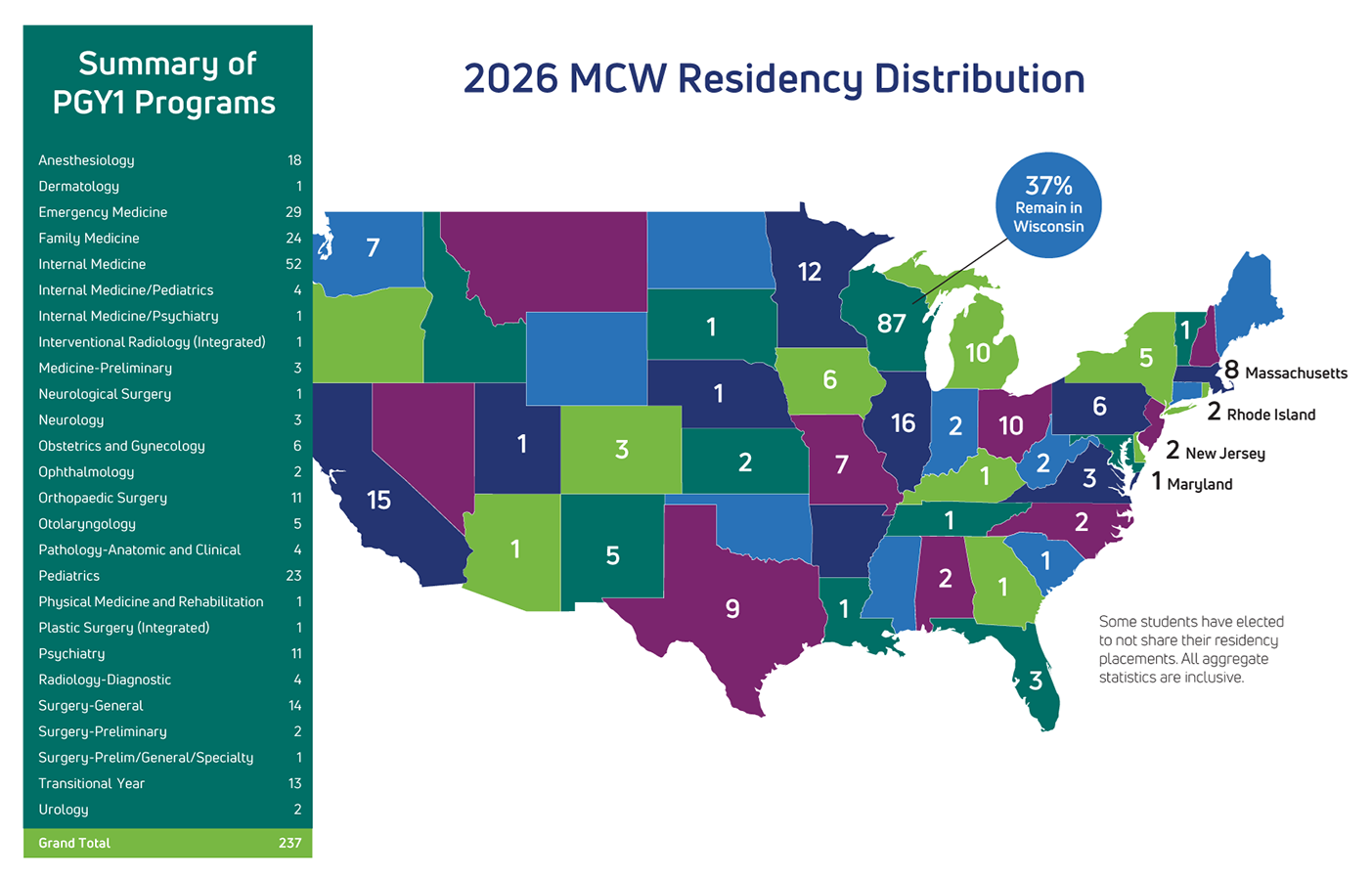
Through this year’s Match, 237 MCW students obtained first-year residency positions. Eighty-seven graduating students will continue their training in Wisconsin, the most common state in which students matched. Other top states include Illinois, California, and Minnesota. The greatest percentage of specialties represented were in internal medicine, emergency medicine, family medicine, pediatrics, and anesthesiology.
For some students, matching in Wisconsin means staying near those they love, including MCW-Milwaukee student Austin Tubbs, who matched into the internal medicine-primary care track at MCW. His fiancé, Brandon Calley, MD ‘24, is a current resident physician in dermatology at MCW.
“The outstanding mentorship at MCW opened the opportunity for me to care for the patient population I want to care for, specifically providing gender-affirming care,” says Tubbs. “I am looking forward to continuing learning from this mentorship and building on this knowledge base.“
MCW Medical School Admissions FAQ
MCW offers many program options to help you become the next generation of physician leaders. Here’s what you need to know if you are interested in applying to the MCW Medical School.
Recommended


