
What can you do with a degree in Global Health Equity?

"Our Global Health Equity program is designed to cultivate: professionals who approach global health with humility, curiosity, and a deep respect for community knowledge."
-Connie Shumba, PhD, program director of the master’s program and an associate professor in the Institute for Health and Humanity
Careers in Global Health
Multiple Job Opportunities
Global Health Equity Graduates pursue roles across sectors including healthcare systems, nonprofits, government agencies, research institutions, philanthropic foundations, and private industry.
Common job titles include:
- Global Health Program Manager
- Public Health Analyst
- Health Equity Specialist
- Epidemiologist
- Community Health Director
- Policy Analyst (Health or Social Policy)
- Monitoring and Evaluation (M&E) Specialist
- Global Health Consultant
- Clinical Research Coordinator
- Health Systems Strengthening Specialist
Global Health Organizations
There are many governmental, nonprofit, private foundations, and nongovernmental organizations that are doing important global health work and may be options for student to find employment after completing a MS Global Health Equity degree. Below are some notable global organizations. The Consortium of Universities for Global Health website also lists various global health related job, fellowship, and internship opportunities.
- Bill and Melinda Gates Foundation
- Commissioned Corps of the US Public Health Service
- Foreign Service Officer
- Global Health Counsel
- Global Health Workforce Alliance
- National Institutes of Health
- Office of Global Health Affairs
- Partners in Health
- Peace Corps
- The Global Fund
- UNICEF
- United States Agency for International Development (USAID)
- WHO
- World Federation of Public Health Associations
“I work as a research program manager for the Center for Health Disparities Research. The Global Health Equity program helped prepare me for this through hands-on experience and coursework in health disparities, qualitative research, and general skill building in the public and global health sector.”
-Abigail Rudd, MS ‘22
Global Health Equity is a rapidly growing field

Global Health Equity: Career Trajectory, Expected Salary, and Advancement
Global health equity careers offer multiple pathways for advancement:
Early career (0-2 years): Program coordination, research support, data analysis: $55,000 – $75,000Mid-career (3-7 years): Program management, policy leadership, technical specialization $70,000 – $95,000
Senior leadership (8+ years): Director roles, global strategy, consulting: $90,000 – $140,000+
Executive leadership: $140,000 – $270,000+
Professionals often move between sectors over time, gaining experience in nonprofit, government, academic, and private settings.
Key factors that influence salary:
- Salaries in global health equity vary by role, sector, and level of experience. Roles in government and nonprofit settings tend to be lower-paying than private sector or consulting positions, but offer strong mission alignment and growth opportunities.
- Sector (government vs. NGO vs. private industry)
- Geographic location (domestic vs. international assignments)
- Technical skills (data analysis, evaluation, digital health)
- Advanced or dual degrees (MD, MPH, MBA, etc.)
Job Outlook
The outlook for global health and health equity careers is strong and growing, driven by increasing demand for expertise in population health, data, and health systems.
Employment for epidemiologists is projected to grow 16% from 2024–2034, much faster than average
Growth is fueled by:
- Emerging and re-emerging infectious diseases
- Climate-related health challenges
- Expansion of global health initiatives and funding
- Increased focus on health equity and social determinants of health
- Digital health
Global careers in Global Health
Local careers in Global Health
MCW Partnership Opportunity: Great Lakes Native American Research Center for Health
The GLNARCH is housed in the Great Lakes Inter-Tribal Council (GLITC) central office on the Lac du Flambeau reservation in north central WI. GLNARCH serves the tri-state Bemidji Area of Michigan (MI), Minnesota (MN) and Wisconsin (WI) and partners with the associated 34 Tribes, four urban Indian areas and three Bemidji Indian Health Service Units as well as longstanding regional academic partners. The current application aims to expand on an existing partnership with the Medical College of Wisconsin (MCW) and regional Tribal Groups to provide a research and training environment that enhances the participation of AI/AN people in biomedical science, as well as the quality of AI/AN-related health research.
Meet the Global Health Equity graduates working in our Froedtert & MCW Hospital system
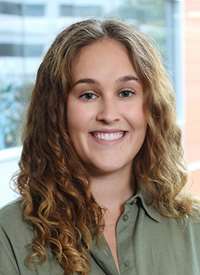
Hannah Kovacevich
Research Program Coordinator II

Courtney Roofe, MS
Research Grants Coordinator, Center for Healthy Communities and Research

Mary Elizabeth Schroeder, MD
Associate Professor

Sarah Young, MS, CCRC
PhD Student
Stories from MCW's Global Health Equity Program

Inspiring Global Outreach
“Through MCW’s program, students get the opportunity to learn to tailor a health project in a setting unlike their own... Along the way, they learn cultural competence, humility and how to engage. They see for themselves how people in other cultures can achieve much with very few resources and learn flexibility and resourcefulness. That is why we have designed an experiential learning program that is hands on and project based.”
MCW student S. Ryan Jacobus is working to make meaningful global health connections and become a future global health leader.
Read more about Jacobus' amazing internship project in Rwanda

MCW Experience Prepares Alum to Tackle Global Health Disparities
“Going to meet the children had a huge impact on me,” De La Hunt says. “We were really able to see a difference in their growth.”
Read Jordan's story