MCW’s New Elective Instills Cooking Skills and Nutritional Knowledge in Medical Students
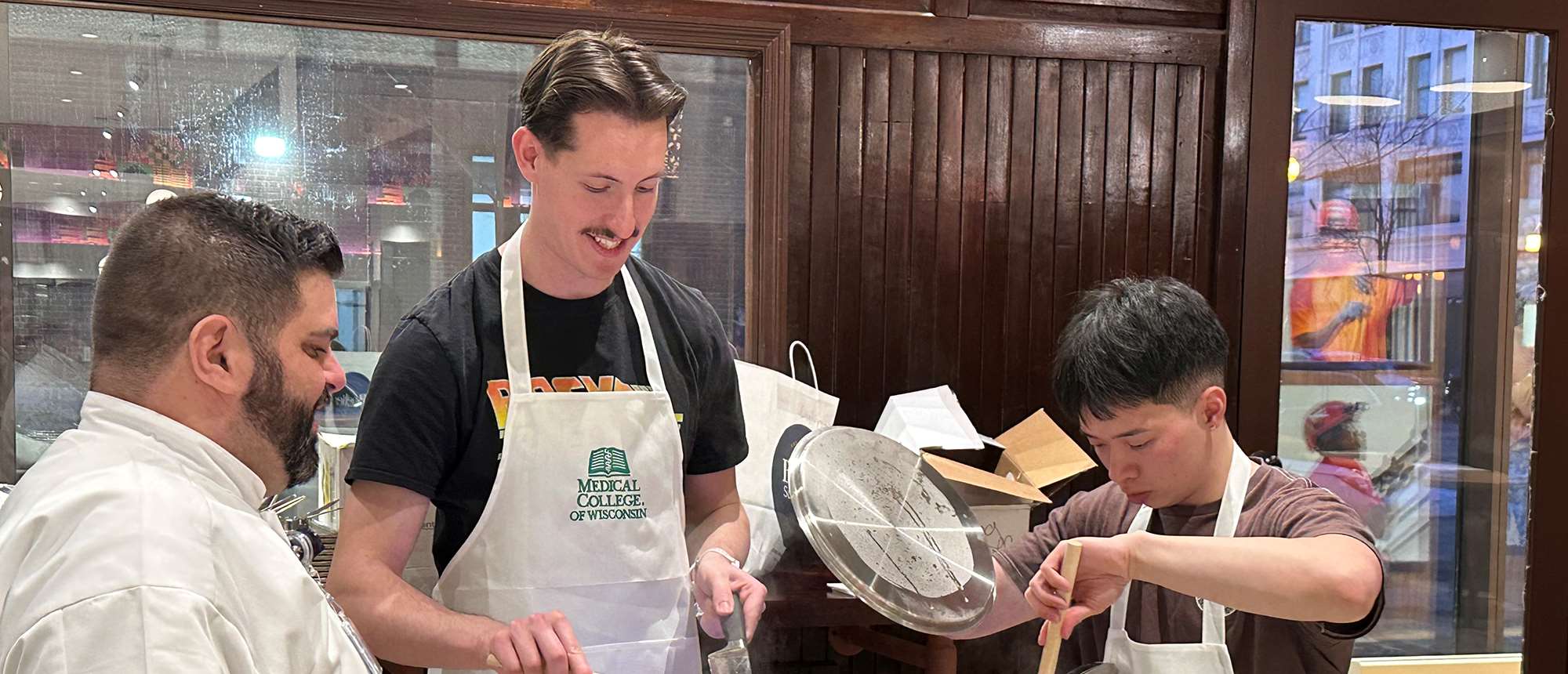
The aroma of chicken fajitas wafts from the room. Inside, six third-year Medical College of Wisconsin (MCW) medical students learn how to prepare the dish. In pairs of two, they sauté bell peppers and sprinkle in a blend of spices.
The students are taking part in a new hands-on medical school elective called “Culinary Medicine Integrated Science Selective,” spearheaded by MCW’s Center for Disease Prevention Research (CDPR).
The course brings culinary medicine, an evidence-based discipline that bridges nutrition science and real-world cooking, to students’ medical toolkit. The discipline teaches the practical culinary skills needed to make meaningful and sustainable lifestyle changes. It also heavily emphasizes adapting recipes to an individual’s nutritional, medical, and cultural needs. For physicians, this knowledge can help support patients in their health journeys.
“Traditionally, physicians have received zero nutritional education and did not have the tools or language to provide the impetus for a patient to make healthy lifestyle changes,” says Stu Wong, MD ’90, course director, director of CDPR, and a professor of hematology and oncology. “We are really happy to fill this void and teach students nutritional skills they can implement in their own lives and model for patients.”
A Recipe for Teaching Healthy Eating
The class draws from the Health Meets Food curriculum of the American College of Culinary Medicine (ACCM), which The New York Times notes is increasingly being implemented into medical schools across the country. Chefs and registered dietitians from ACCM traveled to Milwaukee to train MCW registered dietitians Adam Cohen, MS, RD, and Amanda Rosenmerkel, RD, on the curriculum.
Cohen and Rosenmerkel lead the MCW course, which launched this year. They walk students through different recipes, teaching fundamental culinary techniques like knife skills, ingredient pairing, and flavor development. Students will dice, mince, boil, sauté, blend, whisk, and more.
“Dietitians are not always readily available in every setting, so helping bridge the nutrition gap in medical school is so powerful,” says Rosenmerkel. “It’s important for physicians to have the skills and confidence to discuss nutrition and health to help improve the health of our community.”
During the class, students prepare various dishes, sometimes creating healthier iterations of the same dish through slight nutritional tweaks like higher fiber or lower fat content. After students prepare the dish, they share the meal while discussing the food’s nutritional profile, potential substitutions, and patient-centered adaptations.
“I never really looked at food labels before, but now I frequently do out of curiosity. It has made me much more mindful of what I buy and eat, and I’m more conscious of applying what I’ve learned,” says Andrew Doan, a third-year medical student taking part in the course. “The course helped me think about practical ways to guide patients and tailor recommendations to their individual goals and circumstances.”
Each class focuses on a specific topic, like food allergies and intolerances, vegetarian diets, and food insecurities. Students will explore evidence-based case studies that examine these topics and their scientific underpinnings.
Students will also prepare a range of dishes, including honey mustard pork tenderloins, ratatouille, and banana nut muffins.
“Food is something everyone relates to, and talking about meals often opens the door to more meaningful conversations about health, family, and culture,” says third-year medical student O Aung, who is enrolled in the course. “Instead of simply giving dietary instructions, I want to have real discussions with patients about what they enjoy eating, what meals are important to their families, and what challenges they face when trying to cook at home.”
Kitchen as Classroom
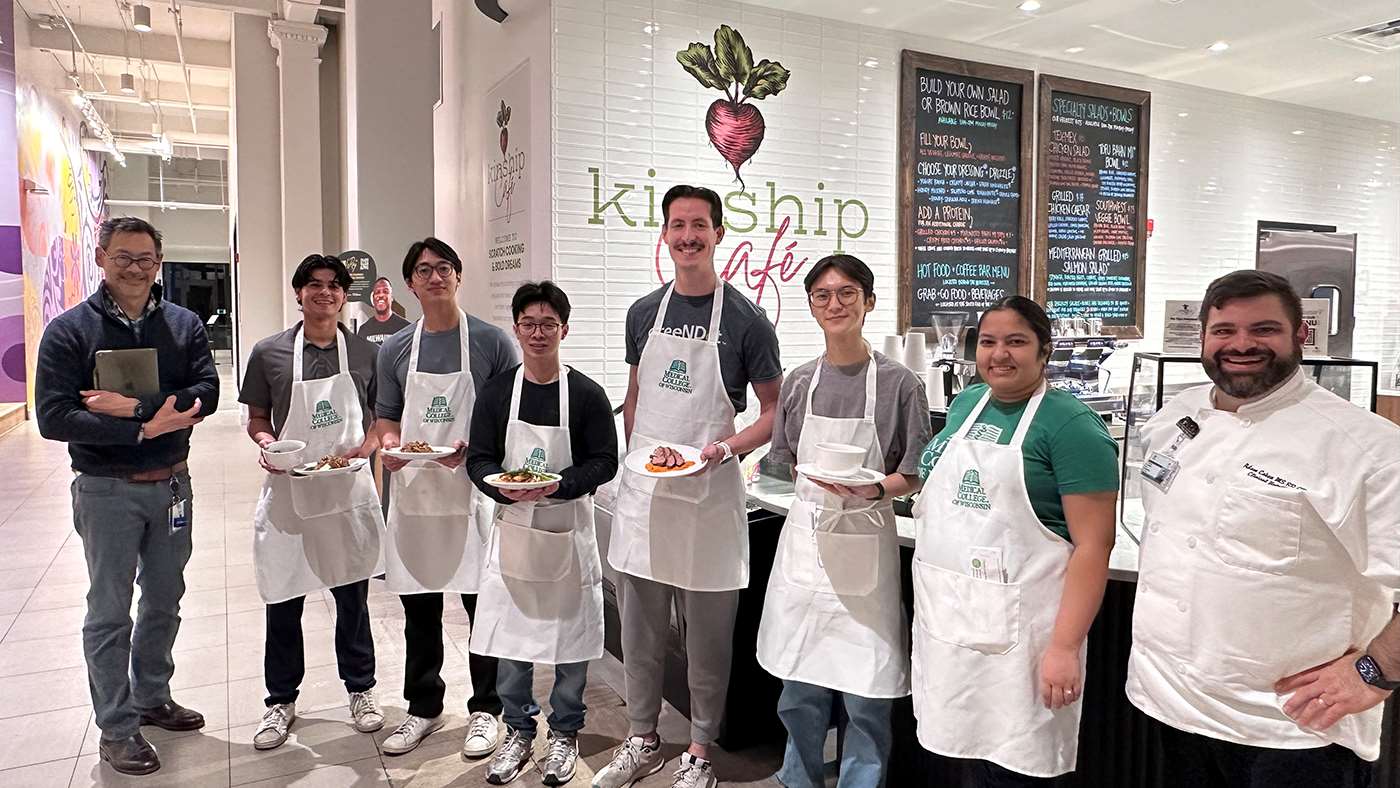
Course director Stu Wong, MD '90 (far left), and dietitian and course instructor Adam Cohen (far right) with the inaugural class of culinary medicine students.
Beyond cooking skills and nutritional knowledge, students absorb other transferable skills.
“A kitchen environment is great for developing many skills beyond cooking, such as communication, time management, and teamwork,” says Melinda Mastel, MBA, MS, financial advisor in the Department of Medicine and course coordinator, who also has a master’s in nutrition.
The class is held at ThriveOn King, a non-profit in the heart of Milwaukee’s Bronzeville district. Created through a partnership between MCW, the Greater Milwaukee Foundation, and Royal Capital, the organization offers an array of social services and community-building resources, including kitchen space.
The CDPR aims to expand the MCW class to include practicing physicians and allied health professionals with the ultimate goal of having them teach their own classes to the communities they serve.
“Nutrition is a major modifiable factor for disease,” says Mastel. “We’re not focusing on gourmet ingredients – we're looking to expand individuals’ exposure to new recipes while making nutrition affordable, practical, and approachable.”
Recommended


