all
Who are the chiropractic faculty at the Medical College of Wisconsin?
What is the total number of hours the resident is expected to meet each week as part of the residency program?
Chiropractic residents follow a standardized work duty schedule. Chiropractic residents spend no more than 65 on-site duty hours per week. Per Council on Chiropractic Education (CCE) accreditation requirements, this does not include off-site duty hours spent relative to reading and preparation related to patient care and non-clinical responsibilities.
What is the allocation of work duty responsibilities? What are workload expectations?
Work duty responsibilities encompass direct clinical care, intra- and inter-professional observations/clinical rotations, and scholarship related opportunities.
The time spent across each of these areas is variable throughout the residency. Approximately 75% of the total hours in the residency is dedicated to direct patient care; 6% of the total hours in the residency is dedicated to intra- and inter-professional observations/clinical rotations; 3% of the total hours in the residency is dedicated to scholarship; and 16% of the total hours in the residency is dedicated to *flex time.
*Flex time is time dedicated to personalized learning experiences that can include direct patient care, intra- and inter-professional observations/clinical rotations, and/or scholarship.
How much of the clinical workload will there be and will the resident be able to have an independent practice? Or is the resident working directly under someone else?
Chiropractic residents are expected to obtain licensure to practice independently as per the State of Wisconsin requirements.
The chiropractic residency is structured to allow the resident to engage in direct patient care throughout the entire residency under the supervision and mentorship of attending chiropractors. As the resident advances through the residency, they are provided with greater levels of autonomy and independence in clinical practice.
Where are the clinical sites associated with the residency program?
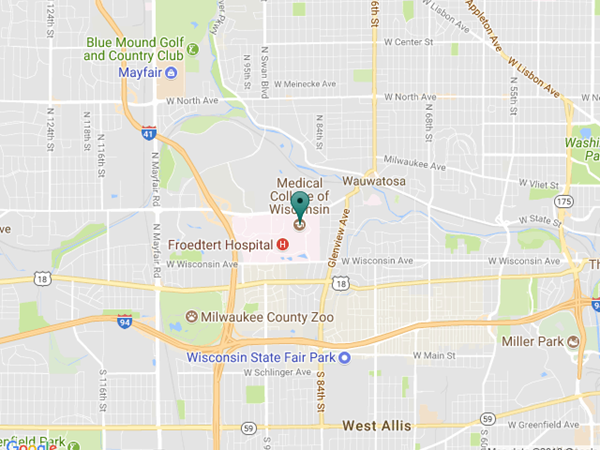
The chiropractic resident will engage in direct clinical care within Froedtert & MCW SpineCare clinic locations, primarily at the Tosa Health Center location: SpineCare Locations
The chiropractic resident will have potential opportunities to participate in inter-professional observations/clinical rotations at clinics throughout the Froedtert & MCW health system in the greater Milwaukee region.
What is the pay and benefits structure for the chiropractic resident?
The chiropractic resident is offered a salary of $44,540. The chiropractic resident is also provided health benefits and paid time off during the residency program.
Is there support with housing for those not from the area?
Currently we do not offer housing support. However, there is plentiful housing availability in the immediate area and the greater Milwaukee region.
Is transportation required to participate in the residency?
Reliable transportation is required.
Are there any other benefits such as covered continuing education allowances or malpractice coverage?
Malpractice insurance is provided at no cost for the resident during their time in the residency program. In addition, there is a stipend for the resident to participate in approved continuing education courses and professional development workshops.
Does the chiropractic residency program accept off cycle applicants/applications?
Do you accept applicants who are not United States citizens? Are there any visa requirements?
So long that applicants are eligible to hold employment in the United States, obtain chiropractic licensure in the state of Wisconsin, and meet all other eligibility requirements, we accept applicants who are not United States citizens.
More information on prospective chiropractic licensure for the state of Wisconsin can be found here: Chiropractic Examining Board
What is the difference between the Medical College of Wisconsin Doctor of Chiropractic residency program and the chiropractic student preceptorship program?
Both programs are similar in structure and purpose. Though both programs are rigorous in nature, the preceptorship program is shorter in duration and less rigorous than the residency program. The residency is an expansion on the preceptorship and provides a greater depth of clinical care, inter-professional learning, and scholarship opportunities.
Is participation in the chiropractic student preceptorship a requirement for the residency program?
Participation in the Medical College of Wisconsin chiropractic student preceptorship program is not a requirement for the chiropractic residency program. All applicants are considered regardless of one’s participation in a preceptorship program. The resident selection processes are structured so that candidates are identified and selected based on possessing academic, clinical, and personal attributes most suitable to achieving success throughout the residency program and thereafter.