
Center for Cervical Myelopathy
An initiative of the Wisconsin Institute of NeuroScience
Founding Director of the Center for Cervical Myelopathy

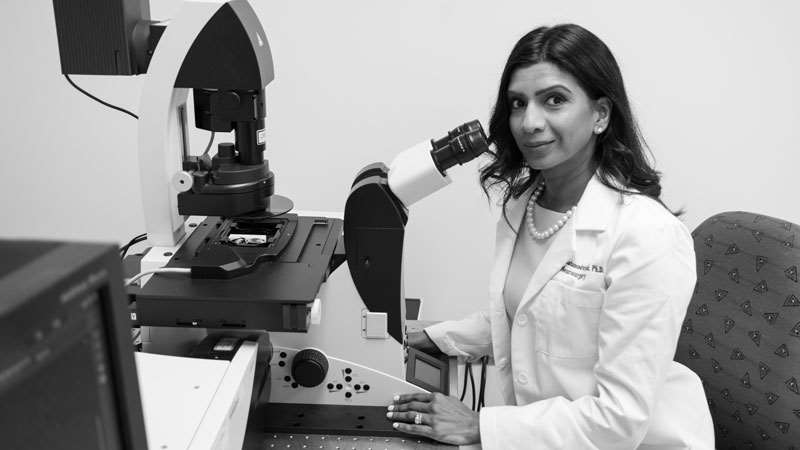
Aditya Vedantam, MD, a trained neurosurgeon and clinical scientist, founded the Center for Cervical Myelopathy in 2022 with the goal of creating a community of patients, physicians, and scientists focused on advancing care and knowledge for cervical myelopathy. Dr. Vedantam has assembled a team uniquely suited to enhancing the understanding of the pathophysiology of the disease, developing novel approaches, and expanding targeted treatments that will augment the quality of clinical care for the management of cervical myelopathy in the United States and abroad.
Research at the Center for Cervical Myelopathy
Basic Science Research
The Basic Science Cervical Myelopathy research team is utilizing an animal model to investigate the underlying pathophysiology of degenerative cervical myelopathy and develop potential therapeutic strategies, including pharmacological, neuromodulation, and surgical approaches.
Participating Laboratories
The Budde Laboratory seeks to improve patient care and clinical outcomes for individuals with injury and diseases affecting the spinal cord, with a focus on developing and employing magnetic resonance imaging (MRI) as a tool for understanding spinal cord biology and pathology, using the MRI's translational value to bridge the gap between preclinical animal studies and human clinical research.
Learn more about the Budde Lab
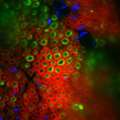
The Neural Engineering, Interfacing and Optimization Laboratory (NEIMO Lab) employs a combination of neurophysiology, optogenetics, viral gene therapy, and optical imaging techniques to develop novel neuroprosthetic and gene therapy approaches to alleviate motor deficits caused by conditions such as spinal cord injury and amyotrophic lateral sclerosis.
Imaging Research
Led by Dr. Matthew Budde, the Imaging Cervical Myelopathy research team utilizes novel imaging techniques to explore and inform the causes, progression and treatment of degenerative cervical myelopathy via non-invasive treatment strategies.
Participating Laboratories
The Budde Laboratory seeks to improve care and outcomes for patients with injury and diseases affecting the spinal cord, with a focus on developing and employing magnetic resonance imaging (MRI) as a tool to understand spinal cord biology and pathology, using the MRI's translational value to bridge the gap between preclinical animal studies and human clinical research.Learn more about the Budde Lab
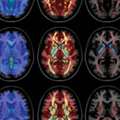 The Koch Laboratory engages in a wide variety of MRI technical development efforts, with particular interest in modeling, use, and compensation of subtle magnetic field distortions in magnetic resonance imaging. Efforts have focused on reconstruction methods, as well as applying MRI-based tissue magnetism measurements with specific interest in application to the imaging of neurologic disease.
Learn more about Dr. Koch's Research
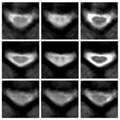 In an effort to improve our understanding of spinal cord pathology and enhanced recovery of function, the Vedantam Laboratory performs clinical and translational research for spinal cord disease states such as DCM and spinal cord injury. The Lab is investigating the pathophysiology of DCM through imaging, finite element modeling and quantitative functional assessments and is working on implementing novel training paradigms to restore hand function after cervical spine surgery for cervical myelopathy.
Biomarkers Research
The Cervical Myelopathy Biomarkers research team utilizes animal models of degenerative cervical myelopathy in its efforts to elucidate the pathway towards biomarker discovery and validation.
Participating Laboratories
In an effort to improve our understanding of spinal cord pathology and enhanced recovery of function, the Vedantam Laboratory performs clinical and translational research for spinal cord disease states such as DCM and spinal cord injury. The Lab is investigating the pathophysiology of DCM through imaging, finite element modeling and quantitative functional assessments and is working on implementing novel training paradigms to restore hand function after cervical spine surgery for cervical myelopathy.
Learn more about the Vedantam Lab
Rehabilitation Research
The Rehabilitation Cervical Myelopathy research team, led by Brian Schmit, PhD, and Allison Hyngstrom, PT, PhD, has established objective biomechanical tests of dynamic and hand function to assess sensorimotor dysfunction in DCM.
Participating Laboratories
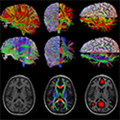 At Marquette's Integrative Neural Engineering and Rehabilitation Laboratory (INERL), Drs. Schmit, Hingstrom, and collaborators seek to advance knowledge in the field of neural engineering and rehabilitation of those people with neural disability.
In an effort to improve our understanding of spinal cord pathology and enhanced recovery of function, the Vedantam Laboratory performs clinical and translational research for spinal cord disease states such as DCM and spinal cord injury. The Lab is investigating the pathophysiology of DCM through imaging, finite element modeling and quantitative functional assessments and is working on implementing novel training paradigms to restore hand function after cervical spine surgery for cervical myelopathy.
Biomechanics Research
Led by Dr. Narayan Yoganandan, the Biomechanics Cervical Myelopathy research team is focuses on using patient-specific 3D Finite Element models (FEM) of the cervical spine and spinal cord to improve our understanding of degenerative cervical myelopathy.
Participating Laboratories
At Marquette's Integrative Neural Engineering and Rehabilitation Laboratory (INERL), Drs. Schmit, Hingstrom, and collaborators seek to advance knowledge in the field of neural engineering and rehabilitation of those people with neural disability.
In an effort to improve our understanding of spinal cord pathology and enhanced recovery of function, the Vedantam Laboratory performs clinical and translational research for spinal cord disease states such as DCM and spinal cord injury. The Lab is investigating the pathophysiology of DCM through imaging, finite element modeling and quantitative functional assessments and is working on implementing novel training paradigms to restore hand function after cervical spine surgery for cervical myelopathy.
Funding
The Center for Cervical Myelopathy is grateful for the generous financial support provided by its sponsors.







Research Faculty
The Center for Cervical Myelopathy is proud to bring together world-class researchers from Froedtert, the Medical College of Wisconsin, and Marquette University making critical advancements in the fields of neurosurgery, neural engineering, biomechanics, orthopaedics, and brain injury research.
Anjishnu Banerjee, PhD
Associate Professor, Data Science Institute - Division of Biostatistics

Timothy Boerger, PhD
Research Assistant Professor, Marquette University

Matthew D. Budde, PhD
Associate Professor, Department of Neurosurgery

Jordan Gliedt, DC
Associate Professor; Director, Doctor of Chiropractic Residency Program; Director, Chiropractic Student Preceptorship Program

Allison Hyngstrom, PT, PhD
Professor, Department Chair
Kevin M. Koch, PhD
Adjunct Professor
Michael McCrea, PhD, ABPP
The Shekar N. Kurpad, MD, PhD, Chair in Neurosurgery; Professor; Vice Chair of Research; Co-director, Neurotrauma Research Center; Director, Brain Injury Research Program
Brian D. Schmit, PhD
Professor, Joint Department of Biomedical Engineering; Hammes Family Chair

Aditya Vedantam, MD
Associate Professor; Director, Minimally Invasive Surgery; Director, Center for Cervical Myelopathy; Adjunct Faculty in Biomedical Engineering, Radiology, and Orthopedics

Jordan Williams, MD, PhD
Assistant Professor, Marquette-MCW Joint Department of Biomedical Engineering, MCW Department of Neurosurgery

Narayan Yoganandan, PhD
Professor & Chair of Biomechanics, Department of Neurosurgery; Orthopaedic Surgery; Joint Department of Biomedical Engineering
More about the Center for Cervical Myelopathy
Cervical Myelopathy Symptoms, Treatment
Contact Us
Administrative Offices for the Center for Cervical Myelopathy are located in the Hub for Collaborative Medicine on the Medical College of Wisconsin's Milwaukee campus.
Hub for Collaborative Medicine
MCW Department of Neurosurgery
8701 Watertown Plank Rd.
Milwaukee, WI 53226
General inquires regarding the Center for Cervical Myelopathy may be routed to Myelopathy@MCW.edu