Medical College of Wisconsin Summer Research Program Strengthens Student Commitment to Science
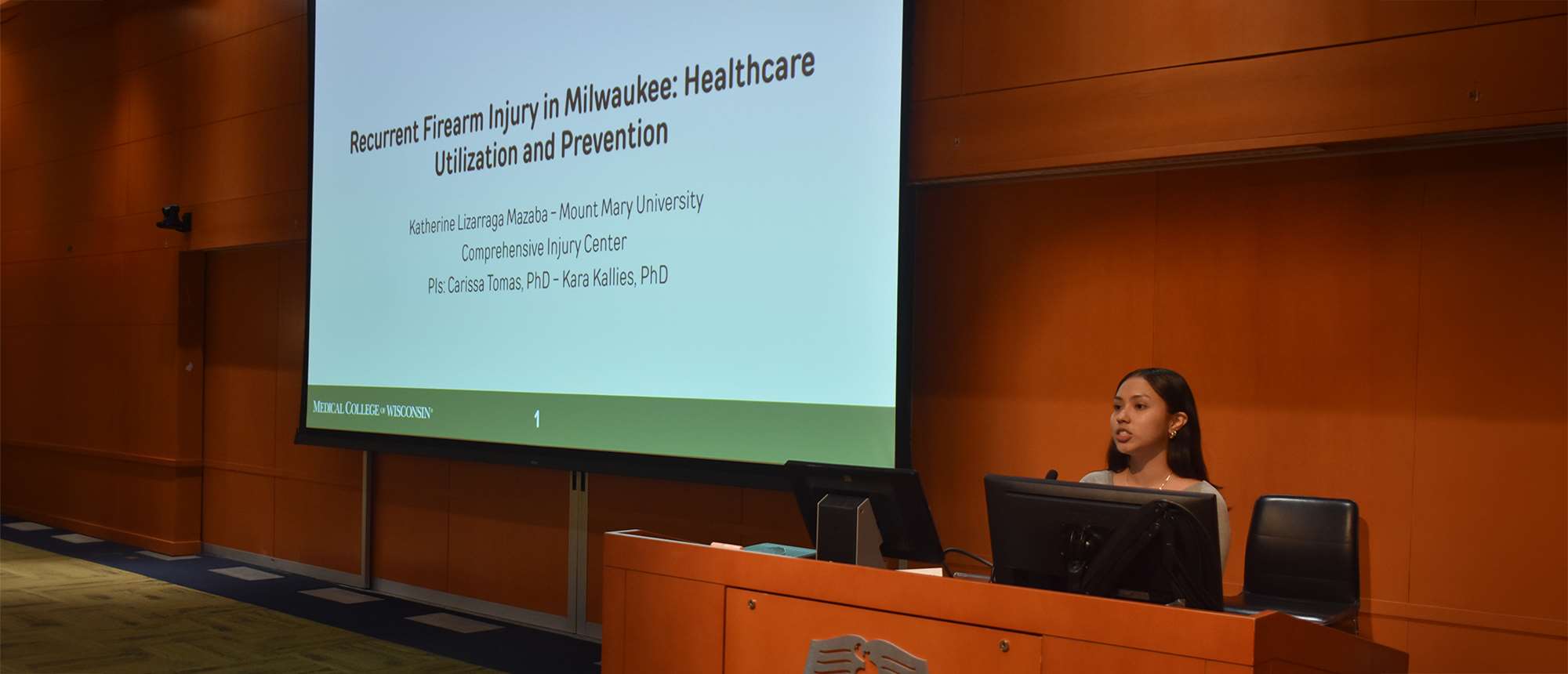
Katherine Lizarraga Mazaba first participated in an MCW Pathways Program as a high school student. This summer, she took part in a 10-week research experience for undergraduates.
Celeste Vargas and Katherine Lizarraga Mazaba have a lot in common. They were both born and raised in Milwaukee, their favorite subject growing up was science, and each explored their pull to the field at the Medical College of Wisconsin (MCW).
This summer, Vargas and Lizarraga Mazaba participated in MCW’s Summer Health-Related Research Education Program (SHREP), a 10-week-long experience where undergraduate students conduct research in MCW labs.
SHREP is one of several programs offered by the Office of Academic Pathways (OAP), which has a mission to introduce middle school, high school, and undergraduate students to careers in medicine and science.
The research students do in SHREP varies; some record cellular changes in a Petri dish, while others analyze variables in massive datasets. Many times, related clinical exposure is sprinkled in.
“SHREP’s main purpose is to create a space where students can have summer research experiences beyond those offered to them at their local institutions,” says Ricardo Aguilar, MSEd, program coordinator for SHREP. “It is an opportunity to explore what is out there.”
Students Finding Their Footing in Science
Before SHREP, Vargas and Lizarraga Mazaba were high schoolers thinking about careers in medicine. Their interests were deeply personal.
Lizarraga Mazaba recalls accompanying her mother, who only speaks Spanish, to doctor’s visits and witnessing her unable to communicate.
Vargas thinks back to her mother’s diagnosis of breast cancer and the slew of questions – What factors could have contributed to this? How common is breast cancer in the general population? – that followed.
To explore their curiosities, each participated in an OAP program for Milwaukee-area high school students called Apprenticeship in Medicine (AIM). Through AIM, they shadowed various clinicians, learned about fundamental biomedical concepts, and engaged in hands-on activities, such as animal heart dissections.
For Lizarraga Mazaba, the experience was particularly memorable because her brother, a medical student at MCW, taught participants about gastrointestinal biology that year.
Vargas also has a special connection to AIM. Her cousin, now a fourth-year medical student at MCW, participated in AIM and even met his wife during the program.
Finding Community through MCW Pathways Programs
After AIM, Vargas and Lizarraga Mazaba entered college and joined STEP-UP, another OAP program. In STEP-UP, students meet one Saturday a month and engage in various career-building activities, including practicing interview skills and connecting with current MCW students for career advice.
“One thing I have always loved about all MCW programs is that we’re all just like a little community,” says Lizarraga Mazaba, now a junior at Mount Mary University studying psychological sciences and health communications. “We are all interested in science and share similar goals.”
Community is a treasured by-product of the OAP’s programs and is especially fostered by students like Vargas and Lizarraga Mazaba, who take part in multiple programs.
While Vargas and Lizarraga Mazaba were initially interested in medicine, STEP-UP introduced them to the world of research. SHREP felt like a natural next step.
“I had trusted everybody at MCW so much, so easily, that when another experience presented itself, I was like ‘Why not?’” says Vargas, now a senior at Marquette University studying biology. “All of the pathway programs have exposed me to a lot more career-wise than I had seen in the past.”
Hands-On Research Experiences
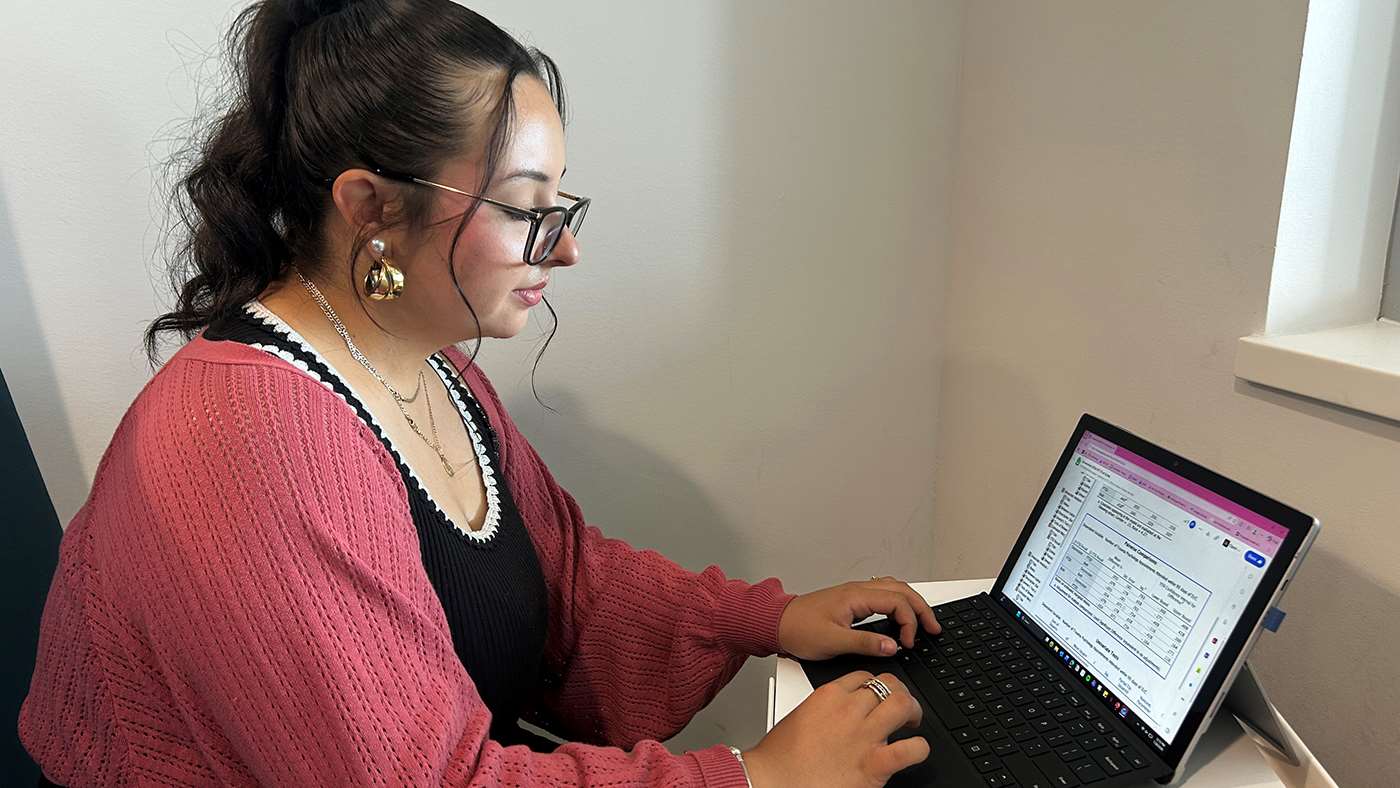
Celeste Vargas says her experiences with MCW Pathway Programs solidified her interest in a career in science. "All of the pathway programs have exposed me to lot more career-wise than I had seen in the past," she says.
This summer, Lizarraga Mazaba conducted research at the Comprehensive Injury Center (CIC) with Carissa Tomas, PhD, deputy director of the Division of Data Surveillance and Informatics, and Kara Kallies, PhD, a postdoctoral researcher. Lizarraga Mazaba analyzed the characteristics of people involved in recurring firearm incidents.
Vargas also did injury-related research. She was mentored by Timothy Geier, PhD and Sydney Timmer-Murillo, PhD, both assistant professors in the Department of Surgery. Vargas looked at whether an at-risk screen for PTSD or depression influences gunshot wound victims' engagement with Froedtert Hospital services, such as their Trauma Center or social workers.
This year was Vargas’ third summer in SHREP. During her first summer, she studied whether radiation therapy adversely affected the organs in rats – a project that intrigued her because her mom had undergone a similar treatment for cancer. When Vargas returned the next year, she investigated whether certain medications could stop pancreatic tumor cell multiplication.
This summer, Lizarraga Mazaba and Vargas also participated in the CIC’s Summer Injury Prevention Institute. Through the program, they toured the Froedtert Hospital ambulance bay and learned from the Flight for Life transport crew on the rooftop helipad where they do their life-saving work.
For both, SHREP solidified their interest in public health, which they plan to pursue after college graduation.
Growing as a Scientist and Person
SHREP teaches more than research skills, it also provides lessons on how to design a career.
Every week, the students – who come from across the country – hear from MCW researchers and clinicians about their professional trajectory.
“We heard from Michael Levas, MD ‘05, MS, who is a physician at MCW and whose parents also came from Mexico,” says Vargas. “A lot of us are minorities, so it was nice to hear from somebody who is in a position we want to be in and who can speak to us about what we can achieve.”
The students also engage in weekly professional development sessions, featuring representatives from MCW’s Offices of Academic Support and Enrichment, Student Health and Wellness, and Career Services.
Weeks round out with a presentation from an MCW researcher, offering students a look into research opportunities beyond their summer projects.
At the end of summer, the tables flip and students present their research projects, showcasing findings to their labs, family, and friends. The research symposium also highlights the work of students in OAP’s Summer Program for Undergraduate Research (SPUR) and Advancing Student Potential for Inclusion with Research Experiences (ASPIRE).
Many alumni from the OAP’s programs go on to advanced education, with many finding their way back to MCW.
“Medical training and professional education is a very long road that requires a lot of energy and time invested,” says Aguilar. “Having a familiar face and people in your corner goes a long way to help support these students.”
“MCW’s programs put you in rooms that you never thought were possible to be in,” says Vargas. “You get so much more out of it than you could initially imagine.”
Recommended


